
READ. SCROLL. LISTEN.

Original briefings. Zero spin.

Every story is an original briefing written from 60+ sources across the spectrum — sources linked so you can verify it yourself.

Colombia's De la Espriella Wins Razor-Thin Election, Vows to Revive Collapsing Oil and Gas Industry

Abelardo de la Espriella narrowly defeated left-wing senator Ivan Cepeda in a recount certified by Colombia's National Electoral Council, and now inherits an oil sector that's produced barely 725,000 barrels a day, down from over 915,000 a decade ago. His fix: fiscal austerity, a former Duque-era finance minister as VP, and a push for 7% GDP growth. Whether that plan survives contact with Colombia's fiscal deficit and political backlash is the real question.

EPA's Zeldin Says Long-Range Climate Forecasts Are Ranges, Not Facts, Pushes Back on 'Science Denier' Label

EPA Administrator Lee Zeldin told Fox News Digital this week that climate projections for 2050 and 2100 are estimates with wide error bars, not settled predictions, and said disagreement shouldn't get people branded science deniers. Asked directly to name a Biden-era climate prediction that's since been disproven, he didn't offer one.

El Niño Wipes Out Peru's Anchovy Season While California Anglers Haul in Record Tuna

Peru has effectively canceled its anchovy fishing season as El Niño disrupts Pacific currents, threatening the world's largest single-species fishery and a key global source of fish oil and animal feed. Meanwhile, warmer waters are handing Southern California some of its best tuna fishing in memory. Same weather pattern, opposite outcomes, and consumers everywhere should expect price swings on fish products.

America's Power Grid Has Known Vulnerabilities. A New Analysis Asks What Happens When They All Fail at Once.

A fictionalized but technically grounded scenario published by Preppgroup via ZeroHedge walks through a hypothetical continental grid collapse, tracing how small synchronization anomalies across transmission networks could cascade into a civilization-scale blackout. The scenario is fiction. The underlying engineering risks it describes are not.

The Pentagon Is Betting on AI-Native Defense Firms. Here Is What a Neoprime Actually Is.

The Defense Department is moving frontier AI into its most classified networks and pouring nearly $55 billion into autonomous warfare. Legacy contractors built the hardware that won the last century of wars, but the next one will be decided by who can integrate trusted software into constrained, classified environments at speed.

Holtec Nuclear Files for $2 Billion IPO as Nuclear Investment Appetite Surges

Holtec Nuclear filed its S-1 with the SEC on July 10, 2026, targeting what Renaissance Capital estimates could be a $2 billion IPO, making it one of the largest nuclear-sector listings in years. The Camden, NJ company brings real revenue and real assets to the table, including an $800 MW plant restart and a small modular reactor program backed by a $1.5 billion federal loan guarantee. It is entering a market that is clearly warming to nuclear, with Standard Nuclear also in the IPO pipeline targeting up to $383 million.

PJM's Own CEO Says the Wholesale Electricity Market Is Broken. Here Is What That Means.

The operator managing power for 65 million Americans across 13 states has acknowledged its market model no longer works. The core problem is structural: rules written in the late 1990s treat a wind farm and a gas plant as interchangeable, which they are not. Until capacity markets distinguish firm power from intermittent generation, reliability will keep deteriorating while costs climb.

A Fictionalized Grid Collapse Scenario Raises Real Questions Engineers Have Long Debated

A fictionalized scenario published by Milan Adams via Preppgroup and distributed through ZeroHedge asks what a cascading, continent-scale blackout would look like in its early hours — and how populations would cope with the sudden loss of the information infrastructure that tells them what is happening. The engineering concerns it dramatizes are real, even if the scenario is not.

France's Nuclear Output Cuts Deepen as Heatwave Stresses European Grids

A European heatwave has forced France to curtail output at up to five nuclear plants, deepening the continent's energy security problem. River temperatures are too high to cool reactors efficiently at the exact moment demand is surging, and the stress is rippling into Germany and the United Kingdom, which import French-generated electricity. Experts say grid adaptation is no longer optional.

IEA Pushes Oil Surplus to 2027 as U.S.-Iran Strikes Resume and Hormuz Traffic Stalls Again

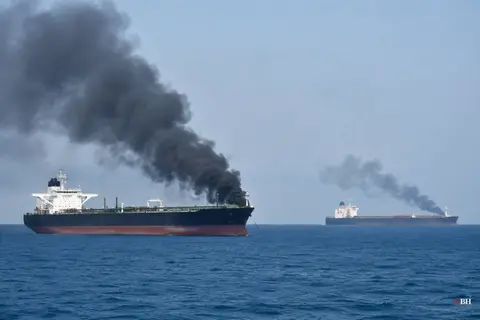
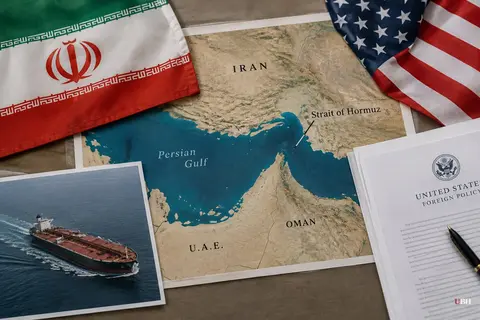
The oil market's brief post-ceasefire calm ended this week when renewed U.S.-Iran strikes on July 7-8 pushed Brent back above $76 per barrel and froze tanker traffic through the Strait of Hormuz. The IEA's July Oil Market Report now pushes its surplus forecast into 2027, contingent on a de-escalation that shows no sign of arriving. Meanwhile, Ukraine's drone strikes on Russian refineries are triggering a separate fuel crisis across Central Asia.

Europe's Third Heatwave of 2026 Forces Nuclear Cutbacks in France and a 1.2-Gigawatt Supply Warning in Britain

Since Europe's summer heatwave cycle began, the energy fallout has moved from a weather story to a grid-reliability crisis. France is cutting output at up to five nuclear plants because river water is too hot to cool reactors, and Britain's National Energy System Operator issued a rare overnight supply warning citing a 1.2-gigawatt shortfall during peak evening demand. The compounding problem: low wind, high cooling demand, and reduced French nuclear exports are hitting both countries at the same time.

Nuclear Energy's Regulatory, Commercial, and Geopolitical Tracks Are All Moving at Once

Three separate developments this week signal that the nuclear energy sector is accelerating across every front: U.S. regulators are proposing the biggest overhaul of licensing reviews in decades, a Miami startup launched the first commercial nuclear-powered satellite aboard a SpaceX rideshare, and India's state nuclear firm is scouting global uranium assets. These are not incremental moves.

DOE Draft Report: Transmission Congestion Cost the U.S. $12 Billion in 2024, and Interregional Links Are the Fix

The Department of Energy's draft National Transmission Needs Study puts a hard number on the grid's bottleneck problem: $12 billion in wholesale power costs added by congestion in 2024 alone. The agency says building more transfer capacity between grid regions offers the highest payoff, and singles out the Southeast as the only U.S. region failing to meet even one of the four key transmission benchmarks.

America's Power Grid Is Falling Behind Demand. Permitting and Transmission Are the Chokepoints.

Grid congestion cost U.S. electricity consumers $12 billion in 2024, and permitting bottlenecks are blocking over $121 billion in clean energy investment. Two separate analyses, one from the Department of Energy and one flagged by JP Morgan, point to the same structural failure: the country cannot build infrastructure fast enough to meet rising demand.

UAE Pumped 4.1 Million Barrels Per Day in June, a Record High, as Gulf Ceasefire Collapses Again

Since the Iran conflict began, the UAE has transformed from a constrained OPEC member into the Gulf's fastest-recovering oil producer. The International Energy Agency confirmed UAE June output hit 4.1 million barrels per day, a record, but renewed U.S. strikes on Iran this week have already disrupted the shipping lanes the recovery depended on.

IEA Lowers Russia Oil Production Forecast, Citing Ukrainian Drone Attacks on Energy Infrastructure

The International Energy Agency has cut its forecast for Russian oil production, attributing the revision to Ukrainian strikes on Russian energy infrastructure. The downgrade adds another variable to an already volatile global oil market, where OPEC+ supply decisions and slowing demand growth are already pulling prices in competing directions.

Saharan Dust Plume Layers Over Gulf Coast Heat Dome, Pushing Feels-Like Temps Toward 110°F Through Next Week

A Saharan dust plume that has traveled more than 5,000 miles is now blanketing Florida and the Gulf Coast, combining with an advancing heat dome to drive dangerous heat index readings into early next week. The same dry air mass suppressing Atlantic hurricane activity is degrading air quality and posing respiratory risks for vulnerable populations. The plume is expected to reach South Texas by Monday and remain across the Gulf Coast through most of next week.

China Bans All Helium Exports Immediately, Citing Iran War Disruptions to Global Chip Supply

China's Ministry of Commerce and General Administration of Customs announced a temporary, blanket ban on helium exports today, July 10, 2026, with no exemptions and no named destination markets. The move is a direct response to supply disruptions caused by the U.S.-Israel war on Iran, which shuttered a major Qatari facility and choked shipping through the Strait of Hormuz. The ban tightens a global market already under severe stress, and could cut off European buyers who relied on Chinese companies as intermediaries for Russian helium.

ONGC Approves 1.75 Million Tonnes of New Strategic Oil Storage After Iran War Exposed India's Supply Vulnerability

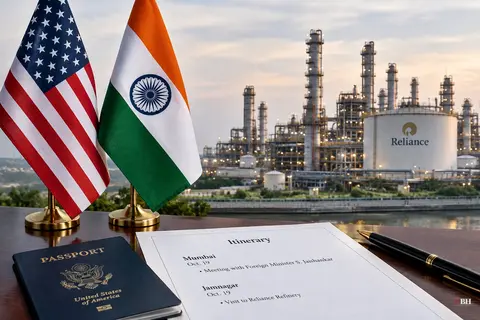
India's state oil giant ONGC has approved a major expansion of the country's strategic petroleum reserves at Mangalore, a direct response to the energy crisis triggered by the near-closure of the Strait of Hormuz during the Iran war. The project marks the first time a government-owned Indian oil producer is committing its own capital to build strategic stockpiles, not just commercial storage. Cost and timeline remain undisclosed.

Trump Faces Pressure to Rescind Obama-Era EPA Power Plant Rules as AI Energy Demand Surges

Advocates argue the EPA's 2009 greenhouse gas endangerment finding, which underpins federal power-plant regulations, is an obstacle to the electricity capacity America needs to compete in AI. The debate pits long-term grid reliability and coal reserve utilization against public health and climate commitments. No regulatory rollback has been announced as of July 10, 2026.

EGA Restarts Alumina Production at Al Taweelah, Three Months After Iranian Strike

Emirates Global Aluminium brought alumina production back online at its Al Taweelah refinery in Abu Dhabi on July 10, more than three months after Iranian attacks halted operations. Output is expected to hit 50 percent of capacity within days, with full production capability targeted by end of 2026. Repair costs have not been disclosed.