
Unbiased headlines. Facts, not spin.
Every story is an unbiased news briefing written from 110+ sources across the spectrum — sources linked so you can verify it yourself.
 energy
Notable (5/10)
July 17, 2026 at 06:35 PM
energy
Notable (5/10)
July 17, 2026 at 06:35 PM
NOAA Puts El Niño Odds at 81% for This Winter, Ski Resorts and Farmers Should Take Note Now
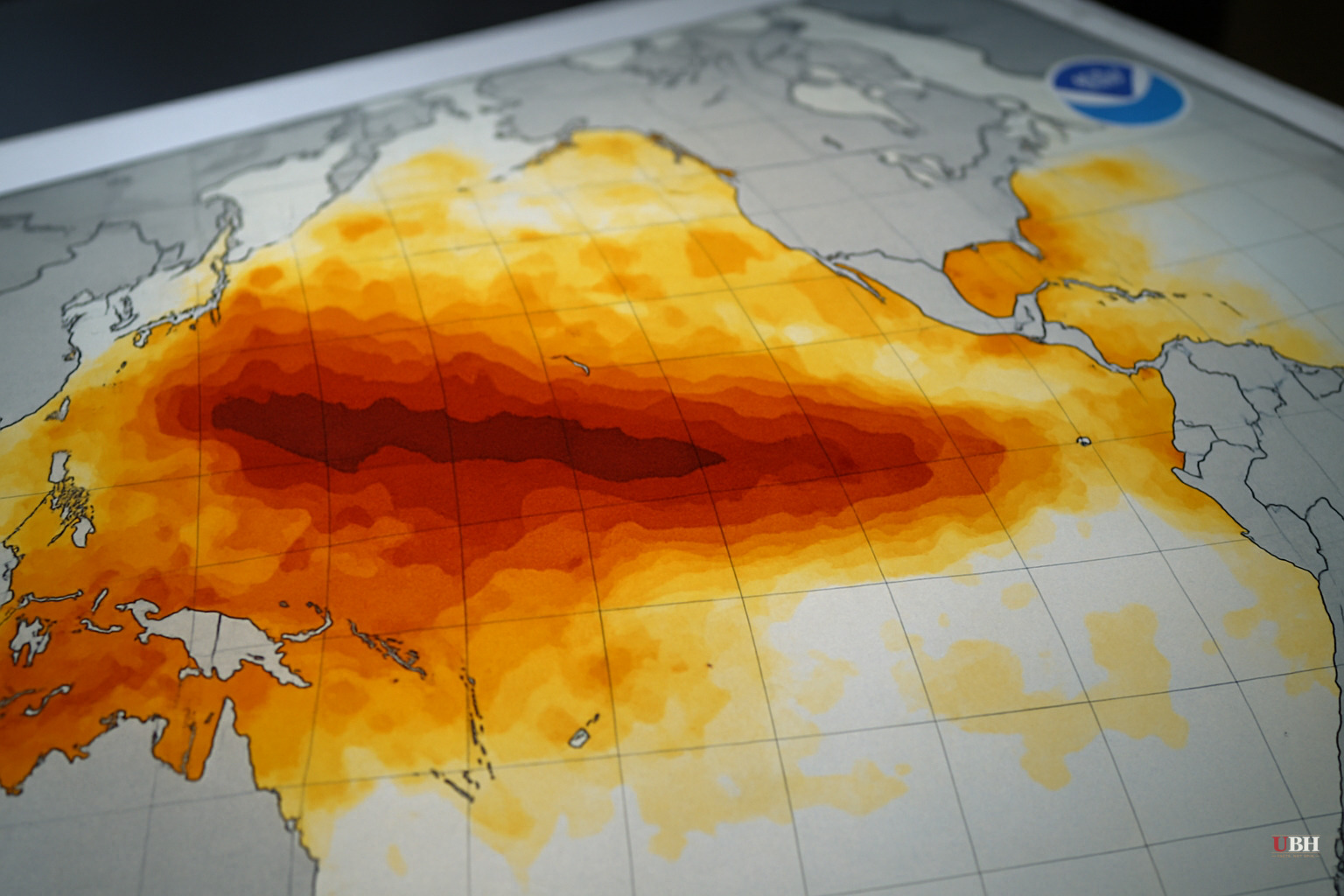
NOAA's July 16 climate models show sea surface temperatures in the Niño 3.4 region, the benchmark patch of the Pacific scientists watch to call El Niño, have hit +1.3°C above normal. That's up from +0.9°C just four weeks earlier, according to SnowBrains, which tracks the data for the ski industry. Models now project the event could peak near +2.5°C, well above last month's +1.9°C estimate.
The practical number: odds of a very strong El Niño this October through December have jumped from 60% in June to 81% in July, per SnowBrains' reporting on the NOAA update. When a model's confidence swings that hard in one month, the underlying signal is getting cleaner, not murkier.
What This Means for Ski Country
El Niño winters follow a known script. Dry and warm in the Pacific Northwest and northern Rockies. Wet in the south. That split hasn't changed since June, according to SnowBrains.
What did change: near-normal temperature signals now show up over New Mexico, Texas, and the Gulf Coast for both the October-December and December-February windows. For ski resorts in New Mexico and Arizona, near-normal temps at elevation beat above-normal every time, because it means snow that actually stays snow instead of melting into slush.
Colorado got a downgrade, not an upgrade. The above-normal precipitation signal that showed up on June's maps for Colorado has pulled back south. The state now sits in "equal chances" territory for early-season snow, meaning forecasters aren't willing to bet either way. SnowBrains is blunt about it: call Colorado's opening-day outlook uncertain, not improved.
The northern tier, Pacific Northwest, northern Rockies, Great Lakes, northern New England keeps its above-normal temperature lean for the entire winter. Warm and dry isn't a good combination for snowpack.
Farmers and Commodity Traders Are Watching Too
This isn't just a skiing story. Expana, which tracks agricultural commodity markets, has been flagging this event since NOAA's ENSO Alert System moved to El Niño Watch back in mid-March. The firm notes forecasts made this early sit inside what meteorologists call the "spring predictability barrier," a stretch when ENSO models are historically less reliable. El Niño forecasts issued in spring have missed before.
Expana's read of the pattern lines up with NOAA's own historical mapping. In the U.S., El Niño's rain tends to show up strongest late in the year and into early 2027, which could ease drought risk and help grain crops, depending on timing.
The bigger risk sits overseas. Expana reports the lag between El Niño onset and rainfall disruption is much shorter along South America's Pacific coast and in Southeast Asia, sometimes just weeks. That raises drought risk for rice and palm oil production in 2026 and 2027. India's monsoon is also a concern: the Indian Meteorological Department is forecasting below-average rainfall for the 2026 season, and Expana notes El Niño could compound that, threatening kharif crops like rice, sugar cane, cotton, and peanuts, plus irrigated wheat and oilseed crops.
Laos is already treating this as a planning issue, not a distant risk. A factsheet from the United Nations in Lao PDR calls for government institutions, UN agencies, and development partners to review contingency plans now, covering drought, flooding, and extreme heat exposure. The document doesn't forecast a specific disaster. It's a preparedness checklist, which is the sober, correct response to a probabilistic forecast rather than a guaranteed one.
NOAA is reporting probabilities, not certainties, and Expana is explicit that spring-issued ENSO forecasts carry extra uncertainty. An 81% chance still leaves a 19% chance this doesn't play out as a strong event at all. Colorado's shift from "above-normal" to "equal chances" in a single month is a live example of how fast these numbers can move.
The next real test comes with NOAA's August update, when the forecast moves past the predictability barrier that Expana flagged. Ski resorts in the Southwest and southern Rockies have real reason for optimism based on current data. Colorado's early season is a genuine coin flip. And rice and palm oil markets in Southeast Asia, along with India's monsoon-dependent crops, are the places where an accelerating El Niño could show up first and hit hardest.
Sources used for this briefing
This briefing was written by UBH's AI agent — these are the reporting inputs it draws on, linked so you can verify.


