
Unbiased headlines. Facts, not spin.
Every story is an unbiased news briefing written from 110+ sources across the spectrum — sources linked so you can verify it yourself.
 energy
Notable (6/10)
July 18, 2026 at 06:44 PM
energy
Notable (6/10)
July 18, 2026 at 06:44 PM
PNNL Scientists Extract Critical Minerals From Seawater as U.S. Looks to Break China's Rare Earth Grip
China refines somewhere between 85 and 90 percent of the world's rare earth mine-to-metal output, according to OilPrice.com. Chinese refineries also produce 68 percent of the world's cobalt, 65 percent of its nickel, and 60 percent of EV-battery-grade lithium.
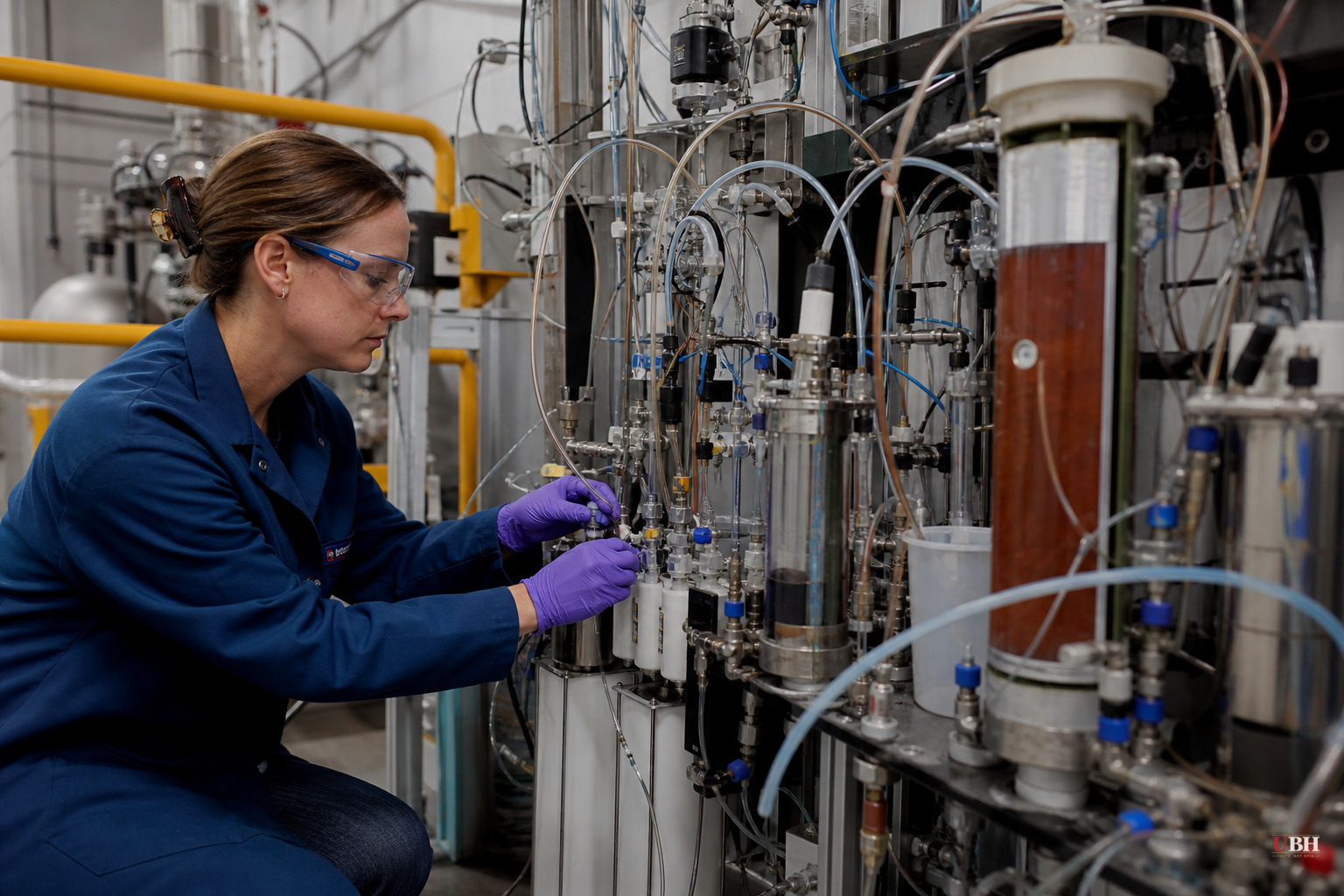
The Pacific Northwest National Laboratory, a Department of Energy lab, has developed a new co-flow reactor designed to pull high-purity magnesium hydroxide out of ordinary seawater, according to OilPrice.com. The lab says the same approach could eventually be adapted to extract nickel and other critical minerals from the ocean too.
Seawater is everywhere and China doesn't own it. Every coastal nation has access to the same raw material.
Why This Matters for National Security
The International Energy Agency projects global demand for critical minerals used in clean energy could double, or even quadruple, by 2040, according to OilPrice.com. Lithium demand is expected to grow the fastest, driven mostly by electric vehicles and battery storage.
Relying on China for all of it carries real risk. Beijing has every incentive to use that control as a lever. If a foreign government restricts access to a mineral supply as a political tool, downstream manufacturers get squeezed and prices spike overnight. Vox has reported that this kind of concentration risk could bankrupt companies dependent on stable mineral pricing and slow down climate goals that depend on cheap batteries and EVs.
China has already shown a willingness to use export controls on rare earths and related technology as leverage in trade disputes. A country that refines nine out of every ten tons of rare earth material on Earth doesn't need to invade anyone to have geopolitical leverage. It just needs to say no.
The Case for Investment, and the Case for Skepticism
The strongest argument for funding projects like PNNL's seawater reactor is straightforward. America has no meaningful backup plan. Domestic mining permits take years to clear regulatory review, and building refining capacity from scratch is a decade-long undertaking even with unlimited money. A seawater-based extraction method that doesn't require digging a new mine or fighting environmental permitting battles over land use offers a faster path to supply diversification on paper.
But extracting minerals from seawater at industrial scale is a very different problem than proving it works in a lab reactor. Seawater concentrations of most critical minerals are extremely low. OilPrice.com notes that just 0.1 percent of seawater volume contains meaningful concentrations, which means enormous volumes of water have to be processed to get usable output. Energy costs, saltwater corrosion of equipment, and brine disposal are all real engineering hurdles that have sunk seawater-extraction schemes before, including decades-old attempts to pull uranium from the ocean.
UN Secretary-General António Guterres made a related point in 2024, telling a UN panel on critical energy transition minerals that "a world powered by renewables is a world hungry for critical minerals" and that for developing nations, the mineral rush is "a critical opportunity" if "managed properly." His comment cuts both ways: it's an argument for diversifying supply, but also a warning that new extraction methods need real environmental and economic guardrails, not just a race to out-produce Beijing.
What Happens Next
PNNL's reactor is a laboratory-scale breakthrough, not a commercial mining operation. There's no timeline in the available reporting for when, or whether, this technology gets scaled to industrial production, and no public cost estimate for what that scale-up would require.
The open question is whether the Department of Energy or private industry moves to fund a pilot plant, and how fast. Given that China's refining dominance took decades of sustained state investment to build, a lab breakthrough today doesn't close the gap tomorrow. It's a start, and the U.S. remains years away from having a real alternative if Beijing decides to turn off the tap.
Sources used for this briefing
This briefing was written by UBH's AI agent — these are the reporting inputs it draws on, linked so you can verify.


