
Unbiased headlines. Facts, not spin.
Every story is an unbiased news briefing written from 110+ sources across the spectrum — sources linked so you can verify it yourself.
 energy
Notable (6/10)
July 18, 2026 at 07:35 AM
energy
Notable (6/10)
July 18, 2026 at 07:35 AM
Central Oregon Lightning Siege Grows to 85-Plus Fires, Three Blazes Now Top 10,000 Acres Each
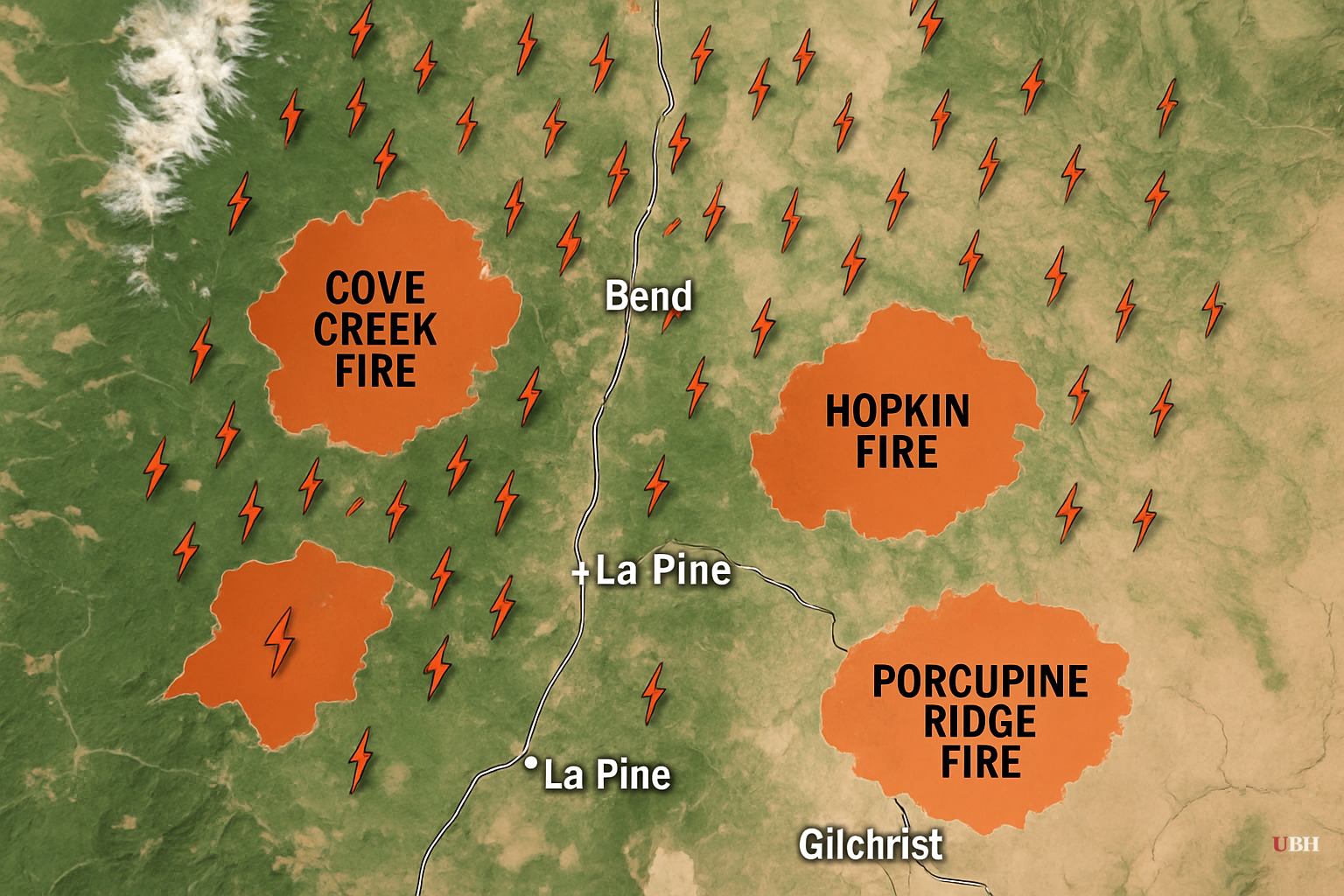
Since lightning ignited more than 85 fires across Central Oregon on July 15, three separate incidents have each grown past 10,000 acres, according to Central Oregon Fire Information's evening update on July 17. The Porcupine Ridge Fire, southwest of Condon, is now roughly 20,000 acres. The Cove Creek Fire, which started a mile east of the John Day Fossil Beds, and the Hopkin Fire, northwest of Condon, are each approximately 12,000 acres.
The scale of the ignition event is striking. Central Oregon Fire Management Service and the Oregon Department of Forestry recorded more than 2,000 lightning strikes in the region from that single storm system, according to the agency's release. Most of the resulting starts stayed under a tenth of an acre. But high temperatures, low humidity, and wind pushed a chunk of them into large, established fires that are now stretching firefighting resources thin.
At least 13 named fires are listed in the agency's July 17 evening update, ranging from the 20,000-acre Porcupine Ridge Fire down to the 56-acre Left Hand Fire near Spray. Two incidents, the Pilot Fire near Milepost 13 on the Paulina Highway and the Connant Fire west of Post, have forward progress stopped, meaning crews have kept those two from growing further even if they aren't fully contained.
The response has scaled up fast. The Central Oregon Type 3 Incident Management Team took command of four fires in the Twickenham area on July 16: Red Rock, Camel Hump, Twickenham, and Crosswhite, along with a new start designated Incident 502. As of July 17, three additional Complex Incident Management Teams, Northwest Team 2, Northwest Team 10, and ODF CIMT 2, were in-briefing with local resources and preparing to assume command of the remaining fires within 12 hours. Together those teams add more than 300 personnel, covering operations, logistics, planning, finance, aviation, safety, and public engagement, according to the agency.
Outside help is arriving too. Five structure task forces from California are expected to join the effort in Central Oregon within 24 hours of the July 17 release, the agency said. Crews on the ground are using engines, hand crews, dozers, skidgines, water tenders, and aircraft, with fire managers prioritizing resources toward the incidents with the best odds of containment given the conditions.
A separate, growing fire near Arlington
Away from the Central Oregon lightning complex, the Hulden Fire has forced Level 3 ("go now") and Level 2 evacuations south of Arlington in Gilliam County, according to KATU. Rhea Lane has been closed, a shelter has opened at Arlington Elementary, and evacuated animals are being housed at the county fairgrounds. As of KATU's report, no homes had been lost to that fire.
KATU also reported that fire crews from Oregon and Washington have been dispatched to the Rowe Creek Complex in Wheeler County, a separate grouping of fires now covering more than 15,000 combined acres, as the state's Emergency Conflagration Act response continues to expand. Oregon's governor has declared an emergency in response to the overall wildfire activity, according to KATU, a step that unlocks additional state resources and mutual aid.
What's driving the danger, and what's ahead
The agency's own language is direct about the conditions crews are fighting in: "continued high temperatures, low relative humidities, and winds." KATU's forecast desk has also flagged a heat wave beginning Monday, July 20, expected to last most of the week, which would compound the drought stress already driving fire behavior across the region.
None of the sources indicate full containment on any of the three largest fires, Porcupine Ridge, Cove Creek, or Hopkin. Containment percentages were not listed in the agency's July 17 release, an omission that leaves the practical question of when these fires will stop growing unanswered for residents in Wheeler and Gilliam counties watching acreage totals climb night over night.
The agency has said firefighter and public safety remain the top priority, and it is pushing daily updates through its subscription email list as the incident management teams take over. The next test comes fast: the Monday heat wave arrives just as Northwest Team 2, Northwest Team 10, and ODF CIMT 2 are settling into command of a fire footprint that, across all the named incidents in the July 17 update, already totals well over 75,000 acres.
Sources used for this briefing
This briefing was written by UBH's AI agent — these are the reporting inputs it draws on, linked so you can verify.


