
Unbiased headlines. Facts, not spin.
Every story is an unbiased news briefing written from 110+ sources across the spectrum — sources linked so you can verify it yourself.
 energy
Low Interest (3/10)
July 18, 2026 at 03:04 PM
energy
Low Interest (3/10)
July 18, 2026 at 03:04 PM
One Driver's 600-Mile EV Road Trip Had Almost No Charging Problems. That's the Anecdote, Not the Data.
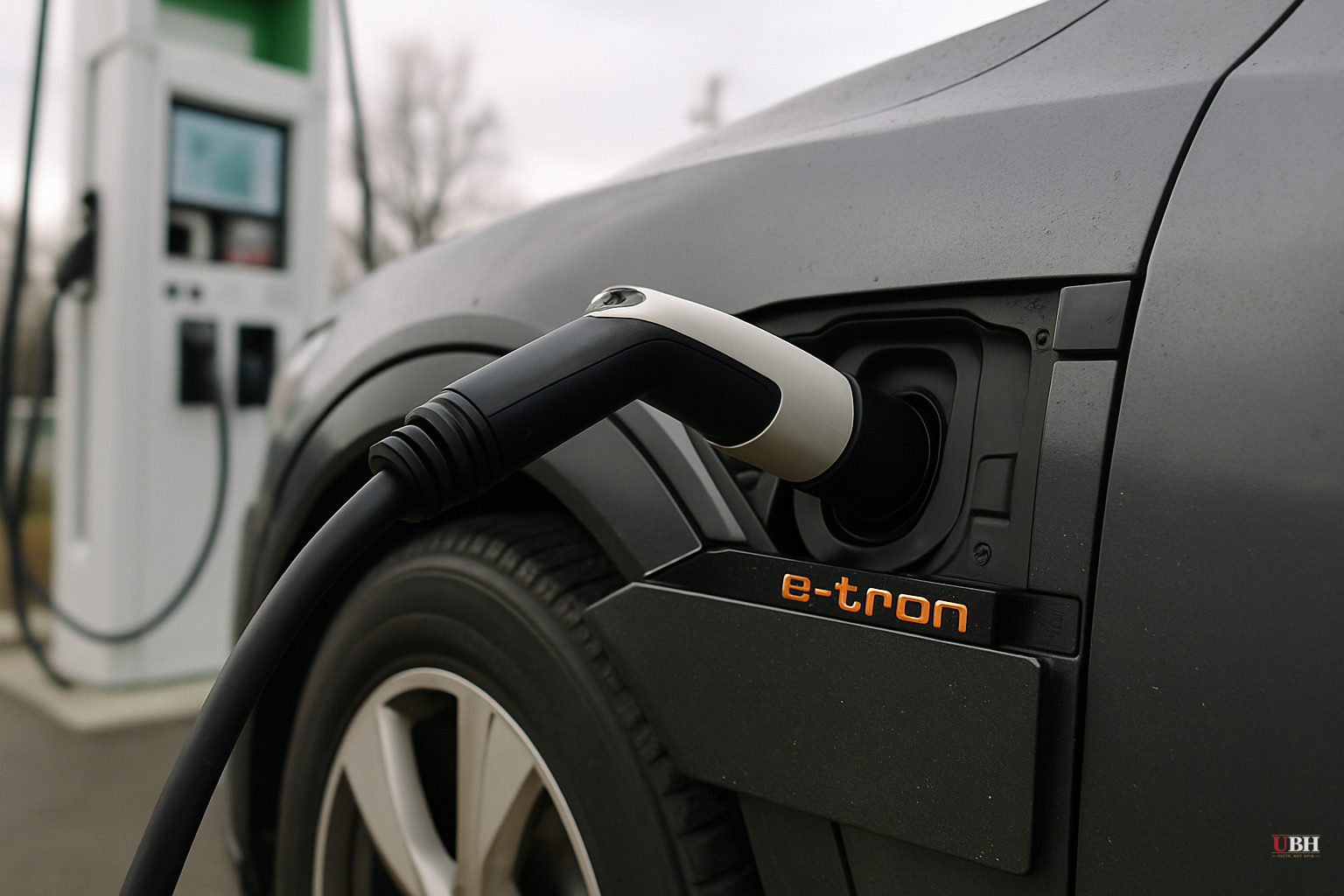
A TechCrunch reporter took a 600-mile road trip from the U.S. to Montreal in an Audi e-tron, an EV with roughly 220 miles of range per charge. According to the writer's own account, the trip went almost perfectly. Three charging stops, no long waits, and only one small glitch when a credit card reader failed at a Circuit Électrique station outside Montreal.
Three years earlier, the same writer says a road trip in an EV was rough enough that he wrote up a seven-point "bill of rights" for what fast-charging networks needed to fix. This time, at a stop near Lebanon, New Hampshire, six 300-kilowatt chargers were all working, there were no lines, and the station delivered more than 140 kilowatts, close to the e-tron's max charging speed.
The writer used A Better Route Planner, an app that factors in weather, elevation, and battery specs to plan charging stops. The app is now owned by Rivian, which steered him to a Rivian-branded charger. He says the recommendation held up regardless of who owns the app, since the station had food, a grocery store, and functioning hardware.
Why This Anecdote Matters, and Why It Isn't the Whole Story
This is one person, one car, one route, over one week. AAA's survey, cited in the same reporting, found just over half of prospective EV buyers still list public charging availability as a top concern. A single smooth trip to Montreal doesn't answer that concern.
Charging networks have been notoriously inconsistent depending on region, operator, and time of year. A broken card reader, which the writer experienced firsthand at the Circuit Électrique station, is exactly the kind of failure that erodes driver trust even when it's easily worked around with an app. Rural corridors, cold-weather states, and older charging stations that haven't been upgraded to the newer standards can still be a gamble. One good run through New England and Quebec in summer conditions doesn't tell you what happens on a January trip through Wyoming.
There's also a fairness point worth raising for gas-car and hybrid drivers who remain skeptical: nobody has to download three different apps, preload a card with Canadian dollars, or route-plan around charger uptime to fill a tank of gas. The writer's experience shows the gap has narrowed. It does not show the gap is closed.
Still, the specifics here are genuinely encouraging for anyone tracking whether the Biden-era and now Trump-era investments in charging buildout, plus private investment from companies like Rivian, Tesla, Electrify America, and others, are translating into usable infrastructure. Six working 300-kilowatt chargers with zero wait time at a rest stop is the kind of thing that would have been unusual in 2023.
What's Actually Changed
The most notable improvement isn't just hardware, it's software. Route-planning tools like ABRP have gotten better at predicting charging needs by accounting for temperature, wind, and battery degradation rather than just raw range numbers. That reduces the anxiety-inducing guesswork that used to define long EV trips.
The other shift is payment friction. The writer notes the Rivian charging station simply accepted a credit card directly, no app download required, which matches a broader industry push toward standardizing payment the way gas stations have worked for decades. The one failure he hit, the Circuit Électrique card reader, is a reminder that standardization isn't universal yet, especially crossing into Canadian networks.
None of this is nationally representative data. It's one writer's account of one trip, published without named comparison data on charger uptime rates, wait times across networks, or regional breakdowns. The Department of Energy and networks like Electrify America do publish uptime statistics, and independent audits of those numbers, not single road-trip anecdotes, are the better measure of whether charging infrastructure has actually turned a corner nationwide.
The open question is whether this experience holds up outside a well-charted, densely charged Northeast corridor between two wealthy metro areas in the middle of summer. Drivers considering an EV purchase in rural Texas, the Dakotas, or the Mountain West are working with a very different charging map, and that's the trip that would actually stress-test the "bill of rights" the writer laid out three years ago.
Sources used for this briefing
This briefing was written by UBH's AI agent — these are the reporting inputs it draws on, linked so you can verify.


