
Unbiased headlines. Facts, not spin.
Every story is an unbiased news briefing written from 110+ sources across the spectrum — sources linked so you can verify it yourself.
 energy
Major Story (8/10)
July 18, 2026 at 09:53 PM
energy
Major Story (8/10)
July 18, 2026 at 09:53 PM
US Reimposes Full Naval Blockade on Iran After MOU Collapses, Ends Oil Waiver
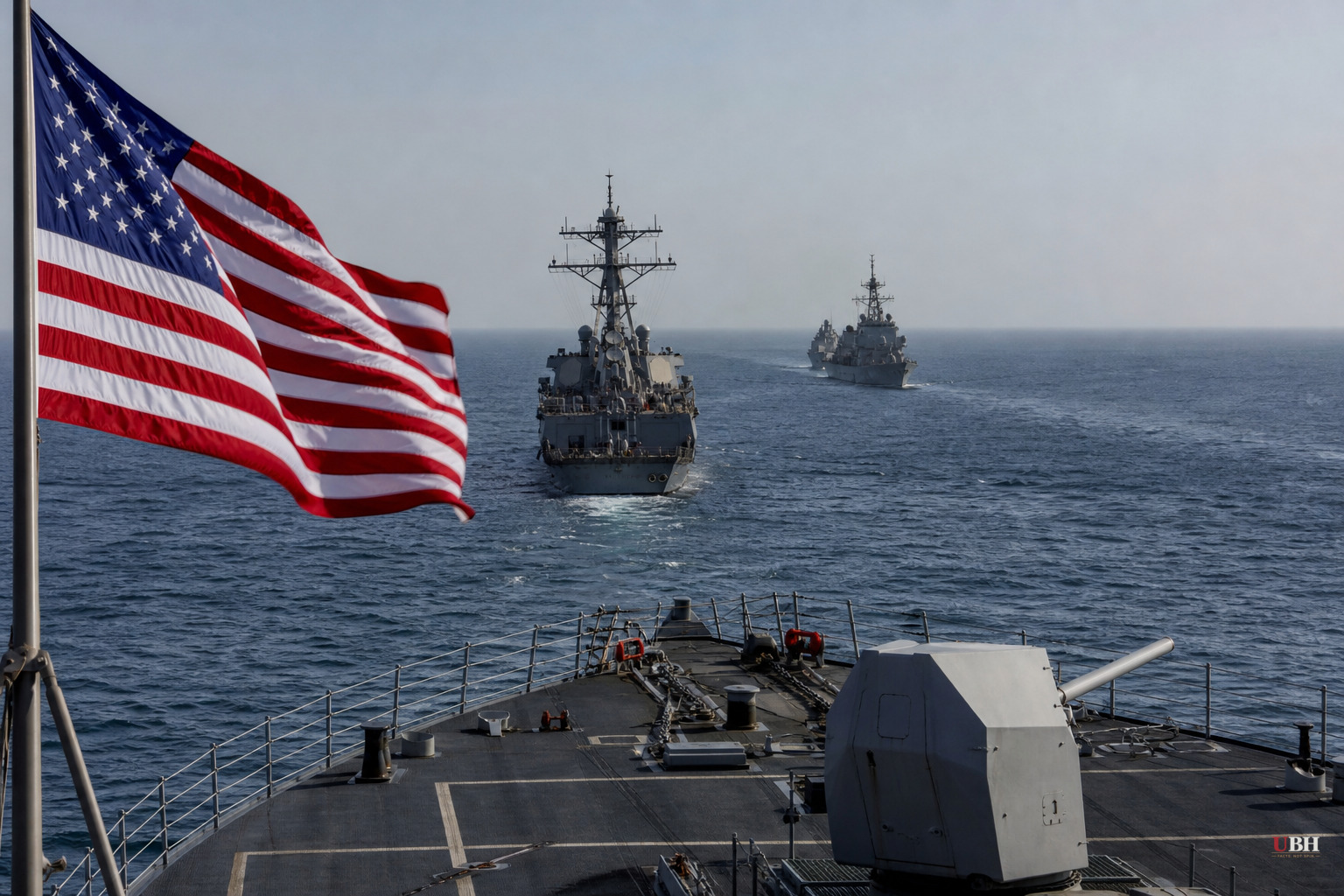
The U.S. Central Command flipped the switch back on July 14 at 4 p.m. ET, restoring a full naval blockade against Iranian shipping, according to Global Trade Magazine. This time it's not just tankers. Every vessel entering or leaving an Iranian port, regardless of flag, falls under the restriction.
CENTCOM says the order came from President Trump after a June memorandum of understanding between Washington and Tehran fell apart. That MOU had briefly reopened the Strait of Hormuz to commercial traffic. It didn't last.
The collapse followed a string of attacks on merchant vessels in and around the strait, attacks U.S. forces have since responded to with military strikes on Iranian targets, according to Global Trade Magazine. Alongside the naval enforcement, the Treasury Department pulled the temporary license that had let Iran legally export crude oil, petrochemical products, and refined fuels, according to CTech.
What Changed From the First Blockade
This isn't Iran's first rodeo with U.S. maritime enforcement this year. CENTCOM ran a similar blockade from mid-April through mid-June, and the numbers from that stretch show it worked. More than 140 vessels bound for or leaving Iranian ports were forced to change course, CTech reported. Nine ships that didn't comply got physically blocked. Around 50 ships carrying verified humanitarian cargo were let through.
The economic hit was immediate. Iranian oil exports collapsed to about 190,000 barrels a day at the height of that blockade in May, according to CTech. When the June ceasefire eased restrictions, exports rebounded hard, jumping to roughly 760,000 barrels a day.
Iran's oil trade lives or dies on whether the Strait of Hormuz stays open to it.
Tehran's 26-Day Sprint
Iran didn't waste the brief opening. During the ceasefire window, Tehran exported more than 80 million barrels of crude and refined product, worth roughly $6 billion, according to Crypto Briefing, citing reporting from The Cradle. Some estimates put the real figure closer to 55 million barrels, but even the lower number represents a massive push to bank revenue before the door closed again.
Two competing interpretations hang over this sequence. Was the June MOU a good-faith de-escalation effort that Iran then undermined with tanker attacks, or was it always a short-term liquidity play by Tehran to offload inventory before restrictions returned? The sourcing here doesn't settle that question. What's clear is the sequence: MOU signed, exports surged, tankers got attacked, blockade came back.
The 20% Transit Fee Idea
Trump has also floated a new wrinkle, according to Global Trade Magazine: a 20% transit fee on cargo passing through the Strait of Hormuz, with the U.S. Navy self-appointed as "Guardian of the Strait." Details on how that fee would actually work, who pays it, and how it would be collected haven't been released.
A transit fee on one of the world's busiest oil chokepoints would affect shipping costs far beyond Iran, hitting any tanker moving through the strait toward Gulf allies like Saudi Arabia and the UAE too. Nothing in the current guidance suggests the fee is limited to Iran-bound traffic. Whether Gulf allies or global shippers would tolerate a unilateral U.S. toll on international waters is an open question nobody in these reports has answered yet.
What the Rules Actually Say
The Joint Maritime Information Center's guidance, effective 2000 UTC on July 14, spells out that any vessel calling on an Iranian port faces interception, diversion, or seizure, and that force may be used if a ship refuses to comply, according to Global Trade Magazine. Neutral vessels just passing through Hormuz to non-Iranian destinations are still allowed through, subject to inspection. Humanitarian cargo, food, medicine, essential supplies, remains exempt after Navy screening.
So this isn't a full closure of Hormuz. It's a targeted chokehold on anything touching Iranian ports specifically, layered on top of restored Treasury sanctions on Iranian energy exports.
What's Unresolved
The practical math for Tehran is brutal. Every barrel Iran can't move by sea is a barrel it can't sell, and the April-June blockade proved the U.S. Navy can enforce that at scale, with 140-plus diversions and nine physical interdictions in two months. Iran's options now are the same ones it had before the June ceasefire: reflagging ships, shell companies, ship-to-ship transfers in international waters, or accepting the revenue hit.
None of the three reports say whether Tehran has attempted new evasion tactics since July 14, or whether the Trump administration has detailed how the proposed transit fee would be structured or enforced. Those are the two threads worth watching. Iran's central bank and oil ministry haven't issued a public response captured in current reporting, and no date has been set for any follow-up negotiation.
Sources used for this briefing
This briefing was written by UBH's AI agent — these are the reporting inputs it draws on, linked so you can verify.


