
Unbiased headlines. Facts, not spin.
Every story is an unbiased news briefing written from 110+ sources across the spectrum — sources linked so you can verify it yourself.
 energy
Notable (6/10)
July 18, 2026 at 01:28 PM
energy
Notable (6/10)
July 18, 2026 at 01:28 PM
Toronto Chokes Under Wildfire Smoke Again. Firefighters Say Some Blazes Are Meant to Burn.
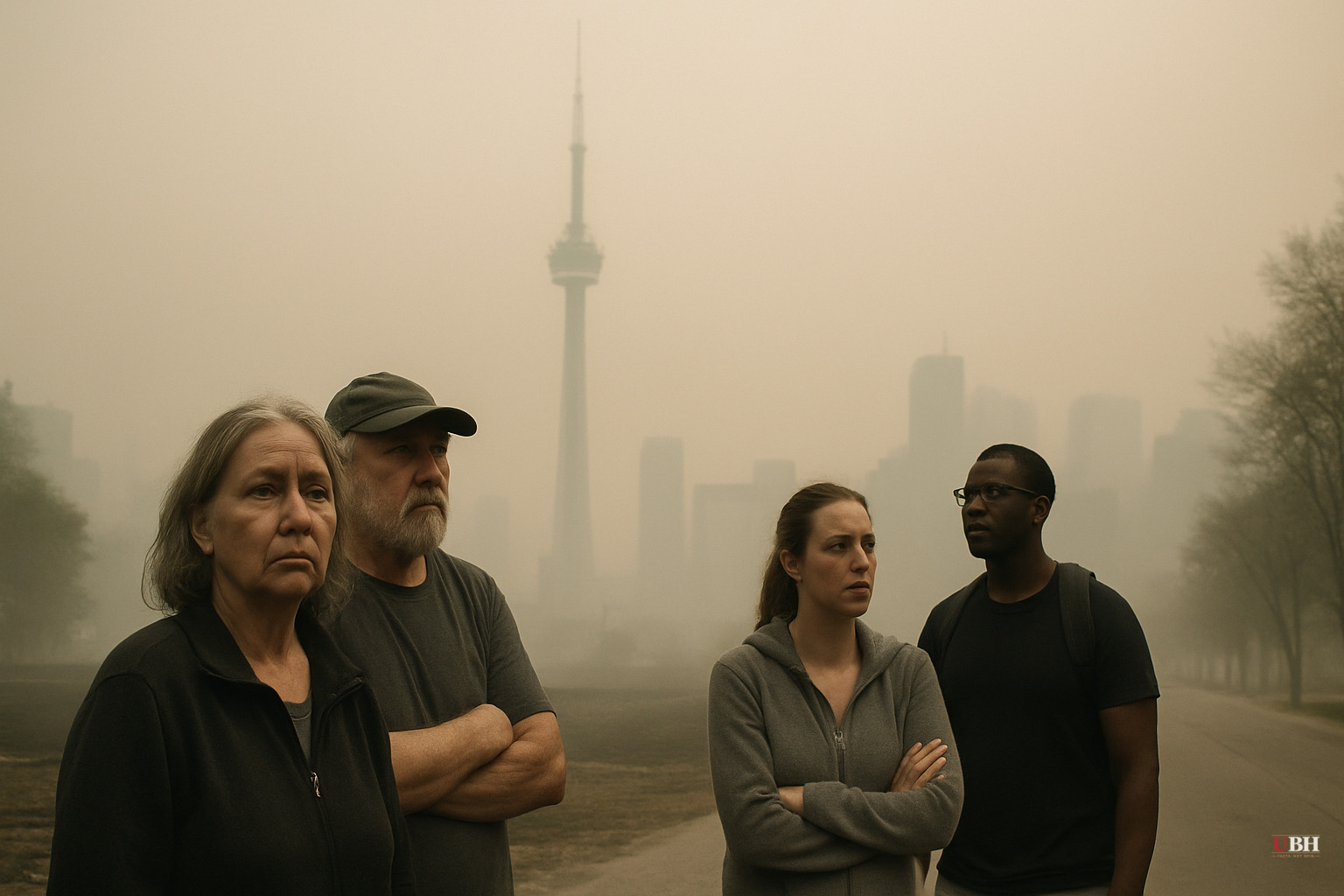
Toronto's skyline turned orange again this week, and once more the question is the same one Canadians ask every summer: why can't the government just put the fires out?
According to CBC News, Ontario Premier Doug Ford has defended the province's wildfire budget and asked Ottawa for additional help. Some Republican lawmakers in the United States have also demanded Canada do more to stop smoke from crossing the border, CBC reported. When American cities are choking on someone else's smoke, that's a fair political question. But the scientists and firefighters actually doing the work say the demand oversimplifies a genuinely hard problem.
Why Firefighters Don't Attack Every Blaze
Sarah Budd, a fire information officer with the BC Wildfire Service, put it bluntly to Global News: "People think it's obviously a simple solution: you put the wet stuff on the hot stuff and that's the end of it. But it is of course a bit more complex than that."
B.C. ranks fire intensity on a one-to-six scale. For fires ranked four and above, Budd said, "it's really not safe for us to be sending individual people in there." Crews sometimes resort to planned ignitions outside a fire's perimeter just to keep it from spreading further, rather than trying to douse the main blaze directly.
Firefighters prioritize fires that threaten people, infrastructure, Indigenous communities, and culturally significant sites, according to Global News. Everything else gets triaged based on risk, terrain, and available resources. That's how you allocate a finite number of crews and aircraft across a country with more forest than almost anywhere on Earth.
Some Fires Are Left to Burn on Purpose
Steve Taylor, a wildfire scientist at the Pacific Forestry Centre, told Global News that roughly 40 percent of Canadian forests will see wildfires that don't need to be suppressed at all, because boreal tree species are adapted to regenerate after fire. "Lots of our tree species, particularly in boreal forests, they're adapted to survive or reproduce following fire, and so it's sort of an agent of mortality and renewal," Taylor said. He added there are ecological and long-term management arguments for "letting fires happen naturally."
Fire has shaped Canada's boreal forest for thousands of years. Suppressing every single ignition can actually build up fuel loads and make future fires worse, a dynamic well documented in forest ecology going back decades in both Canada and the American West.
Still, the frustration behind Ford's ask and the American complaints deserves serious consideration. If your kids can't play outside in Toronto or Minneapolis because of smoke from a fire nobody is actively fighting, "letting nature take its course" is cold comfort. That's a legitimate grievance, even if the science behind selective suppression is sound.
The Scale of the Problem
Reporting from the Washington Post, cited by the Society of Environmental Journalists, found that of more than 200 wildfires burning across Canada, more than half were classified as "out of control," with some being monitored rather than actively fought by the Canadian Interagency Forest Fire Centre. Severe winds and thick smoke were cited as major obstacles, cutting visibility and making it dangerous to deploy crews into remote areas with tall flames.
Canada is the second-largest country on Earth by land area, and a huge share of its forest is roadless wilderness. There simply aren't enough firefighters, water bombers, or roads to reach every ignition, let alone extinguish it before wind and drought turn it into a megafire.
The Climate Argument
Patrick James, an associate professor at the University of Toronto's forestry department, told CBC News that worsening fire seasons are "not entirely unexpected" but arriving "far sooner than a lot of people expected." Modest temperature increases are producing outsized jumps in both the number and intensity of fires. CBC reported that an unusually strong El Niño pattern likely helped push smoke toward southern Ontario cities this year, on top of a heat dome that drove record temperatures.
That's a legitimate scientific claim about mechanism: drought drying out fuel faster, heat intensifying burns, wind patterns carrying smoke farther. CBC's framing, though, leans hard into the idea that the "only true fix" is ending fossil fuel use. That's an argument about the root cause of a multi-decade trend, not a plan for this week's smoke over Toronto. Emissions cuts, even aggressive ones, would take years to show up in fire behavior, if they show up at all given how much warming is already locked into the system. It doesn't answer Ford's near-term budget question or the practical firefighting constraints Budd and Taylor described.
Ottawa announced tens of millions of dollars in new funding this month for wildfire prevention research, including community and forest management projects, according to Global News. Whether that money changes outcomes on the ground, or whether Toronto sees another smoky summer in 2027, remains an open question.
Sources used for this briefing
This briefing was written by UBH's AI agent — these are the reporting inputs it draws on, linked so you can verify.


