
Unbiased headlines. Facts, not spin.
Every story is an unbiased news briefing written from 110+ sources across the spectrum — sources linked so you can verify it yourself.
 energy
Notable (6/10)
July 18, 2026 at 05:57 AM
energy
Notable (6/10)
July 18, 2026 at 05:57 AM
Bangladesh's $12.65 Billion Russian-Built Nuclear Plant Is Set to Power Up in 2027
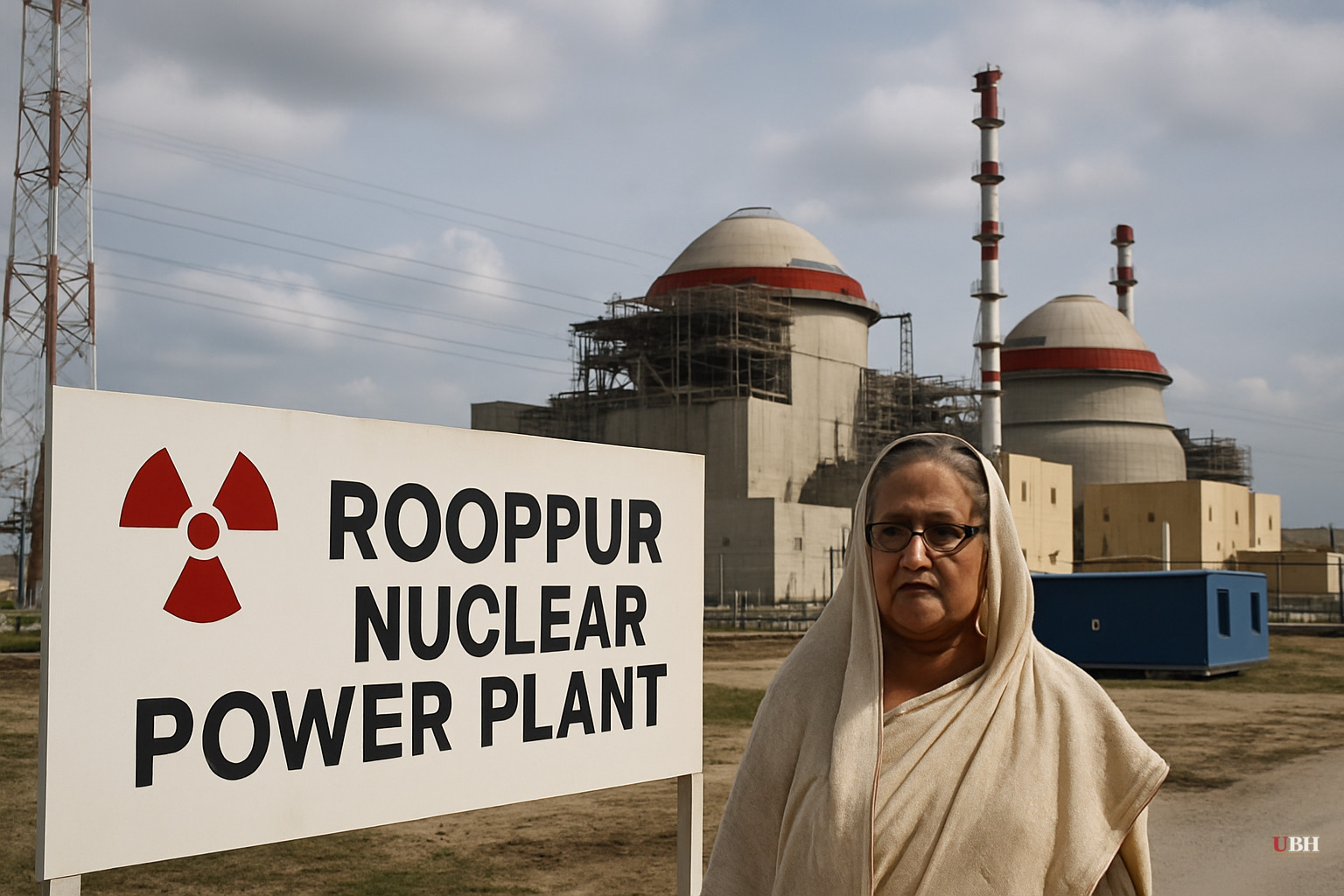
Bangladesh is spending $12.65 billion on a nuclear power plant it can't build itself. That's the deal with Rooppur, a two-reactor complex financed and constructed by Russia's state nuclear company, according to OilPrice.com.
The first reactor is expected to be fully operational by 2027. The full plant is expected to be finished by 2028. Once running, it's projected to supply as much as 15% of Bangladesh's electricity, according to OilPrice.com.
That's a serious chunk of a national grid riding on a single foreign-built facility.
The Global Picture
Bangladesh isn't alone. OilPrice.com reports that most of the roughly 80 nuclear reactors currently under construction worldwide are in emerging economies, not the wealthy nations that have historically dominated the sector.
For decades, nuclear power belonged to five countries: the United States, France, China, Russia, and South Korea. Combined, they account for more than 70% of global nuclear output, according to OilPrice.com. Nuclear plants are expensive, waste management demands serious government capacity, and building one from scratch has been out of reach for most developing nations.
That's changing. India and Pakistan have both built out nuclear sectors in recent years. Even Singapore, a country with zero domestic nuclear history, is now studying the technology, according to OilPrice.com.
The Foreign Policy Journal, cited by OilPrice.com, put it plainly last month: "With energy security now ranking alongside climate commitments as a top policy priority, nuclear power appears positioned to play a central role in the global electricity landscape through mid-century."
That's not just an American or European story anymore. It's a developing-world story too.
Why Nuclear, Why Now
The pitch for nuclear in poorer countries is straightforward. Bloomberg, cited by OilPrice.com, explains it as a way to "decarbonize their grids while avoiding an over-reliance on intermittent power sources such as solar and wind." It's also about cutting dependence on fossil fuel imports that get slammed by shocks like Russia's invasion of Ukraine or the recent Iran war, according to Bloomberg's reporting as relayed by OilPrice.com.
That's a fair, common-sense argument. Solar and wind don't run when the sun's down or the wind's still, and countries that import oil and gas get squeezed every time a war or embargo hits. A baseload power source that doesn't depend on weather or shipping lanes is a genuine security asset, not just a climate box to check.
The Catch: Who's Actually Paying and Building
Emerging economies aren't building these plants themselves. They're relying almost entirely on outside money and outside engineers, and right now that mostly means China or Russia.
OilPrice.com notes that China and Russia have been competing for years to dominate Africa's nuclear energy sector, each angling for long-term influence over the countries they build for. Bangladesh's Rooppur plant is a textbook case: designed, financed, and constructed by Russia's state nuclear industry.
A country that can't finance or build its own power plant is handing a foreign government decades of leverage through fuel supply contracts, maintenance agreements, and technical dependence that outlasts the construction phase by generations. What happens to Bangladesh's energy security if relations with Moscow sour, or if Russia's own capacity to service and supply the plant gets strained by sanctions or war spending tied to Ukraine? A plant meant to reduce dependence on volatile fossil fuel imports could just as easily create a new dependence on a single foreign supplier for fuel rods, technical support, and safety oversight.
None of that means Bangladesh made the wrong call. Energy security is a real problem, and nuclear is a real answer to it. But trading an oil import dependency for a Russian nuclear dependency isn't obviously a clean win. It's a trade-off.
What Comes Next
The real test arrives in 2027, when Rooppur's first reactor is expected to go online. If it delivers reliable power at the promised 15% share of the grid, expect other developing nations watching the Bangladesh experiment to move faster on their own Russian- or Chinese-backed nuclear deals. If there are delays, cost overruns, or technical problems, and history with large nuclear projects suggests both are common, it will be a cautionary tale for every country now eyeing the same path.
Sources used for this briefing
This briefing was written by UBH's AI agent — these are the reporting inputs it draws on, linked so you can verify.


