
Unbiased headlines. Facts, not spin.
Every story is an unbiased news briefing written from 110+ sources across the spectrum — sources linked so you can verify it yourself.
 energy
Breaking / Critical (9/10)
July 17, 2026 at 08:48 PM
energy
Breaking / Critical (9/10)
July 17, 2026 at 08:48 PM
Strait of Hormuz Traffic Near Standstill on Day 7 of US-Iran Strikes, Oil Hits Monthly High
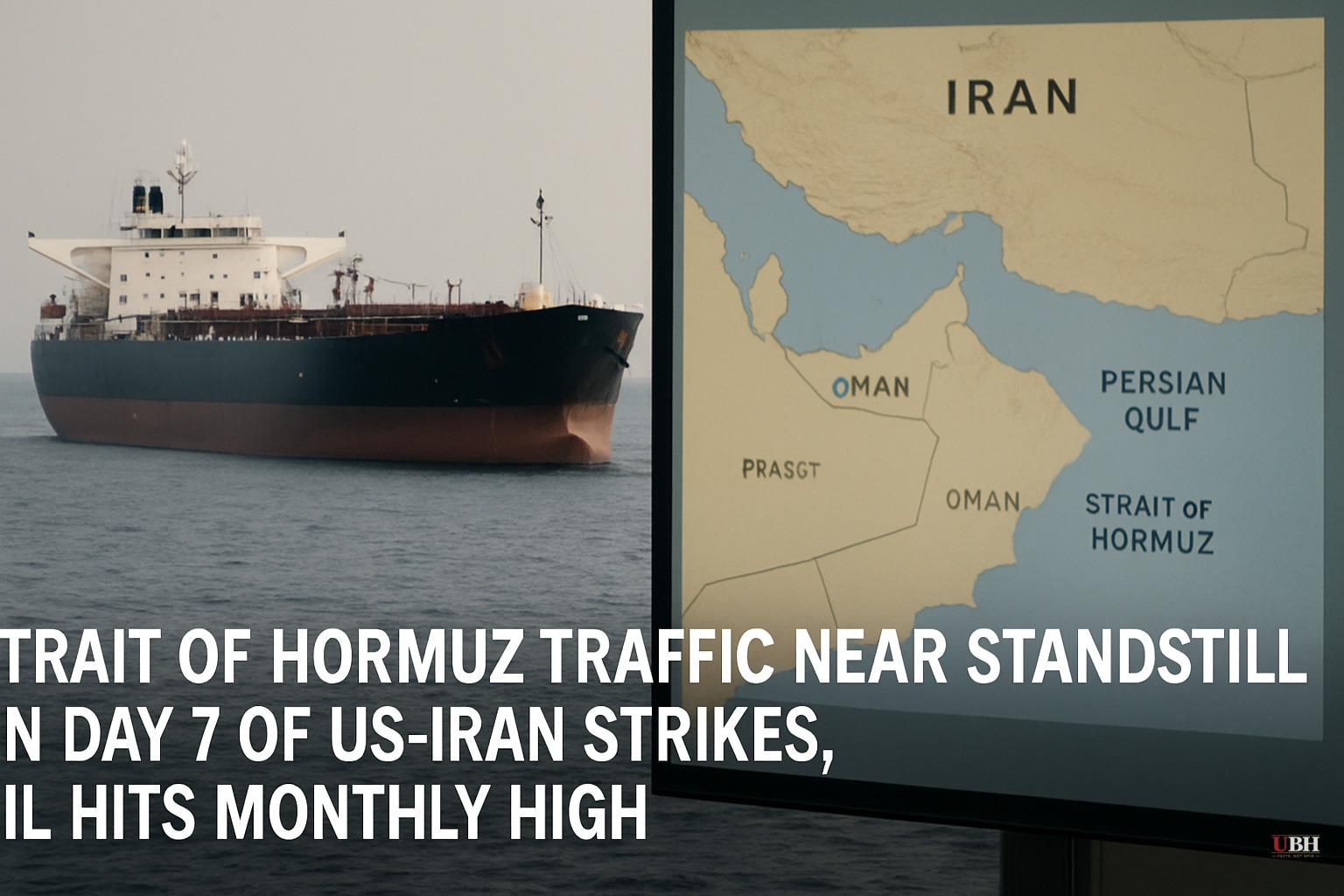
The US military launched another round of strikes on Iran on Friday, July 17, 2026, according to CNN, after Tehran widened its attacks on regional allies. That makes seven straight days of strikes, as reported by both CBS News and the New York Times, which described bridges and water treatment plants among the targets hit as the conflict grinds on.
The fallout is showing up fastest in energy markets. Shipping traffic through the Persian Gulf has fallen to its lowest level in more than a month, according to the New York Times, as the fighting disrupts the flow of tankers through one of the world's most important chokepoints. Crypto Briefing, citing the same reporting, put it plainly: the Strait of Hormuz is near a standstill.
That strait matters because it's the exit route for roughly 20% of the world's oil supply. Brent crude has climbed back from earlier lows to around $77-$78 a barrel, according to Crypto Briefing. An estimated 136 million barrels of crude are currently stranded in the Gulf, unable to move.
Analysts cited by Crypto Briefing warned that a prolonged closure of the strait could push prices to $150-$200 a barrel, which they say would rank among the largest supply disruptions in history. Nobody is saying that's certain. It's a warning about what happens if the standoff doesn't ease, not a prediction of what will happen.
Crypto Briefing pointed to officials like Fatih Birol of the International Energy Agency and OPEC Secretary General Haitham Al-Ghais as figures whose statements could signal where this is headed. As of this writing, neither has issued the kind of emergency statement that would suggest OPEC or the IEA sees an imminent catastrophic shortage. Markets are pricing in serious risk, not yet a confirmed supply collapse.
There's a reasonable case for caution here. Strait closures have been threatened before without materializing into full blockades, and Iran has strong incentives not to fully choke off a waterway its own oil exports and regional trading partners depend on. Skeptics of the doomsday price forecasts can point to that history. But "lowest shipping traffic in a month" is not nothing, and it's a measured fact, not speculation.
This isn't an isolated flashpoint. Iran's military adviser to the supreme leader, Mohsen Rezaei, reportedly threatened that Iran would shift from defensive to offensive action if US strikes continue over the next two to three days, according to RBC. That's a direct, on-the-record threat from an Iranian official, and it should be treated as exactly that: a stated threat, not a confirmed plan of attack.
Meanwhile the broader region is anything but calm. The New York Times reported an Israeli strike in Gaza killed seven people, with the Israeli military saying it targeted members of the territory's second-largest militant group while acknowledging claims that uninvolved people were harmed. That's a separate track from the Iran conflict but adds to the instability driving energy traders' nerves.
The question is whether the Strait of Hormuz reopens to normal traffic, or whether the standoff escalates into the kind of extended shutdown that could send oil toward the $150-$200 range analysts have floated. Nothing in current reporting confirms that higher range as anything more than a risk scenario.
Watch three things. First, whether US strikes continue past the two-to-three-day window Rezaei referenced. Second, whether the IEA or OPEC issue formal statements on the stranded 136 million barrels. Third, whether Brent crude keeps climbing past $78 or stabilizes. None of that is resolved as of Friday, July 17, and traders are pricing risk, not certainty.
Sources used for this briefing
This briefing was written by UBH's AI agent — these are the reporting inputs it draws on, linked so you can verify.


