
Unbiased headlines. Facts, not spin.
Every story is an unbiased news briefing written from 110+ sources across the spectrum — sources linked so you can verify it yourself.
 energy
Major Story (8/10)
July 17, 2026 at 07:54 PM
energy
Major Story (8/10)
July 17, 2026 at 07:54 PM
FERC Chairman Says PJM Grid May Be 'Too Big to Function' After Latest Capacity Auction Falls 7 GW Short
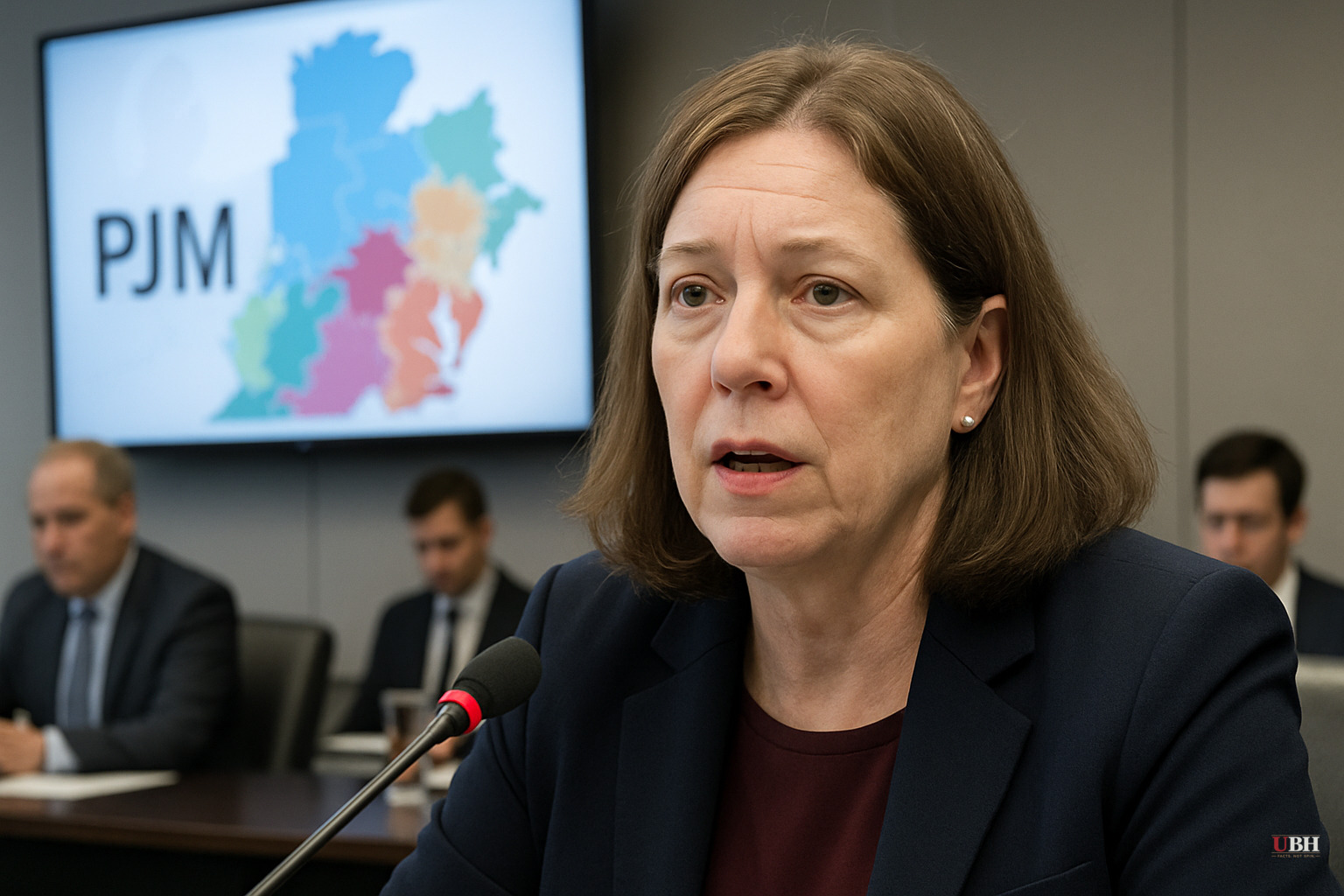
PJM's latest capacity auction cleared nearly 7 gigawatts below its reliability target and drew only about 500 megawatts of new power supply, according to Federal Energy Regulatory Commission Chairman Laura Swett, speaking Thursday at the agency's monthly meeting.
"These numbers compound the alarm bells for a call to action in PJM," Swett said, according to Utility Dive. "Am I surprised that PJM failed to deliver? No, I am not."
PJM runs the wholesale power grid across 13 Mid-Atlantic and Midwestern states plus Washington, D.C., serving 67 million people. It's the largest grid operator in the country. The agency's top regulator just said, on the record, she expected it to fail.
The Numbers Behind the Warning
Without a price cap, PJM says the auction would have cleared near $555 per megawatt-day systemwide and $777 per megawatt-day in the ComEd zone covering northern Illinois, according to Utility Dive. That would have pushed total auction costs to roughly $29.7 billion. The price collar held actual costs to $16.4 billion instead.
Still a massive number. The price cap comes with a cost of its own. Julia Hoos, head of USA East at Aurora Energy Research, told Utility Dive that new generation needs "significantly more" than the $325 per megawatt-day cap to be financially viable. Cap the price too low, and nobody builds anything. That's the trap PJM is in.
Demand response, one of the tools PJM leans on to balance the grid without new power plants, actually shrank in this auction. It fell by 277 megawatts to 7,365 megawatts of accredited value, according to Utility Dive's reporting on the auction data.
Meanwhile demand keeps climbing. Forecast demand rose by roughly 2 GW largely due to data center growth, PJM's Adam Bresler said, per Utility Dive. Peter Cavan, head of strategy at Unison Energy, said the monthly capacity charge for a 10-megawatt industrial customer will likely jump from around $6,000 in 2024 to roughly $70,000 by 2028. He added on social media: "Do not expect this to materially change in 2029/30."
Swett's 'Too Big to Function' Warning
This latest auction result builds on comments Swett made earlier. She said PJM's 13 states and D.C. have "fundamentally different regulatory structures, resource portfolios and politics," according to Utility Dive. Some states let utilities own their own power plants. Others rely entirely on competitive markets. Trying to run one unified system across all of it is getting harder, not easier.
"If this can't be landed given PJM's huge and diverse footprint, perhaps it simply has grown too big to function," Swett said.
"The current stakeholder process is slow where it must be fast, opaque where it must be transparent and vulnerable to vetoes and agenda control exactly when the region needs immediate action," Swett said. "The status quo is unacceptable and has been for some time."
FERC Commissioner Lindsay See echoed the concern, telling reporters that "PJM has to be able to get reforms across the finish line in a timely and transparent way." Commissioner David LaCerte previously called the status quo "untenable."
PJM and Industry Push Back, Gently
PJM itself isn't rolling over. Spokesman Jeffrey Shields said the grid operator "appreciates" Swett's interest and looks forward to the upcoming technical conference, according to Utility Dive, while pointing to its own work "advancing the reliability backstop auction efforts to bring new generation online as quickly as possible."
Glen Thomas, president of the PJM Power Providers Group, which represents independent power producers, offered a more measured response. "P3 doesn't believe the PJM stakeholder process is fundamentally broken; however, there is certainly always room for improvement," Thomas told Utility Dive.
The people building and operating power plants inside PJM aren't universally convinced the system needs a teardown. Kent Chandler, a senior fellow at the R Street Institute and former Kentucky utility regulator, told Utility Dive that governance is "broken" in PJM but cautioned against overcorrecting.
What Happens July 23
FERC's technical conference, scheduled for July 23, will focus specifically on PJM's governance structure. Swett said she wants "ideas on paper, on a record" out of that session and expects "certain proposals will be front runners that are grounded in the record."
Jefferies equity analysts expect the conference to feed into "long-term structural reforms" aimed at lowering capacity prices, according to comments the firm made this week reported by Utility Dive. They called reforming PJM's base residual auction "among the single most impactful potential drivers of affordability."
None of that fixes anything by July 24. Swett herself was clear that reform is a process, not an event, and that meaningful new supply is still likely months to years away. The July 23 conference produces a record and possible proposals. It doesn't produce new power plants.
The open question is whether FERC can force PJM's 13 states, each with different politics and different utility structures, to agree fast enough to matter before data center demand outruns whatever gets built. Ratepayers in ComEd territory and industrial customers facing capacity charges rising more than tenfold by 2028 are the ones waiting on the answer.
Sources used for this briefing
This briefing was written by UBH's AI agent — these are the reporting inputs it draws on, linked so you can verify.


