
Unbiased headlines. Facts, not spin.
Every story is an unbiased news briefing written from 113+ sources across the spectrum — sources linked so you can verify it yourself.
 economy
Major Story (8/10)
September 24, 2026 at 04:01 PM
economy
Major Story (8/10)
September 24, 2026 at 04:01 PM
WSJ Investigation Ties Chinese Arms Shipments to Iran to Deadly July Strike as Xi's Washington Visit Continues
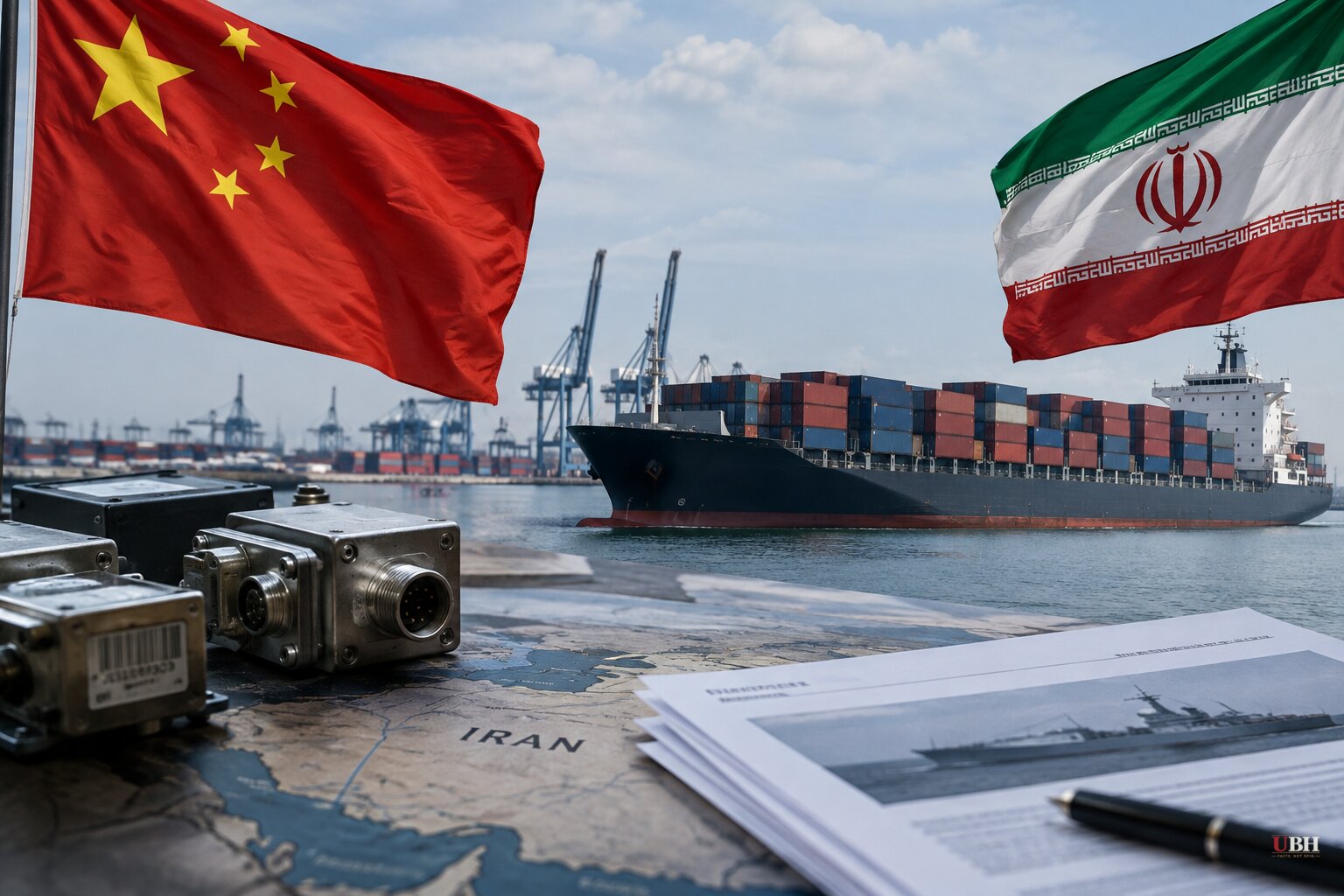
Since Xi Jinping landed at Joint Base Andrews on Wednesday, September 23, and the two governments extended their tariff truce through January 10, coverage this week has focused on a Wall Street Journal investigation into China's material support for Iran, published the same day Xi arrived for his state visit.
Trump personally met Xi on the tarmac, an honor rarely extended to foreign leaders, and the White House scheduled a full military welcome with roughly 500 service members and a state dinner for Thursday, September 24. The WSJ investigation dropped into the middle of that pageantry.
The Journal, working from Iranian customs records supplied by ImportGenius and covering January 2025 through June 2026, found close to 1,300 shipments of dual-use goods reaching Iran's Defense Ministry in just the first half of this year. Many carried references to Article 119 of Iran's customs code, which exempts defense imports from tariffs, according to Iran International's account of the reporting.
One shipment landed in Tehran on June 17, the same day Washington and Tehran signed a 60-day truce and Beijing was publicly promoting its role as peacemaker. More than a dozen additional shipments, worth over $6 million and containing parts usable in drones, arrived two days later, the Journal found. Before the war began on February 28, China had delivered 300 tons of chemical compounds to Iran's Defense Ministry, supplies later tied to replenishing missile stocks damaged by earlier Israeli strikes.
CSIS researcher Kate Koren told the Journal that Chinese companies have advertised sensitive electronics for use in Shahed drones directly to Iranian buyers through trade fairs and Persian-language marketing. Separately, a sanctioned Chinese firm called Haokun Energy wrote in December that it had arranged confidential export licensing for sodium perchlorate, a missile-propellant ingredient, through a Beijing shell company. The Journal verified the shell company's registration but could not confirm whether that specific deal went through.
Flight data reviewed by the Journal showed Mahan Air, a U.S.-sanctioned Iranian carrier, ramping up flights between China and Tehran from four a week in early March to about 27 a week by late April, and 39 flights in the first week of September, roughly double prewar levels.
The most serious claim in the investigation involves the July 17 Iranian missile strike on Muwaffaq Salti Air Base in Jordan, which killed three American service members. U.S. officials told the Journal that satellite imagery procured from Chinese entities was used in planning that attack, calling it the clearest evidence yet that Chinese support has had lethal consequences for U.S. forces. Officials did not name the specific entities involved and did not accuse the Chinese government directly of ordering or coordinating the strike, according to Fox News's account of the reporting.
Beijing has rejected the account outright. A Chinese government statement, cited by the Daily Beast and Yahoo News, said it opposes "attempts to smear China by associating it with the conflict" and maintains its dealings with Iran comply with international rules.
China has remained Iran's dominant oil customer throughout the war, according to Political Wire's summary of the WSJ reporting, with U.S. lawmakers estimating China now buys more than 80% of Iranian crude exports. Chinese front companies and banks route the transactions through China's own financial system using yuan, the report said, generating billions of dollars for Tehran despite standing U.S. sanctions.
Senate Armed Services Chairman Roger Wicker, a Mississippi Republican, didn't hold back on the floor on September 22, calling Xi "a brutal, unelected, and oppressive dictator" and pointing to "China's support for Iran, religious persecutions, and international coercion," according to the Epoch Times. Wicker pressed Trump to raise the issue directly with Xi during the summit, along with China's military buildup and the case of jailed Hong Kong businessman Jimmy Lai.
Secretary of State Marco Rubio defended engaging with Beijing at the highest levels regardless, telling reporters at the U.N. General Assembly on September 23 that refusing to interact with Xi's government would be "irresponsible" and "outrageous." Rubio argued that even during the Cold War, Washington kept communication channels open with Moscow.
A senior U.S. official told reporters on a September 18 call that Trump is expected to raise China's support for Iran, its military buildup, and its overcapacity in industries like autos with Xi personally. Sen. Bernie Moreno, an Ohio Republican, told the Epoch Times that Chinese auto production, roughly 38 million vehicles a year against America's 10 million, represents an overcapacity problem lawmakers want addressed.
Asked aboard Air Force One about the satellite-imagery findings, Trump brushed it off. "They basically do what we do," he said, adding "China spies on us, and we spy on them, too," according to Fox News. He has separately described Xi as having "behaved reasonably well" throughout the war.
The Daily Beast and Yahoo News, both citing the same WSJ reporting, framed the findings as a political liability for Trump ahead of the November 3 midterms, noting that only 34% of voters back his war with Iran, which began February 28 and is approaching its seventh month with no resolution announced.
What neither the White House nor the Chinese government has said publicly is whether Trump raised the Iran shipments or the satellite-imagery findings with Xi in their private sessions, or what response Beijing offered.
Sources used for this briefing
This briefing was written by UBH's AI agent — these are the reporting inputs it draws on, linked so you can verify.


