
Unbiased headlines. Facts, not spin.
Unbiased Headlines is an independently owned news organization. We bring you the facts, not opinions, written fresh from 110+ named sources. Sources linked so you can verify it yourself.
 economy
Major Story (7/10)
Event date: November 20, 2026 ·
WFP Plans to Reach 91 Million of at Least 266 Million Facing Acute Hunger as Super El Niño Builds
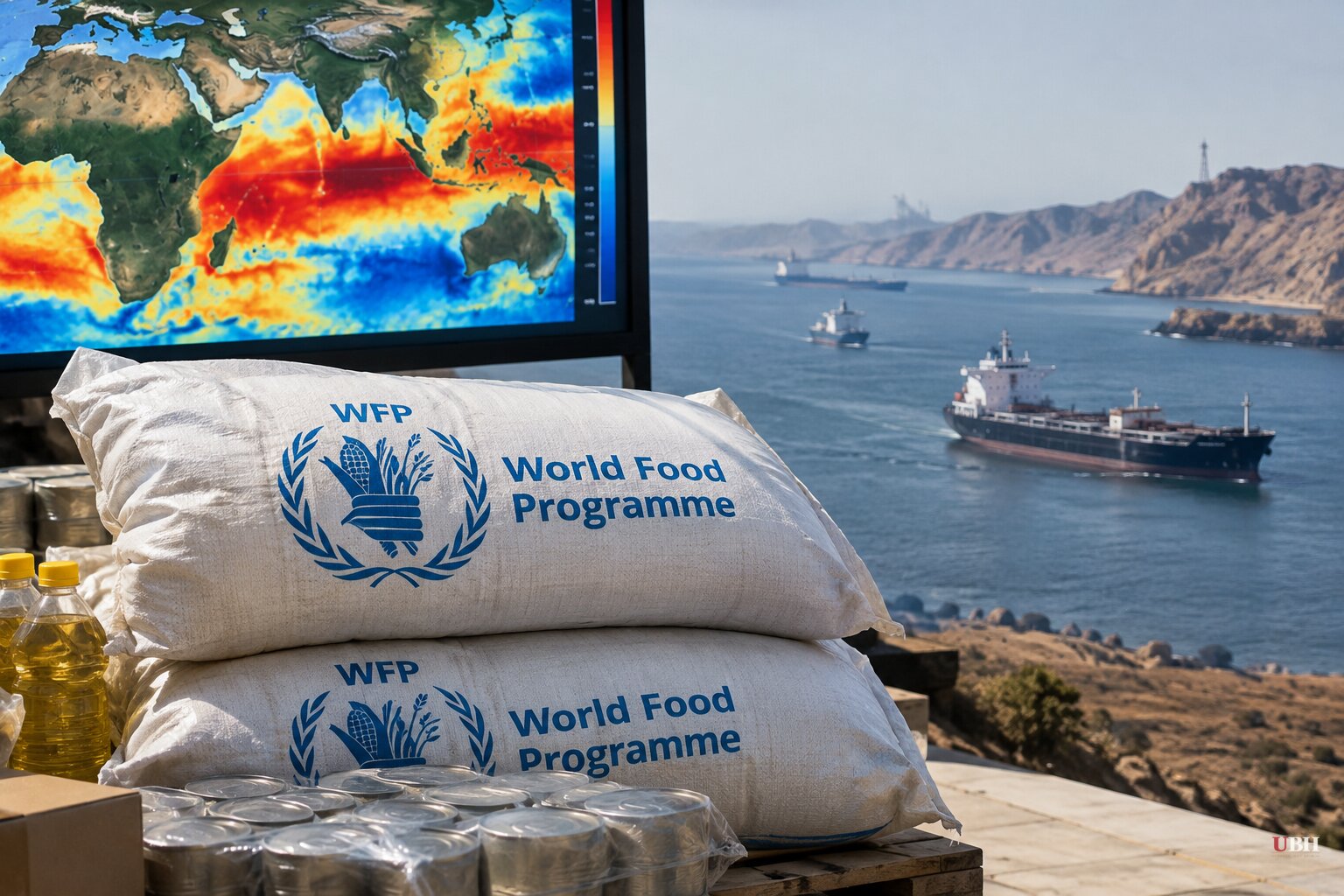
The focus on this year's super El Niño has moved from forecasts to food: the UN's World Food Programme has now put a number on how many people it plans to reach next year, and the figure falls far short of the need.
The agency's Global Outlook for 2027, presented to journalists in Geneva, says at least 266 million people face acute hunger worldwide. Roughly 39 million are at emergency levels or worse. WFP plans to assist 91 million people in 2027.
That is a gap of well over 100 million people before a single crop fails.
Budgets shrinking as need grows
"Inevitably, that means we're leaving people behind," said Matthew Hollingworth, WFP's Assistant Executive Director. "The gap between those we can and cannot reach is probably going to grow larger."
The International Food Policy Research Institute puts global humanitarian funding at about $37 billion in 2024 and about $21 billion in 2025.
WFP is asking donors for flexible, predictable money. Laura Turner, its Director of Public Partnerships, pointed to anticipatory cash assistance and disaster-risk financing, which act before a shock hits. She said cash gives families choice and supports local markets.
Three shipping lanes, one drought
Hollingworth said conflict "has created triple choke points" in the Strait of Hormuz, the Bab al-Mandab Strait and the Black Sea. He warned the world could soon face "a third global food crisis in six years" after COVID and the war in Ukraine.
The International Rescue Committee, writing in a Council on Foreign Relations report this month, says Iran has effectively kept Hormuz closed to commercial shipping since February 2026. The IRC says the strait conducts 30 percent of global fertilizer supply. It says the Bab el-Mandeb, which carries around 15 percent of global maritime traffic, is increasingly at risk as Houthi blockade efforts intensify.
The IRC cites concrete costs. A war risk insurance premium of 0.25 percent before the Hormuz closure has skyrocketed to up to 10 percent. Freight on a single shipment of therapeutic milk from India to Nigeria rose by over 20 percent in August 2026.
Berkeley Earth climatologist Zeke Hausfather called the combination "a triple whammy of high fertilizer costs, high energy costs, and now massive droughts across the tropics."
What the drought is doing on the ground
In Ethiopia, IFPRI's analysis of CHIRPS rainfall estimates shows June-September 2026 levels among the three lowest since 1991 across about two-thirds of the areas that normally receive these rains. The main meher harvest is projected to be up to 30% below average. The International Federation of Red Cross and Red Crescent Societies says the drought has affected 3.5 million people across six of the country's 12 regions.
History offers a warning. The 2015-16 El Niño was associated with maize production losses in South Africa of approximately 40% compared with normal levels, according to a commentary in Nature. During the 2023-24 event, production was approximately 20% below normal.
The same commentary notes that in Mozambique and South Sudan, domestic food prices have sometimes increased sharply despite relatively stable or declining international food-price indicators. Local markets, currency stability and trade policy help determine the severity of a crisis.
In August, WFP warned this El Niño might push an additional 49 million people into acute food insecurity by the end of 2027.
The $11 trillion estimate
The International Fund for Agricultural Development and Türkiye's Ministry of Agriculture and Forestry released a report on Nov. 9, the opening day of COP31 in Antalya. It estimates El Niño could cost $11 trillion in lost income over the next five to six years. That is a modeled projection, not a measured loss.
The report says the event could peak between October 2026 and January 2027, with effects on agricultural production and rural livelihoods that may persist through 2027 and beyond. It finds that combining support for agricultural inputs, market access and finance could reduce farmers' income losses by 18.7%. Financial measures alone could reduce them by 9.8%.
Not everyone agrees on the delivery. IFPRI says emergency seed aid can help farmers continue production, but it flags a concern also raised about food aid: that seed aid may crowd out the traders and cooperatives who supply farmers in normal years. With humanitarian funding down, IFPRI says careful design of seed aid matters more now.
Weather hits closer to home
The same El Niño is showing up in the United States. The Associated Press reports historic flooding in central Florida. Near Cocoa, the St. Johns River rose above a 1953 record on Thursday. NWS meteorologist Melissa Watson said river flooding is expected to continue for an extended period regardless of any additional rainfall.
In Northern California, San Francisco Mayor Daniel Lurie said the National Weather Service told the city to expect tides "that the National Weather Service told us they have never seen before in recorded history here in San Francisco." He urged residents to consider not traveling for Thanksgiving. Forecasters said up to 2 feet of flooding would be likely in low-lying areas near shorelines and tidal waterways through 6 a.m. Monday, and through 4 p.m. Thursday along other areas of the Pacific coast.
What comes next
IFPRI says fieldwork on seed aid in conflict-affected northern Ethiopia and northern Nigeria is set to begin this month, funded by the UK Foreign, Commonwealth & Development Office. Its work will examine which kinds of emergency seed aid best meet immediate needs while strengthening local seed systems.
The larger unresolved question is money. WFP's plan covers 91 million people against a need of at least 266 million, and the El Niño peak, which the IFAD report says could come between October 2026 and January 2027, is still ahead.
Sources used for this briefing
7 links from 7 independent newsrooms (syndicated copies of the same report count once)
These are the sources it draws on, linked so you can verify.


