
Unbiased headlines. Facts, not spin.
Unbiased Headlines is an independently owned news organization. We bring you the facts, not opinions, written fresh from 110+ named sources. Sources linked so you can verify it yourself.
 economy
Notable (6/10)
Event date: November 20, 2026 ·
Trump's Overseas Data Center Tax Threat Meets Voter Backlash at Home and a Senate Permitting Bill
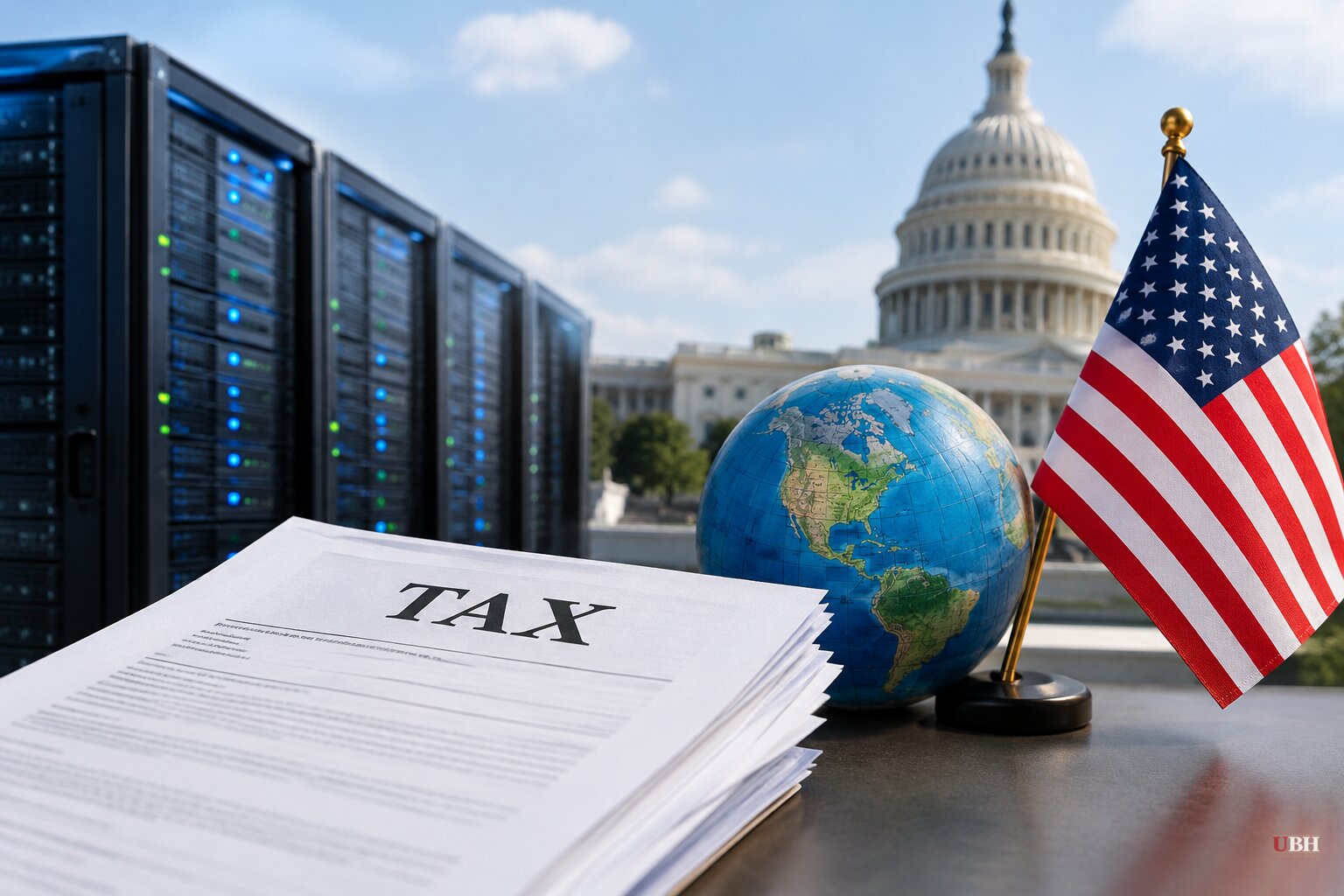
President Donald Trump's Friday, Nov. 20, threat of a "tremendous tax" on American companies that build AI data centers overseas remains a statement, not a policy. He told reporters at the White House he had not even told his own people. "But I'm telling them now, they're here," he said.
He has not said what the tax would look like, which companies or projects it would cover, or when it would start. He also named no legal authority for it.
What he did offer was a rationale. "We're not allowing data centers to go into other countries because China will take all of them, and we're not allowing that to happen," Trump said. He added that the administration would "put tremendous penalties on companies that try and do it."
The Finland project and the foreign footprint
Trump singled out a planned data center in Finland and said the United States would not allow it to go forward. He did not say how.
The companies he is addressing already have significant overseas infrastructure. Alphabet, Amazon, Microsoft, Meta and Oracle have all invested in foreign facilities to serve international customers. Building near those customers also helps meet local requirements.
Trump framed the issue as a race with China over what the administration now calls "Super Intelligence." "We're leading, and they're second," he said. "But whoever wins SI, wins." He also said he and Chinese President Xi Jinping agreed to develop "joint guardrails."
The Gulf and Nordic states are already competing for this business. Saudi Arabia, the United Arab Emirates and the Nordic countries pitch themselves to the AI industry on energy and land, as Güney Yıldız wrote in Forbes on Nov. 21. Trump's own pitch for West Virginia, Texas and California was much the same: "They have energy, and they have everything."
Voters are not buying the home-field pitch
Trump also urged Americans to accept data centers in their own communities, but to charge for it. "Make them pay you, make them pay your community, but don't shut them off," he said. He cited communities getting $10,000 per resident and teachers getting $50,000 in connection with data center proposals.
That message runs into the midterm results. According to AdImpact, campaigns spent more than $380 million on television ads mentioning data centers, and Democrats outspent Republicans on the topic by more than 3-to-1.
Data center regulation was not a top issue for most voters, the AP found. But hard-line stances against the facilities were woven into the platforms of many winning candidates, including the Democrats who flipped governorships in Texas, Ohio, Georgia, Nevada and Iowa.
Data Center Watch, a project of the consultancy 10a Labs, found that 32 of 34 winning governors in races the AP called support stronger regulation or restrictions. Twelve of the 34 support bans or moratoriums.
Clayton Tucker, the first Democrat elected Texas agriculture commissioner since 1986, said his pledge to fight data center development was critical to his win. Ranchers, he told the AP, feared for their shrinking water supplies. "Whiskey's for drinking and water's for fighting," he said.
In Wisconsin, Gov.-elect David Crowley shifted during the campaign from opposing any moratorium to supporting one, along with ending the state's sales tax exemption for data center operators. He told the AP on Thursday he is still working out what he will propose once in office. Options include requiring developers to disclose water and energy use and ensuring a community backs a project before it proceeds.
The AP summed up the tension as a divide between a president who sees expansion as critical to winning the AI race and a public deeply skeptical of the benefits.
Congress and the industry
The Republican-led Senate on Thursday, Nov. 19, passed bipartisan legislation to speed permitting reviews for power plants, transmission lines and other energy infrastructure. The bill would also require data centers to pay for the energy they use and for upgrades to the broader transmission network. It now goes to the House.
Trump praised the bill. "It's going to cause tremendous amounts of new building," he said.
The industry is trying to get ahead of the anger. Officials with Google and Meta told the AP they are trying to address mistrust by being more transparent with host communities. Tech companies are also promising to take fewer taxpayer handouts and to put more money into the towns that accept them.
There is a contradiction in the president's two messages. He wants communities to stop resisting data centers, while the same communities are electing officials who promise to restrict them. And he wants the buildings kept in the U.S. without any mechanism to make companies choose American sites over foreign ones.
The next concrete steps are in Washington and the statehouses. The House has to act on the permitting bill, and the White House has to say whether the overseas tax is a real proposal. Crowley and other incoming governors are expected to release their own data center plans after taking office.
Sources used for this briefing
6 links from 6 independent newsrooms (syndicated copies of the same report count once)
These are the sources it draws on, linked so you can verify.


