
Unbiased headlines. Facts, not spin.
Unbiased Headlines is an independently owned news organization. We bring you the facts, not opinions, written fresh from 110+ named sources. Sources linked so you can verify it yourself.
 economy
Notable (6/10)
Event date: November 18, 2026 ·
Ways and Means Chair Jason Smith Urges Republicans to Raise Debt Limit in Lame Duck Using Reconciliation
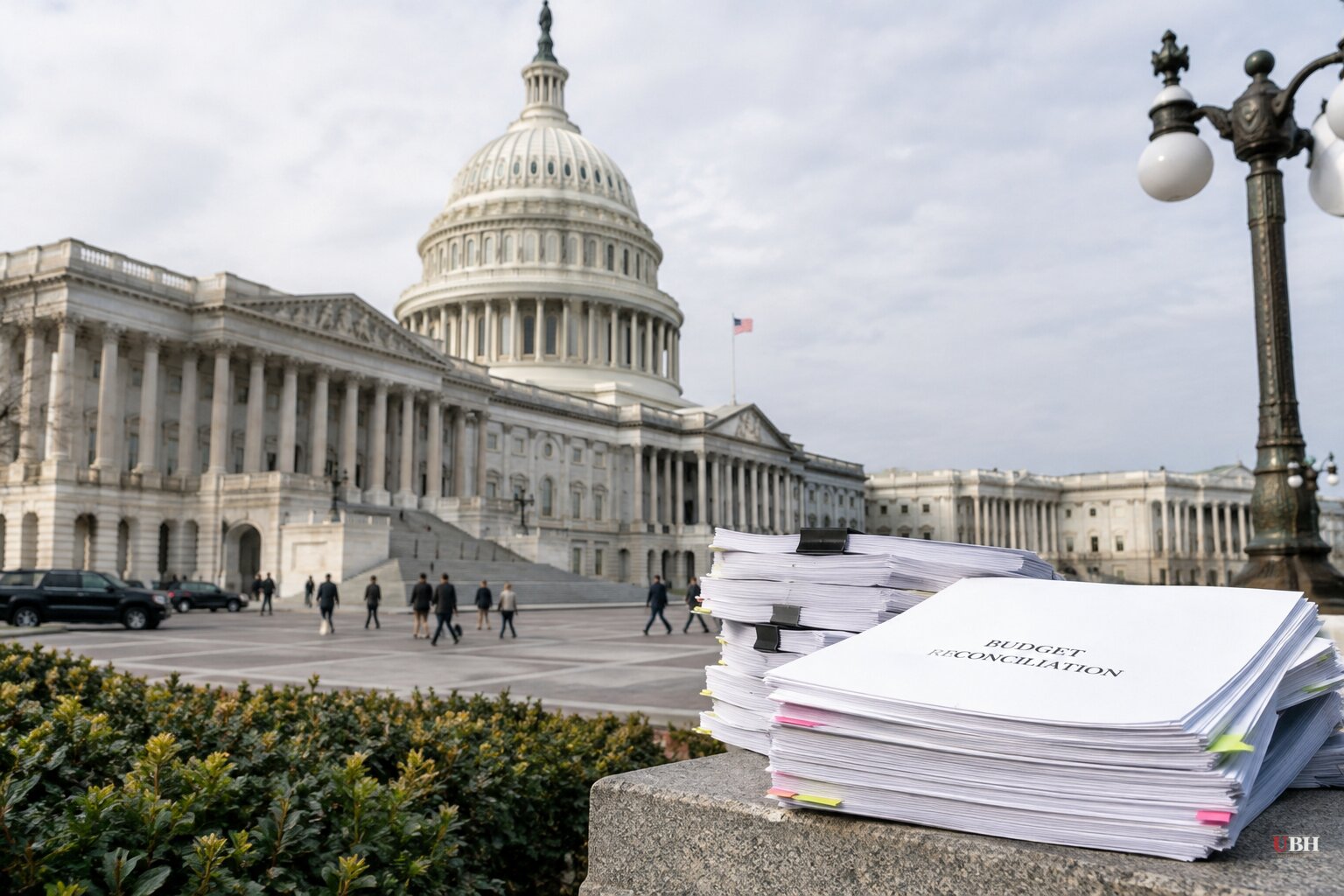
House Ways and Means Chairman Jason Smith wants Republicans to settle the debt limit before they lose control of Congress.
Smith made the pitch Friday, Nov. 21, on Fox Business Network's Big Money in the Morning. His plan: use budget reconciliation, which needs only a simple majority in the Senate, to raise the borrowing cap during the lame duck.
"We have six weeks left, Dagen, we need to do everything and make the best of the next six weeks that we have," Smith said. "We should take the debt limit off the table, so that the president is not held hostage in three months, because that debt limit expires in March."
What Smith says Democrats would do
Smith argued that leaving the issue open invites a hostage fight. "I guarantee you that, if we don't take care of the debt limit in the next six weeks, under reconciliation, you're going to have the Democrats try to extort President Trump," he said.
He named two targets: the work requirements in the One Big Beautiful Bill Act, and what he described as tax credits going to illegal immigrants. Those are Smith's characterizations of what Democrats would seek. No Democratic leader is quoted laying out a debt-limit demand list.
Smith did not say how large an increase he has in mind.
The new math on Capitol Hill
Democrats won both chambers in the midterms. They will hold 56 Senate seats and have won at least 258 House seats, with some races still too close to call, according to a tax-policy review published this month. That is the largest governing majority in the House since 1992. It is still short of the 60 votes needed to overcome a Senate filibuster.
A CNBC analysis published after the election argued the debt limit is now potentially the one real chance the new Democratic majority has to extract concessions from a president who is already pledging to veto their agenda. Aniket Shah, head of the Washington policy team at Jefferies, told CNBC that many in the markets are stuck on an outdated image of timid Democrats. "I don't think they realize how aggressively Democrats plan to take 2027," he said.
That same analysis said that because Democrats would hold the leverage, a deal would more likely increase government spending than lower it.
The March date is not the only date in circulation
Smith put the expiration in March. Other estimates differ.
Congress last set the limit in 2025, giving the Treasury Department authority to borrow $41.1 trillion. The Bipartisan Policy Center, a nonprofit that tracks the issue, says Treasury is likely to hit its maximum borrowing capacity by midsummer. Wall Street estimates cited by CNBC say Treasury budgeting techniques could extend the so-called X-date, when the U.S. would no longer be able to meet all its obligations, to sometime in the fourth quarter of 2027.
The gap matters for the argument. Smith's case rests on the pressure point arriving in about three months.
CNBC put this year's federal deficit at $1.99 trillion. The debt ceiling stops the government from borrowing funds that Congress has already ordered federal agencies to spend.
The attendance problem
The plan has to get through a Republican conference that is struggling to show up. With 14 Republicans missing Wednesday, House leaders postponed a floor vote.
Speaker Mike Johnson (R-La.) urged Republicans on Friday to return to Washington after Thanksgiving and finish their terms. A Dec. 11 funding deadline leaves little time for an Iran spending deal or a farm bill, according to analysis from AgBull Trading.
The lame duck is also crowded with leadership business. House Democrats vote Dec. 9 on contested committee chair races. Senate Democratic leadership elections are scheduled for Dec. 1, and Senate Minority Leader Chuck Schumer faces a challenge from Sen. Chris Van Hollen (D-Md.) for the top job, Punchbowl News reported. House Republicans are sorting out their own ranking-member battles.
Why the lame duck matters to both sides
Grant Thornton's post-election analysis called the session the last window for Republicans to advance their partisan priorities. It framed the election results as a repudiation of the U.S. economy under President Trump rather than an endorsement of Democratic policy. Exit polling, it said, showed that rising costs attributed to Trump's tariffs and the war on Iran drove affordability concerns for voters across the political spectrum.
The same analysis said congressional Republicans could reduce Democratic leverage in the next Congress by passing a long-term debt ceiling, but that reaching agreement to do so is easier said than done. CNBC reported that Trump has called for Republicans to resolve the issue in the next few weeks, before the new Democratic-majority Congress is seated, and said success under reconciliation would require unity among a fractured, fleeting Republican majority that also faces other pressing priorities.
The tax-policy review noted that Democrats may use reconciliation themselves in the next Congress to put priorities on record, even if a veto is likely.
Whether Republican leaders will adopt Smith's reconciliation approach has not been determined. Whether Johnson can assemble a full-strength conference after Thanksgiving, with a funding deadline, an Iran spending fight and a farm bill all competing for floor time, will determine whether the debt limit gets handled before the new Congress is seated.
Sources used for this briefing
7 links from 7 independent newsrooms (syndicated copies of the same report count once)
These are the sources it draws on, linked so you can verify.


