
Unbiased headlines. Facts, not spin.
Unbiased Headlines is an independently owned news organization. We bring you the facts, not opinions, written fresh from 110+ named sources. Sources linked so you can verify it yourself.
 economy
Notable (6/10)
Trump Says He 'Would Do' a Credit Card Rate Cap With Democrats, Names No Figure or Timeline
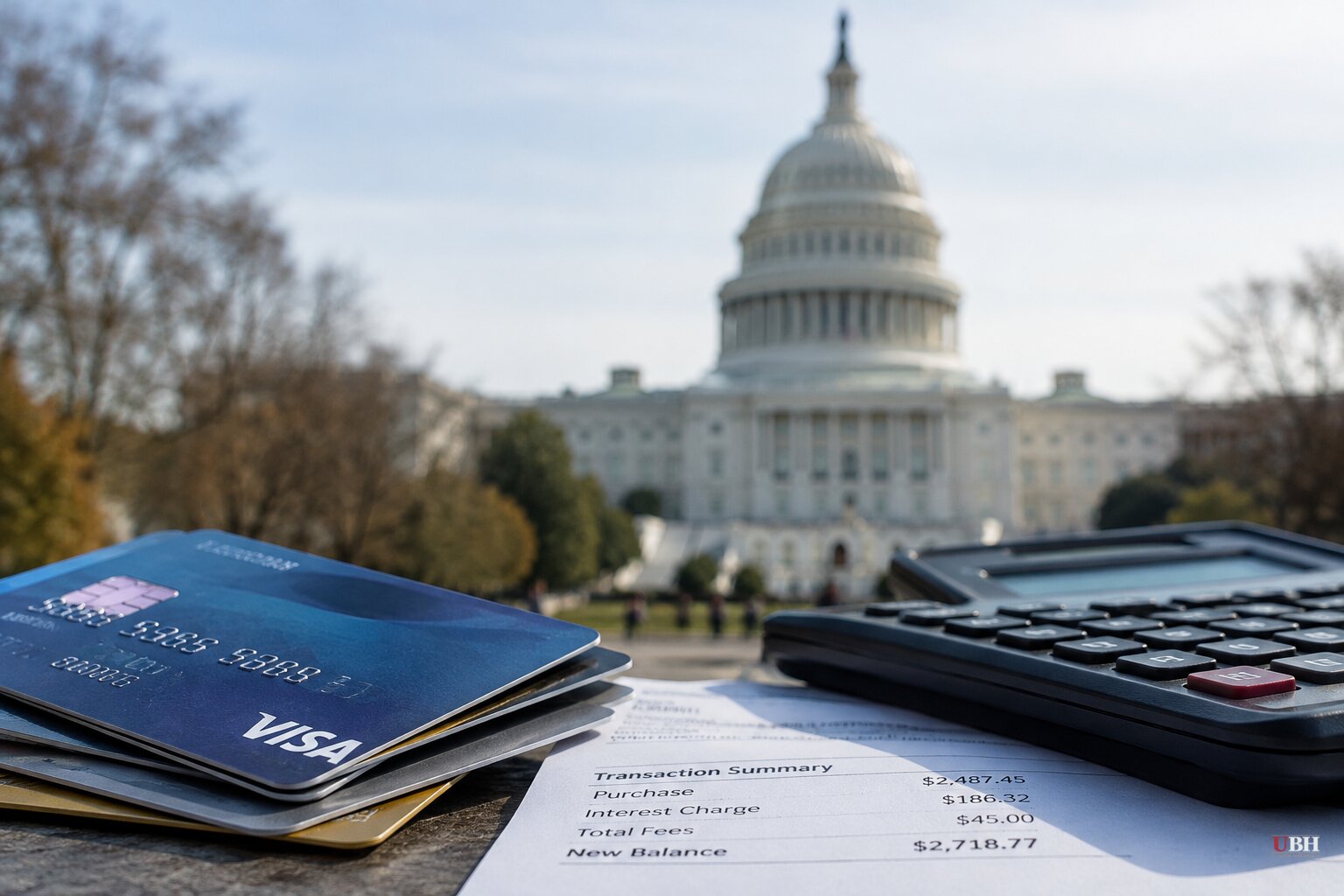
Since Trump called in January for a one-year, 10% cap on credit card interest that never took effect, the idea has sat idle in a Republican-run Congress. On Saturday, Nov. 21, he said he would pursue it with the Democrats who take over in January.
Asked on Fox News' "Saturday in America" whether a cap was somewhere he could work with Democrats, Trump answered: "It is… I would do it." He added: "The credit card companies, they're getting too much. The fees are too high and the interests are too high."
What Trump did and did not commit to
The interviewer, Kayleigh McEnany, referred to his earlier suggestion of a 10% cap for one year. Trump's answer did not repeat that number or any time frame.
He also rejected the argument that a cap violates free enterprise. "But what's free enterprise when you're sitting home and you get a bill that some guy set up in an office on Park Avenue," he said. He called himself "a very conservative guy" and "a common-sense person."
His January proposal, posted on Truth Social, called for a 10% ceiling for one year and legal consequences for lenders that did not comply. He wanted it in place by Jan. 20. It was not, and there is still no federal cap.
Warren's offer
Sen. Elizabeth Warren, D-Mass., said on CBS News' "Face the Nation" on Nov. 8: "I got the bill. I'm ready to go." After the Fox interview she said, "Let's cap credit card interest rates and save Americans money."
Warren is expected to chair the Senate Banking Committee when Democrats take control. She asked federal banking regulators in April why they had not acted after Trump's deadline passed, noting average card rates of roughly 25%.
The alignment is unusual. Trump and progressive Democrats are on one side, while the banking industry and several prominent Republicans are on the other. Sen. Josh Hawley, R-Mo., has joined Sen. Bernie Sanders on cap legislation.
The numbers
The Federal Reserve put the average rate on commercial-bank card accounts assessed interest at 22.36% in the third quarter. The New York Fed said in a report released Friday that card balances rose $22 billion in that quarter, to about $1.28 trillion.
The Consumer Financial Protection Bureau says about 195 million Americans held credit cards in 2024 and were assessed $160 billion in interest. At 10%, a cardholder carrying $5,000 would pay about $42 a month in interest. At roughly 22%, the figure is about $100.
Researchers who studied the 10% pledge after its January announcement estimated Americans would save about $100 billion a year in interest. They found the industry would take a major hit but stay profitable, with rewards and perks likely scaled back.
The industry's objection
Banks and card issuers opposed the proposal from the start. American Bankers Association spokesperson Sarah Grano has said the group strongly opposes a government-imposed limit because it would reduce credit access, particularly for people with lower scores or limited credit histories.
Consumer Bankers Association CEO Lindsey Johnson, citing industry-supported research, said a 10% limit could restrict credit for roughly 75% of current cardholders. Credit unions have said more than 47 million people could lose card access.
The conservative case against a cap rests on basic pricing. National Review argues that a ceiling creates a shortage, since only a tiny fraction of cards now carry rates at or below 10%. The magazine points to the cost of defaults: 13% of card balances are seriously past due and about 5% of debt is never repaid. In its telling, borrowers with thin or damaged credit would be cut off and pushed toward pawnshops or illegal lenders.
The disagreement is over magnitude. The researchers cited above say the industry survives with fewer perks. The industry groups say millions lose access to cards.
The politics around it
On Friday, Trump told reporters at a White House news conference that "we might get more done because we had some Republicans that were just impossible to deal with." He has also said he sees room to work with Democrats on immigration, tax changes and economic development.
Those openings sit beside other signals. Trump is replacing chief of staff Susie Wiles with Stephen Miller, and he has called the Democratic Party a "domestic extremist organization." Miller pledged Trump his "absolute loyalty" at Mar-a-Lago this weekend.
No cap bill has been scheduled for a vote. Democrats take control of both chambers in January, and Warren says her bill is written. Trump has not said whether he would back 10%, a different number or only a limit on fees.
If the Banking Committee moves a 10% bill, the open question is whether Trump signs it. In January, he could not get it past his own party.
Sources used for this briefing
7 links from 7 independent newsrooms (syndicated copies of the same report count once)
These are the sources it draws on, linked so you can verify.


