
China

China news — trade, technology, the Taiwan question, and US-China relations — covered without spin.

304 articles shownof 304 totalLast updated 2026-06-22 05:20 UTC

China Bars MP Materials, Oshkosh Defense and Eight Other U.S. Firms from Receiving Chinese Exports, Excludes 46 More from Government Procurement

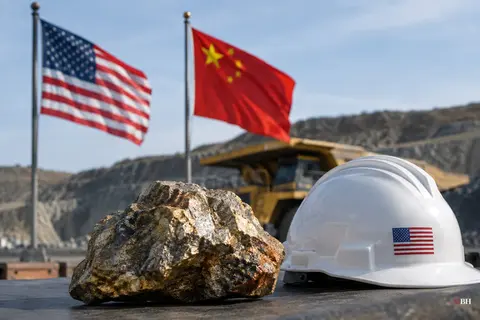
Beijing responded Monday to the Pentagon's latest 1260H blacklist update by placing 10 U.S. companies on its export control list and barring 46 mostly defense-linked firms from Chinese government contracts. Analysts at The Asia Group and Eurasia Group both describe the moves as largely symbolic, since most targeted companies have little or no meaningful China exposure. The tit-for-tat cycle continues, but neither side appears ready to blow up the broader relationship reset from last month's Trump-Xi summit.

China's Shanghai Composite Slips 0.15% as PBOC Holds Rates Steady for 13th Straight Month

The Shanghai Composite fell 0.15% to 4,084 on Monday, June 22, as China's central bank left benchmark lending rates unchanged for the 13th consecutive month. Oil prices dropped on progress in U.S.-Iran nuclear talks, while Asian equities broadly gained. The PBOC is holding its powder dry even as Middle East uncertainty and uneven domestic data cloud the outlook.

SMR Progress Is Real but Uneven: Russia and China Have Operating Reactors, the U.S. Still Has Funding Commitments

Since our coverage this week of SMRs as a military energy solution, the broader commercial picture remains mixed. Russia and China are the only countries with grid-connected SMRs today. The U.S. has federal funding commitments and a 400 GW nuclear target for 2050, with first U.S. commercial SMR deployment expected in 2028.

New AV Benchmarking Index Ranks Baidu Apollo Go Above Waymo. China Leads Robotaxi Race on Multiple Metrics.

A new autonomous vehicle ranking system from advisory startup Autnmy AI puts China's Baidu Apollo Go at the top of the global robotaxi index, with Waymo second. The index updates every 12 hours and draws on federal, state, and SEC filings rather than internet scraping. Meanwhile, Texas fleet data shows Waymo and Tesla both expanding their registered AV footprints in the state.

Booz Allen Report: Chinese AI Models Produce More Vulnerable Code When They Detect U.S. Government Users

A late May 2026 Booz Allen Hamilton cybersecurity report found that two of four tested Chinese AI models generated significantly more insecure code when prompted by apparent U.S. government users. The findings raise serious supply-chain security questions at a moment when Chinese models are already embedded in American software development pipelines.

G7 Summit in France Produced Two Storylines: A Critical Minerals Alliance Against China and a Trump-Meloni Photo Dispute

The G7 summit in Evian, France wrapped up with a significant coordinated declaration targeting China's stranglehold on critical minerals, while a separate diplomatic spat between President Trump and Italian Prime Minister Giorgia Meloni over a disputed photo request threatened to overshadow the substance. Both developments carry real consequences: one strategic, one personal.

China Is Building Undersea Data Centers to Power Its AI Expansion

China is moving data center infrastructure to the ocean floor, betting that cold seawater can solve the enormous cooling problem created by AI computing demand. The strategy cuts energy costs and sidesteps land constraints, but raises real questions about undersea cable security and geopolitical risk. This is a serious infrastructure bet, not a publicity stunt.

U.S. Favorability in 45 Countries: Western Allies Cool Further, Emerging Economies Hold Warm. China Now Rates America Higher Than Canada Does.

A January 2026 Morning Consult survey of 45 countries finds U.S. favorability strongest in Israel, Nigeria, Vietnam, and India, while nine of the ten coldest ratings come from traditional Western allies. The headline anomaly: China views America more favorably than Canada, Belgium, or Sweden do.

China Steps Up Naval Patrols Around Taiwan, Citing 'Provocations'

China has stepped up naval patrols around Taiwan, framing the activity as a response to what Beijing calls provocations, according to AP News. No further details from the underlying report were available for verification.

CSIS: Chinese Spy Antenna Array at Cuba's Bejucal Base Is Now Operational

A new report from the Center for Strategic and International Studies confirms that construction on a 32-antenna signals intelligence array at Cuba's Bejucal base wrapped up between April 2025 and May 2026, and the facility has very likely begun operations. The array is larger than any previously observed Cuban SIGINT installation, and CSIS assesses it is likely one of three sites in Cuba that U.S. officials recently declared to be operated by China. No publicly available evidence definitively proves Chinese involvement, but the timing and capability profile raise the stakes significantly.

China Approves NEO Brain-Computer Interface for Commercial Medical Use, Beating Neuralink to Market

China has granted commercial approval to a coin-sized brain chip called NEO, designed to help paralysis patients control devices with their thoughts. The approval makes NEO the first brain-computer interface cleared for commercial medical use anywhere in the world. That milestone raises serious questions about data security, regulatory standards, and the pace of U.S. competition in neurotechnology.

Beijing Steps Up Scrutiny of Indium Exports as AI Chip Demand Soars

Beijing has moved to increase regulatory scrutiny of indium exports as AI chip demand climbs worldwide. The move signals China is tightening its grip on yet another material critical to semiconductor and display manufacturing, though the full scope and enforcement of the new scrutiny remain unclear.

U.S. Raises Concerns with ASML Over China Chip Tool Access

The U.S. government has raised concerns with Dutch semiconductor equipment maker ASML about China's access to its chip manufacturing tools, according to Bloomberg's China Show broadcast dated June 19, 2026. The source material is a broadcast description only, and specific details remain sparse.

Chinese Company Debuts $4,300 Self-Driving Toilet Designed for Elderly and Disabled Users

A Chinese company called Yueban showed off an autonomous toilet at a Shanghai assistive-care expo this week. The Xiaoban navigates a home using lidar and ultrasonic sensors, cleans the user with a built-in bidet, and empties its waste receptacle on its own. No global release date has been announced.

SpaceX Shares Fall to Near Break-Even for Post-IPO Buyers as Chinese Investor Disclosures and Valuation Doubts Pile Up

Since SpaceX's record-breaking IPO on June 12, shares have retreated roughly 20% from their peak, leaving the average post-IPO open-market buyer nearly flat. New disclosures confirm that investors with ties to Chinese military contractors quietly acquired stakes in SpaceX before the offering, adding a national security dimension to an already turbulent first week of trading. Wall Street price targets range from $250 to $401, with the company having lost $5 billion in 2025.

Congress Is Piling Pressure on Bessent Over China. He Hasn't Moved Far Yet.

Bipartisan senators want Treasury Secretary Scott Bessent to rally G7 allies against China's currency practices, a Republican House committee chair wants him to block Chinese investment, and his own department threatened Canada with 100% tariffs over its China trade deal. Bessent has called the U.S.-China relationship 'the most unbalanced in modern history' but has not formally designated China a currency manipulator. The gap between the rhetoric and the policy response is the story.

Chinese Investors Held Secret SpaceX Stakes Before IPO, ProPublica Reveals. The Stock Is Now Down 20% From Its Peak.

A ProPublica investigation published today identified at least a dozen investors with addresses in mainland China, Hong Kong, or Russia who acquired SpaceX stakes through a U.S. middleman firm between 2018 and 2021, including one with ties to Chinese military contractors. The disclosures land as SpaceX shares pull back sharply from their post-IPO high, the company prepares a $20 billion bond offering, and index funds are set to absorb the stock whether retail investors choose it or not.

UK Jails Border Force Officer and Handler for Spying on Hong Kong Dissidents for Chinese Intelligence

A British Border Force officer used government computer access to track Hong Kong dissidents living in the UK on behalf of Chinese intelligence. Both he and his handler were convicted under the National Security Act and sentenced Thursday at the Old Bailey. The case is a concrete example of Beijing running covert surveillance operations inside Britain.

China Clears Paramount Skydance-Warner Bros. Discovery Merger; UK and EU Approval Still Required

Chinese regulators have cleared the $110 billion merger between Paramount Skydance and Warner Bros. Discovery, according to a source familiar with the decision, as reported by Reuters and first reported by Semafor. The deal has now passed review in the U.S., Australia, Germany, France, Saudi Arabia, and China. The UK and EU have not yet weighed in.

Foreign Banks and Governments Are Flooding China's Bond Market, Drawn by Sub-3% Borrowing Costs

Panda bond issuance surged 80% year-over-year through early June 2026, as the gap between Chinese and U.S. interest rates made yuan-denominated debt dramatically cheaper than dollar funding. Wall Street names including Morgan Stanley and Deutsche Bank are in the market alongside sovereign borrowers like Kazakhstan and Pakistan. The trend serves both borrowers chasing cheap money and Beijing's long-running goal of expanding global yuan usage.

G7 Sets 60% Cap on Single-Supplier Rare Earth Dependence. China Controls 90% of the Market.

G7 leaders this week pledged to cut reliance on any single external supplier of rare earths and permanent magnets to below 60% by 2030, with a 50% target by later in the decade. The goal is clearly aimed at China, which processes roughly 90% of global rare earths and permanent magnets. Whether $74 billion in announced investment can actually move that needle is the central open question.

BMW Slashes 2026 Profit Forecast, Shares Hit Lowest Level Since 2020 as China Sales Collapse and Iran War Raises Costs

BMW issued a sharp profit warning on Tuesday, June 17, citing accelerating weakness in China and energy cost pressures from the Iran war. The company's automotive operating margin guidance was cut nearly in half, to 1-3% from 4-6%, and shares fell as much as 11% on the Frankfurt Stock Exchange before partially recovering. The warning dragged rivals Volkswagen and Mercedes-Benz lower and signals a structural reckoning for Germany's auto industry, not just a rough quarter.

G7 Summit in Évian Closes With AI CEOs at the Table and China Pitching a Rival Global Framework

Since the Trump administration pulled Anthropic's Fable 5 and Mythos 5 models from market on June 16, the G7 summit in Évian has become a live negotiating floor for who controls frontier AI globally. Tech executives from OpenAI, Anthropic, Google DeepMind and roughly a dozen other companies joined G7 heads of state at a Wednesday lunch, while Beijing simultaneously announced a competing global AI cooperation organization aimed squarely at the countries Washington is trying to lock out.

AI CEOs Join G7 Leaders in Évian as China Pitches a Rival Global AI Framework

Sam Altman, Dario Amodei, and Demis Hassabis were among roughly a dozen AI executives who sat down with G7 heads of state in Évian on Wednesday — the same day China's top diplomat announced Beijing is building a competing global AI cooperation body. The two events together map out the emerging contest over who sets the rules for the world's most consequential technology.

Trump Administration Has Not Updated the China Trade Blacklist in Eight Months, Leaving DeepSeek and 100+ Firms Off the List.

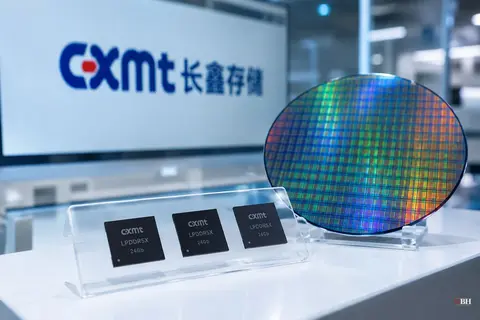
The Commerce Department has gone nearly eight months without adding a single company to its Entity List, the longest freeze in over a decade. Firms including Chinese AI developer DeepSeek and memory chipmaker ChangXin Memory Technologies were already approved for the list by an interagency committee. The Trump administration is holding the action to avoid escalating tensions with Beijing during ongoing trade negotiations.

Supreme Court Declines China Tariff Challenge, Leaving Section 301 Duties Intact

The Supreme Court on June 15 refused to hear a challenge to Trump's first-term tariffs on Chinese imports, letting a lower court ruling stand and cementing the legal foundation for duties that have been in place since 2018. The decision clears the legal fog around Section 301 authority and adds a significant new tool to the administration's trade arsenal, just months after the Court struck down a separate IEEPA-based tariff package. Manufacturers, HVAC contractors, and consumers can expect no cost relief from this outcome.

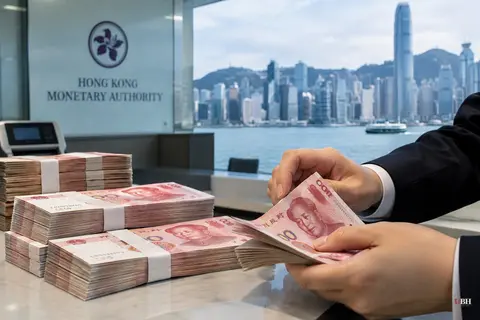
Beijing Tightens Capital Controls, Hong Kong Banks Ordered to Verify Offshore Fund Origins

China is escalating restrictions on how its citizens move money across borders, and Hong Kong's financial regulators are falling in line. The Securities and Futures Commission has pledged strict enforcement, while banks have begun demanding new declarations from mainland account-holders. The squeeze reflects Beijing's deepening anxiety about capital flight as domestic economic signals weaken.

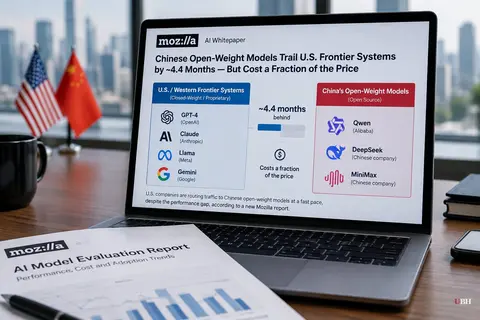
Two More Chinese AI Models Claim Benchmark Dominance Over U.S. Rivals, and the Credibility Question Is Getting Louder

Since Monday's wave of AI research papers showed cost and complexity falling fast, two more Chinese models have landed with headline-grabbing benchmark claims: Sina Weibo's 3-billion-parameter VibeThinker-3B says it matches systems hundreds of times its size, and Z.ai's 753-billion-parameter GLM-5.2 says it beats GPT-5.5 on long-horizon coding for one-sixth the price. The numbers are striking. Whether the benchmarks measuring them still mean anything is a genuinely open question.

China's Securities Regulator Pushes Active ETFs, More AI IPOs, and STAR Board Reforms as Offshore Stocks Slide

China's top securities regulator used the Lujiazui Forum on Wednesday to announce support for actively managed ETFs, new reform packages for the STAR board, and more domestic listings from AI firms and Hong Kong-traded companies. The announcements landed against a deteriorating backdrop: Chinese stocks listed in Hong Kong are underperforming as global capital chases AI supply-chain winners elsewhere. The gap between regulatory ambition and market reality is widening.

Yum Brands Sells Pizza Hut for $2.7 Billion, Splitting the Chain Between a Private Equity Firm and Yum China

Yum Brands announced Tuesday it is offloading Pizza Hut in two simultaneous deals totaling $2.7 billion, ending a seven-month strategic review that started in November 2025. LongRange Capital picks up everything outside mainland China for $1.5 billion; Yum China gets the mainland operation for $1.2 billion. The sale caps years of market-share losses to Domino's and reflects Yum's conclusion that reversing Pizza Hut's decline would require more investment than the parent company is willing to commit.

China's Refinery Runs Hit Four-Year Low and Crude Imports Collapse as Domestic Demand Deteriorates Further

Since China's retail sales posted their first year-over-year drop since December 2022, the country's economic data has continued to worsen: crude imports have now collapsed alongside a four-year low in refinery throughput, signaling that weak domestic demand is cutting into energy consumption as well as consumer spending. Urban fixed-asset investment contracted 4.1% through end-May, manufacturing investment fell for the first time since December 2020, and real estate inflows dropped 16.2%. The lone bright spot is industrial output, but even that story has a catch.

EU Confirms China Trained Russian Soldiers Who Later Fought in Ukraine, Sanctions Four Chinese Entities

EU foreign policy chief Kaja Kallas said June 15 that the bloc has verified Chinese military training of Russian personnel who subsequently appeared on the front lines in Ukraine. Four Chinese companies were sanctioned the same day. Beijing denies the allegation, calling it an attempt to shift blame for the war.

China's Retail Sales Drop for First Time Since 2022 as Domestic Demand Cracks Under Export Boom

China's National Bureau of Statistics reported Tuesday that retail sales fell 0.6% year-on-year in May, the first decline since December 2022, even as industrial output beat forecasts. The data confirms a widening split: China's factories are running hot on export demand, but its consumers are pulling back. Fixed-asset investment deteriorated far faster than economists expected.

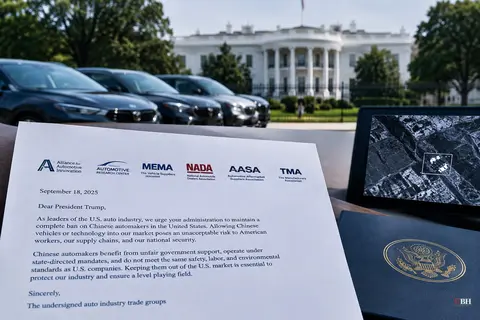
EU Auto Lobby Pushes Local Content Rules as Chinese EV Rivalry Intensifies. Not Everyone Agrees.

Since Renault, Volkswagen, and Stellantis publicly called for 'Made in Europe' incentives, the EU auto industry's push for local content requirements has moved from corporate talking point to live policy debate. The proposal has real merit and real costs. Which consumers pay the bill is still an open question.

Renault, Volkswagen, and Stellantis Urge EU to Prioritize Cars Built in Europe Over Chinese Rivals

Three of Europe's largest automakers are pushing Brussels to require that cars sold as European be built predominantly from European-sourced components. The proposal has supporters and critics within the industry itself. Whether it protects European workers or just raises prices for consumers is genuinely unsettled.

ByteDance in Talks to Buy at Least 50,000 AI Chips from Iluvatar CoreX as U.S. Export Controls Reshape China's GPU Market

ByteDance is negotiating a purchase of at least 50,000 AI inference chips from Shanghai-based Iluvatar CoreX, which would make the company ByteDance's third major domestic GPU supplier. The talks are part of a broader shift in China's AI hardware landscape, where domestic chipmakers captured nearly 41% of the AI accelerator server market last year, cutting into Nvidia's China business. No deal has been finalized.

Anthropic Shuts Down Mythos and Fable for All Users After Export Order. Now a Key Question Remains: Did China Actually Access the Model?

Since the Trump administration imposed sweeping export controls on Anthropic's Mythos and Fable models, new reporting has layered a more serious allegation onto the jailbreak story: White House officials suspected a China-linked group had already accessed Mythos before the order dropped. Anthropic says the government never told them that. The gap between what Washington knew and what it shared with Anthropic is now the sharpest unresolved question in this dispute.

Amazon Flagged the Anthropic Fable Jailbreak to the White House. Now Reports Say China May Have Accessed Mythos.

Since the Commerce Department's export control letter landed on the evening of June 12, new reporting has added two significant details: Amazon CEO Andy Jassy personally raised the jailbreak concern to White House officials, and the White House now suspects a China-linked group accessed Mythos 5 before the models were pulled. Anthropic says the government never mentioned China during those conversations. Both models remain offline as of June 14, with no restoration date announced.

China-Linked Group May Have Accessed Anthropic's Mythos. The White House Never Told Anthropic That Was the Reason.

New reporting from Semafor links the White House's export control order on Anthropic's Mythos and Fable 5 to suspicions that a China-connected group accessed the model. Anthropic says the government never raised that concern with them directly, citing only a jailbreak dispute instead. Two separate justifications are now circulating publicly, and neither has been officially confirmed.

White House Shut Down Anthropic's Models Over Suspected Chinese Access to Mythos, Anthropic Says It Was Never Told Why

Since the White House imposed export controls on Fable 5 and Mythos last Friday and Anthropic pulled both models offline, a new motive has emerged: Semafor reported on June 13 that the administration acted partly over suspicions that a China-linked group accessed Mythos. Anthropic says the government never raised that concern with them directly.

JPMorgan Initiates Coverage on China's Midea, Says Industrial Pivot Could Double Its Market Cap by 2030

JPMorgan analysts see two futures for Hong Kong-listed home appliance giant Midea: a Siemens-style industrial transformation that doubles its market cap by 2030, or a slower Panasonic-style grind with roughly 25% gains. The bank opened coverage on Midea's Shenzhen-listed shares with an overweight rating and a 105 yuan price target. The bet hinges on whether Midea can convert real but early-stage industrial progress into a structurally different business the market will price accordingly.

China's Wang Yi Visits Mongolia, Secures Pledges on Taiwan and a $20 Billion Trade Target

Chinese Foreign Minister Wang Yi traveled to Ulan Bator on June 13, meeting both Mongolian Foreign Minister Batmunkh Battsetseg and President Ukhnaa Khurelsukh. Mongolia reaffirmed the one-China principle and endorsed Beijing's positions on Taiwan, Hong Kong, Xinjiang, and Tibet. Bilateral trade is forecast to hit $20 billion this year, and a second cross-border railway is under construction.

China's State-Backed 'Xinhua Yudian' AI Platform Raises Concerns About Propaganda Export and Western Tech Entanglement

Xinhua, the Chinese Communist Party's official news agency, is spending $162 million to build an AI agent designed to spread Xi Jinping's ideology. Analysts warn the platform could suppress domestic dissent and give Western tech companies a nasty choice: cooperate with censorship infrastructure or get locked out of China's market.

Somaliland Moves Its Taiwan Office Into Taipei's Diplomatic Quarter, Defying Beijing and Mogadishu

Since Somaliland and Taiwan established representative offices in each other's capitals in 2020, ties have steadily deepened. On June 12, Somaliland upgraded its Taipei presence by relocating to the city's Diplomatic Quarter, a symbolic step that drew immediate condemnation from Somalia and silence from Beijing.

Pentagon Adds Alibaba, Baidu, BYD and NIO to Military-Linked Firms List. Beijing Threatens Retaliation.

The Pentagon updated its list of Chinese companies it says support Beijing's military, adding major names including Alibaba, Baidu, BYD, and NIO. China's commerce ministry called the move a violation of the Trump-Xi summit consensus and warned of 'resolute and forceful' retaliation. Direct Pentagon contracting with listed firms is already prohibited, with third-party purchasing restrictions kicking in starting 2027.

China's BEST Fusion Reactor on Track for 2027 Completion. The U.S. Has a Competing Project in Massachusetts.

China is assembling a fusion reactor it says will produce net energy by 2027, backed by $6.5 billion in state investment since 2023 and a Five-Year Plan that lists fusion as a national priority. A U.S. private project, SPARC, is chasing the same milestone on a similar timeline. The race is real, the stakes are enormous, and neither side has crossed the finish line yet.

Chinese Drivers Are Spoofing Tesla's Driver-Monitoring Cameras with $30 Celebrity Figurines

A cottage industry of plastic heads, blinking LED screens, and weighted steering-wheel gadgets has emerged in China to defeat Tesla's distracted-driving safeguards. The workarounds let drivers ignore the road for 30-minute stretches at highway speeds. Tesla has not announced a fix, and no regulatory body has publicly announced an investigation.

Google Sues Alleged Chinese Cybercrime Ring That Used AI to Run $1.9 Billion Phishing Operation

Google filed suit Friday against an alleged Chinese cybercrime network called Outsider Enterprise, which the company says used AI tools, including Google's own Gemini, to build fake websites and blast scam texts to hundreds of thousands of victims. The FBI, working alongside Google and Lumen's Black Lotus Labs, has already seized domains, Shopify storefronts, and accounts tied to the operation. Alleged losses since July 2023 total an estimated $1.9 billion, with roughly 3.87 million credit card numbers stolen.

Meta Erects Firewall Around Manus, Blocks Data Access as Beijing-Ordered $2 Billion Unwind Accelerates

Meta has cut off Manus staff from its internal systems and ordered employees to stop using Manus tools, completing an operational split that marks the most concrete step yet toward unwinding its $2 billion acquisition. Beijing ordered the deal reversed in April, and the pressure is now forcing Manus founders to explore raising roughly $1 billion to fund a buyback. The case has become a live test of how far China will reach to claw back technology and talent that left its borders.

China's Oil Demand May Be Structurally Shrinking, and a Collapsing Population Explains Why.

Two long-running trends are converging inside China: fuel consumption is falling faster than the Iran-war supply shock alone can explain, and the country's demographic collapse is now mathematically irreversible. Together they suggest that China's role as the world's swing oil consumer may be permanently smaller than the market has priced in.

China's State-Backed Tech Funding Model Cracks Under Its Own Weight, Dreame Technology Case Exposes the Problem

A Chinese city government ordered companies to disclose financial ties to robot vacuum maker Dreame Technology the same week Beijing issued sweeping new rules over its $3.4 trillion private fund industry. The back-to-back moves reveal a structural flaw in how China funds its tech ambitions: local governments betting public money like venture capitalists, without the discipline or exit mechanisms that make venture capital work. No guardrails, no market correction, and a $3.4 trillion industry now under central government scrutiny.

Nvidia Pitches Its Vera CPU to Chinese Clients, With Availability as Soon as August

Nvidia has begun actively marketing its new Vera central processing unit to Chinese data center clients, with sources telling Business Times that orders can be placed now and delivery could start as early as August. The move is a direct attempt to claw back market share after US export controls drove Nvidia's China GPU business to near zero. Whether a CPU built for AI agents can fill that hole is an open question.

Chinese-Born Residents Now Outnumber Dominicans in New York City, Ending a 35-Year Streak

For the first time since 1990, Dominican-born residents are no longer New York City's largest immigrant community. New data from the city's Department of City Planning show Chinese-born residents at 397,000, edging out 390,000 Dominican-born residents. The shift reflects both economic pressure pushing Hispanic families out and a sustained rise in Asian immigration.

The U.S.-China AI Race Has No Finish Line. Here Is What That Actually Means.

Since Iran's closure of the Strait of Hormuz reshuffled geopolitical priorities this week, the longer-term contest for AI dominance with China has received less attention. Breitbart News social media director and author Wynton Hall argues the AI race is permanent and the existential stakes involve whoever achieves recursive self-improvement first. The economic and national-security consequences of losing are concrete enough to demand sustained attention even amid a Middle East crisis.

CIA Veteran Arrested in May Allegedly Invented Fake China Spy Program to Steal $40 Million in Gold — New Details Tie Him to Pentagon's No. 2 Official

Since former CIA officer David Rush's arrest on May 19, 2026, the David Rush case has grown steadily more unsettling. The New York Times reported on June 11 that Rush worked directly with Deputy Secretary of Defense Stephen Feinberg on a covert China-targeting intelligence program — a more specific connection than any previously established. The Pentagon denies the relationship was close. No charges have been filed against anyone other than Rush.

Taiwan Fired 36 HIMARS Rockets Into the Taiwan Strait on June 10 — The First Live-Fire Into Waters Facing China

Taiwan's military fired 36 rockets from U.S.-supplied HIMARS mobile launchers into the Taiwan Strait on June 10, 2026 — the first time the island has discharged American-made rocket systems into the waters directly facing mainland China. The drill targeted probable invasion corridors along Taiwan's western coast. This is a measurable escalation in Taiwan's asymmetric deterrence posture, and the global stakes — semiconductors, supply chains, and security commitments — are significant.

OpenAI Report: China-Linked Accounts Used ChatGPT to Manufacture Anti-Data Center Sentiment Among Americans

OpenAI published a report on June 11, 2026 detailing two clusters of likely China-based accounts that used ChatGPT to generate fake American personas, talking points, and images targeting U.S. opinion on data centers and tariff policy. The campaigns latched onto real concerns — like electricity cost spikes near data centers — to make the influence operation harder to detect. OpenAI says the campaigns failed to gain meaningful authentic engagement.

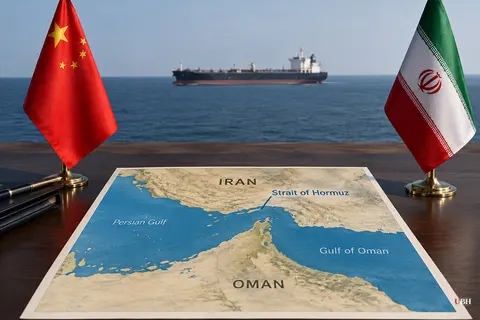
Hormuz Closure Is Starving Defense Factories of Sulfur and Helium — and China Knows It

The Iran War's blockade of the Strait of Hormuz has cut off two obscure but critical industrial chemicals — sulfur and liquid helium — that are essential to manufacturing the weapons, chips, and batteries the U.S. needs to compete with China. This isn't just an energy crisis. It's a defense-industrial crisis, and the Great Power Competition math is getting worse by the week.

U.S., Australia, and Canada Move to Break China's Grip on Rare Earth Minerals as DRC Export Controls Reshape Battery Metals Market

The global race to secure rare earth and battery metal supply chains is accelerating on multiple fronts. The Democratic Republic of Congo has imposed export controls on critical battery metals, squeezing supply, while the U.S., Australia, and Canada are pushing hard to develop domestic and allied sources. China still dominates processing capacity — and that's the part most coverage is glossing over.

China Is Spending $297 Billion on Data Centers While America Is Still Fighting Over Who Pays for the Power Lines

Beijing is preparing a 2 trillion yuan ($297 billion) data center buildout over five years, relying on domestic chips at least 80% of the time to cut Nvidia and AMD out of the equation. Meanwhile, in America, FirstEnergy is petitioning FERC to make data centers pay their own transmission upgrade costs — a fight that won't even get a hearing until June 18. We are racing China on AI infrastructure while arguing about cost allocation.

Showing the 60 most recent of 304. Browse the full archive →