
Unbiased headlines. Facts, not spin.
Unbiased Headlines is an independently owned news organization. We bring you the facts, not opinions, written fresh from 110+ named sources. Sources linked so you can verify it yourself.
 economy
Major Story (8/10)
IMF chief Georgieva says AI demand and war energy shock call for tighter policy, forecasts 4.7% global inflation
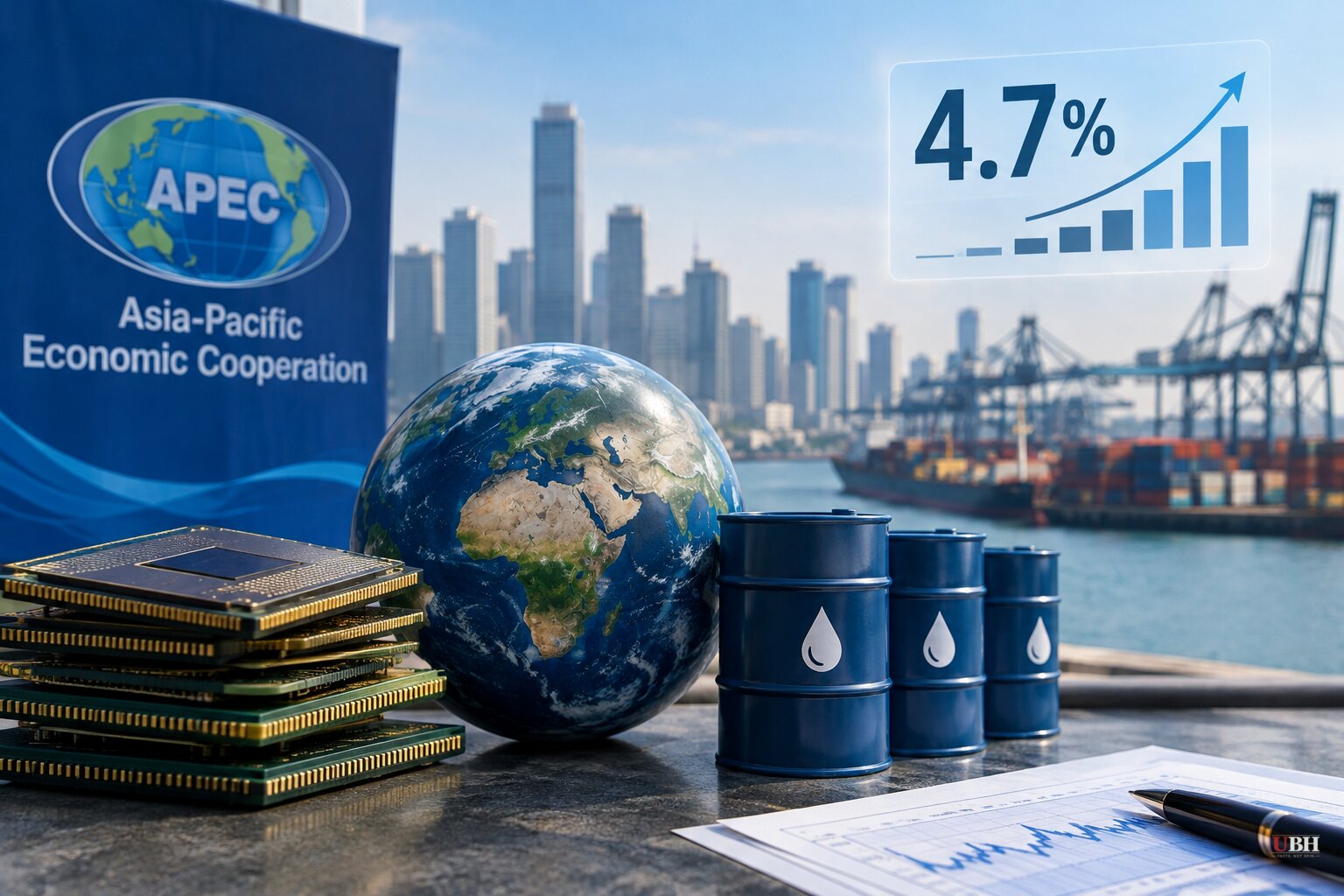
The head of the International Monetary Fund says the AI boom is now an inflation problem, not just a growth story.
Speaking today, Nov. 19, at the APEC summit in Shenzhen, Kristalina Georgieva said demand for AI hardware and related technology is pushing up consumer prices worldwide. Alongside the energy shock from the war in the Middle East, she said, it adds to inflationary pressure across the globe.
"This calls for a tightening of monetary policy in many economies," Georgieva said.
She put global inflation at 4.7% this year. That is her forecast for overall inflation, not a measure of how much of the price rise AI alone is responsible for.
Rate hikes already underway
Central banks have not been waiting. The war with Iran broke out in February and drove oil above $100 a barrel. The European Central Bank raised rates in June, its first increase since 2023. The U.S. Federal Reserve followed in September. The Bank of England raised rates earlier this month.
Financial markets expect borrowing costs to climb further next year, as AI investment supports growth against the volatile backdrop of the conflict.
Oil has eased in recent weeks, following the U.S. midterm elections and an increase in crude supply. Georgieva said the energy shock will eventually dissipate. "AI is for ever," she said, calling it a lasting driver of trade, competitiveness, productivity and growth.
How big AI has become
Georgieva said AI hardware and related tech products now make up more than one-tenth of world goods trade, and the share is rising fast. She said some countries are benefiting more than others.
"To put it simply: you snooze, you lose," she said. She called for digital infrastructure, workers and labor markets ready for AI, plus risk controls, especially around financial stability and cybersecurity.
The boom is also lifting growth. Georgieva said AI is contributing to stronger-than-expected expansion in several countries despite the Iran war. The IMF's October World Economic Outlook put 2026 global growth at 3.1%, with AI investment credited as one of the forces behind that figure.
In a Bloomberg Television interview in Shenzhen, she said the IMF conservatively estimates AI could add half a percentage point to global growth. She said the fund estimates AI will affect 60% of jobs in advanced economies, though she added it could also create new work.
The debt question
The borrowing behind the boom is the part that worries regulators. Hyperscalers, the giant cloud and tech firms building AI capacity, made up less than 1% of global investment-grade bond issuance in 2024. Their share is now about 10%, according to figures attributed to the IMF.
Georgieva also flagged circular financing: deals in which AI supply-chain companies fund customers who then buy their products. She estimated those arrangements at about $1 trillion, with roughly two-thirds financed by debt.
The IMF says a correction in AI investment could cut global GDP by 1.1% by 2028. The U.S., home to most of the biggest spenders, would take a larger hit of 1.8%.
Two views of the bubble risk
Georgieva's read on markets is relatively calm. "At this point we don't see a major correction, but we do expect perhaps a little bit more," she told Bloomberg. She said the IMF had expected some adjustment even before the recent weakness because enthusiasm for AI had become excessive, and that a pullback could bring valuations to a more sustainable level.
The European Central Bank sounded a sharper alarm a day earlier. In its financial stability review, it said the rising debt that AI companies are taking on has "historic parallels" with the dotcom bubble and the subprime mortgage bubble that set off the 2008 financial crisis.
Markets have already shown some strain. The iShares Semiconductor ETF (SOXX) has fallen more than 11% over the past month, and the VanEck Semiconductor ETF (SMH) more than 12%.
Economists also warn that high inflation is squeezing households and could slow demand. Fears of an AI bubble could dent business investment.
What comes next
The policy trade-off is now in the open. Georgieva says higher rates are warranted because AI spending is pushing prices up. The IMF's own numbers show a sharp AI pullback would cost the U.S. more (1.8% of GDP) than the global economy as a whole (1.1%).
Markets are pricing more increases in 2027. Whether the Fed, ECB and Bank of England follow through will depend on whether oil keeps falling and whether the AI spending, and the debt financing it, holds up.
An unresolved question is how much borrowing stress those higher rates put on companies that have loaded up on debt to build AI capacity.
Sources used for this briefing
7 links from 6 independent newsrooms (syndicated copies of the same report count once)
These are the sources it draws on, linked so you can verify.


