
Unbiased headlines. Facts, not spin.
Unbiased Headlines is an independently owned news organization. We bring you the facts, not opinions, written fresh from 110+ named sources. Sources linked so you can verify it yourself.
 economy
Major Story (8/10)
EU Commission Set to Propose €45 Billion Joint-Debt Loan for Ukraine, With Russia Expected to Repay
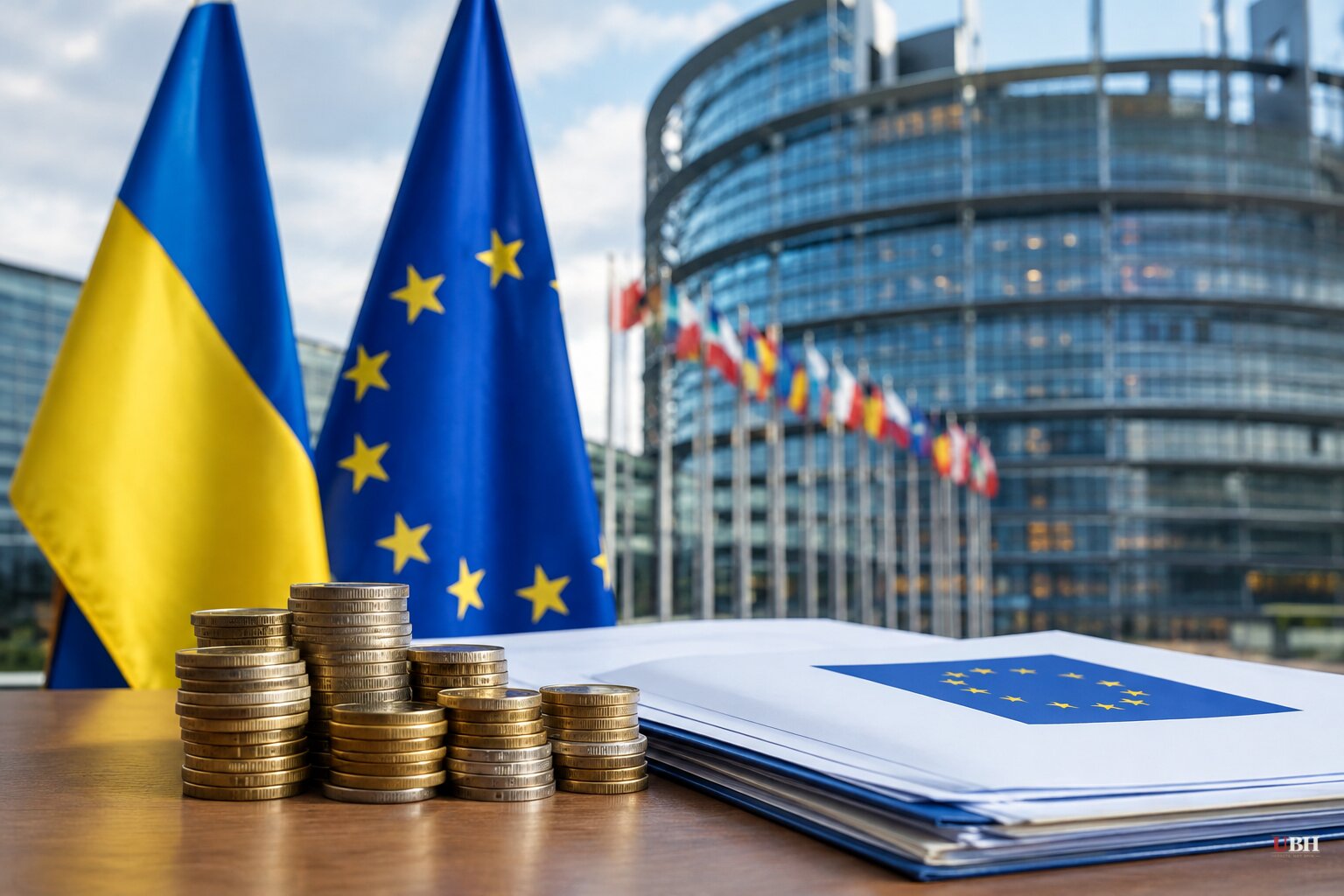
Since EU leaders agreed a €90 billion loan for Ukraine in December, after talks on tapping frozen Russian assets collapsed amid fierce Belgian resistance, Brussels has been working on what comes next. The answer is due today, Nov. 18: a second loan, this time €45 billion.
Commission President Ursula von der Leyen is set to present it, flanked by Economy Commissioner Valdis Dombrovskis and Defence Commissioner Andrius Kubilius.
How the €45 billion is built
The package is called the "Instrument for Coordinated Support to Ukraine," according to a Commission document. The Commission would raise the money by issuing common EU debt, backed by EU budget headroom.
That is the same mechanism as the €90 billion loan, which is still being disbursed. Member states pay the annual interest. The Commission keeps its AAA rating, but borrowing costs have climbed this year amid high energy prices, geopolitical volatility and the AI investment race.
The draft splits the money three ways:
- €25 billion for Ukraine's defense industry, released against product schedules, essentially shopping lists Kyiv submits.
- The remaining €20 billion, split equally between two buckets: Macro-Financial Assistance and the Ukraine Facility.
Those last two buckets pay out only as Ukraine implements EU and IMF reforms. EU and Ukrainian manufacturers get priority on the defense money, but an approval mechanism stays in place for buying elsewhere. Ukraine has already used it to get exemptions for cheap Chinese drone components and U.S.-made PAC-3 Patriot interceptors, where European producers could not deliver at speed and scale.
Who pays, and when
The repayment terms are the same as before. Ukraine repays only once it receives reparations from Russia. If Moscow does not pay, the draft says, "the Union reserves its right to make use of the Russian assets immobilised in the Union to repay the loan."
Dombrovskis said the same on Europe Tonight: "We have explicitly foreseen in the regulation that in this case, the Union reserves the right to use immobilised Russian sovereign assets." About €210 billion of those assets sit on EU soil, most of them at the Brussels-based depository Euroclear.
In practice, Politico notes, it is unlikely Moscow will compensate Ukraine. That leaves the frozen assets, or EU taxpayers, as the backstop. The Commission says the structure keeps Ukraine's mounting debt sustainable after more than four years of war.
The reference to the assets also reopens a fight the EU thought it had set aside. Belgium's resistance killed the earlier plan to use them directly, and Brussels is again choosing to keep them in reserve rather than spend them now. Politico described the reference as threatening a return to the controversial debate.
The gap that remains
Zelensky told the EU in October that Ukraine faces a €70 billion shortfall in 2027 alone. The €45 billion covers roughly two-thirds of it, with payouts that could run to the end of 2028. That leaves about €25 billion uncovered.
The Commission said throughout 2026 that the €90 billion loan was designed to cover only two-thirds of Ukraine's needs and that third countries had to step up. Few did.
This time the draft tries to make it easier. One change would amend the Ukraine Facility so that "third countries of high credit quality" can provide irrevocable, unconditional, on-demand guarantees to the EU, which could unlock about €5 billion more in loans. Another provision would allow new G7 loans to be repaid from future "extraordinary revenues" from the immobilised Russian assets. Brussels is looking to Canada, Japan, the U.S. and the U.K.
Euronews commentator Jorge Liboreiro argues the €90 billion loan was built on an unfounded assumption that the war would end this year. Moscow, he writes, is escalating its airstrikes.
The holdouts
The €90 billion loan came with carve-outs. Hungary, Czechia and Slovakia sat out. This time the Commission wants none.
"We are putting the emphasis of importance of ensuring that it is all 27 EU Member States which are contributing to this program, not 24, as it is right now," Dombrovskis told reporters Tuesday. He added: "Our ambition certainly will be to ensure that all countries contribute."
Germany, traditionally opposed to joint borrowing, now intends to support the existing loan setup, Dombrovskis said. As the EU's largest budget contributor, Berlin has pushed for every member state to take part. Czechia, Hungary and Slovakia have already said they have no interest in getting involved.
Dombrovskis said not every rule has to be settled at once, but there must be a clear and credible path.
What comes next
EU leaders will discuss the loan at a special summit later this month, alongside the bloc's next seven-year budget. Technically separate, the two items have become one negotiation, and the budget could help cover the loan's borrowing costs.
The open question is whether Hungary, Czechia and Slovakia will drop their opt-outs, and who covers the remaining €25 billion if the G7 guarantees do not materialize.
The IMF is the other clock. A tranche of roughly $1.66 billion due before year-end could be complicated if political agreement slips, according to a report from Briefs Finance.
Sources used for this briefing
7 links from 5 independent newsrooms (syndicated copies of the same report count once)
These are the sources it draws on, linked so you can verify.
More coverage: Ukraine


