
Unbiased headlines. Facts, not spin.
Unbiased Headlines is an independently owned news organization. We bring you the facts, not opinions, written fresh from 110+ named sources. Sources linked so you can verify it yourself.
 economy
Major Story (8/10)
Event date: November 8, 2026 ·
Germany Backs Spain's Hernández de Cos for ECB President, Seeks Chief Economist Post for Brunnermeier
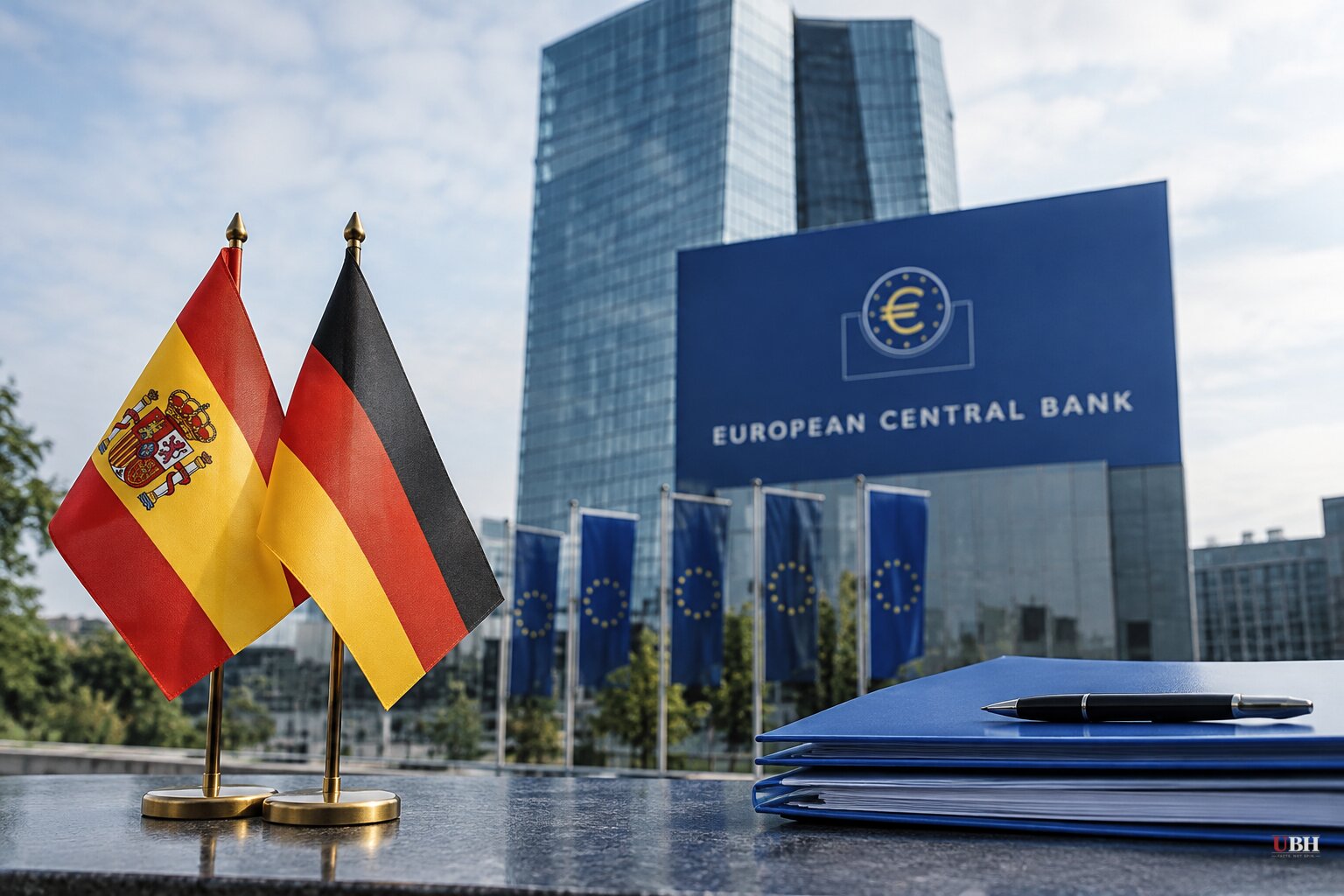
Since Christine Lagarde announced Oct. 29 that she would leave the European Central Bank on Feb. 7, nine months before her term was due to end, the contest for her job has come down to two men. As of today, Nov. 17, Germany has tilted it.
Germany's Finance Ministry said Tuesday it is seeking the ECB chief economist post for Markus Brunnermeier, a Princeton University professor. People familiar with the matter told Reuters that Berlin will also support Spain's Pablo Hernández de Cos for the presidency.
The Wall Street Journal, citing EU diplomats and a senior German official, reported that France and Germany are preparing to back de Cos jointly. In that arrangement, France would reportedly take the executive board seat overseeing market operations, now held by Germany's Isabel Schnabel. None of this has been formally announced.
Three seats, one package
The presidency is one of three Executive Board vacancies. Schnabel is leaving Jan. 3 for the International Monetary Fund. Chief economist Philip Lane's term ends May 31. Lagarde goes Feb. 7.
Governments are bargaining over all three at once. By targeting the chief economist job, which shapes the ECB's policy proposals, Germany makes it easier for de Cos to win the presidency. Reuters noted the importance of maintaining a balance between northern and southern Europeans on the ECB's six-member Executive Board, and a German economist in that seat gives the northern bloc something in return.
The arrangement still needs sign-off at the EU summit in Brussels on Nov. 26-27. A candidate needs the support of at least 16 euro-area countries representing 65% of the euro-area population. The European Parliament and the ECB's Governing Council are also due to weigh in.
The two candidates
The Netherlands and Spain each nominated a former central bank chief. Kyriakos Pierrakakis, who heads the group of euro-area finance ministers, announced both nominations in a statement on a Friday, according to Bloomberg's Nov. 8 report.
De Cos, 55, is a former Bank of Spain governor and now general manager of the Bank for International Settlements in Basel. He is a former ECB staffer and a Mario Draghi ally. He backed negative interest rates and large-scale bond purchases when inflation was weak. He also supported the ECB's most aggressive rate-hiking cycle after Russia's 2022 invasion of Ukraine.
Spanish Foreign Minister José Manuel Albares said on Bloomberg Television on Monday that de Cos is "someone with very long experience, with a real European vision and heart." He added: "Our candidate is a consensus candidate." Spain's governing and opposition parties both back him. "The sooner, the better for Europe, for the bank and for the stability of the European economy," Albares said.
Knot, the former Dutch central bank governor, is the only other declared candidate. De Volkskrant reported Monday that he is expected to withdraw. No withdrawal has been confirmed.
Why the north-south balance matters
Northern and southern euro members have often landed on opposite sides of EU economic fights. Southern governments, carrying heavier debt, typically favor lower interest rates and more risk-sharing. Reuters noted that putting a southern European and Draghi ally at the top would reinforce expectations that the ECB would use its firepower to contain any new sovereign debt crisis.
The timing is awkward. The ECB is dealing with a war-driven rise in inflation and the fallout from France's budget crisis, which has rattled euro zone bond markets. Money markets are pricing two or three ECB rate increases by the end of next year, according to Reuters. Economists expect de Cos to broadly continue the gradual tightening path Lagarde laid out.
Why Lagarde left early
Lagarde, 70, said at her Oct. 29 news conference that she wanted to be freed from the political neutrality the job demands. "I want to, have the freedom of speech, the freedom of expression, and the freedom to engage on matters that are not monetary policy matters," she said. She did not elaborate.
There was also speculation that an early exit would let EU leaders choose a successor while President Emmanuel Macron is still in office, ahead of France's presidential election next year. The worry, as the speculation framed it, was that National Rally candidate Marine Le Pen might win and influence the choice. Lagarde did not address that.
Holger Schmieding, chief economist at Berenberg bank, said her early departure "is no surprise and does not change the outlook for ECB policies."
The person who sets interest rates for 21 countries will be picked in a bargaining session among governments, not at a ballot box. The next test is whether Knot formally exits and whether Paris and Berlin's reported deal on the board seats holds through the Nov. 26-27 summit.
European Council President Antonio Costa said the selection process would proceed "without delay."
Sources used for this briefing
6 links from 5 independent newsrooms (syndicated copies of the same report count once)
These are the sources it draws on, linked so you can verify.


