
Unbiased headlines. Facts, not spin.
Unbiased Headlines is an independently owned news organization. We bring you the facts, not opinions, written fresh from 110+ named sources. Sources linked so you can verify it yourself.
 economy
Major Story (8/10)
Carney Says Canada Could Turn to Chinese Automakers if U.S. Talks Fail, and Navarro Calls It 'Offensive'
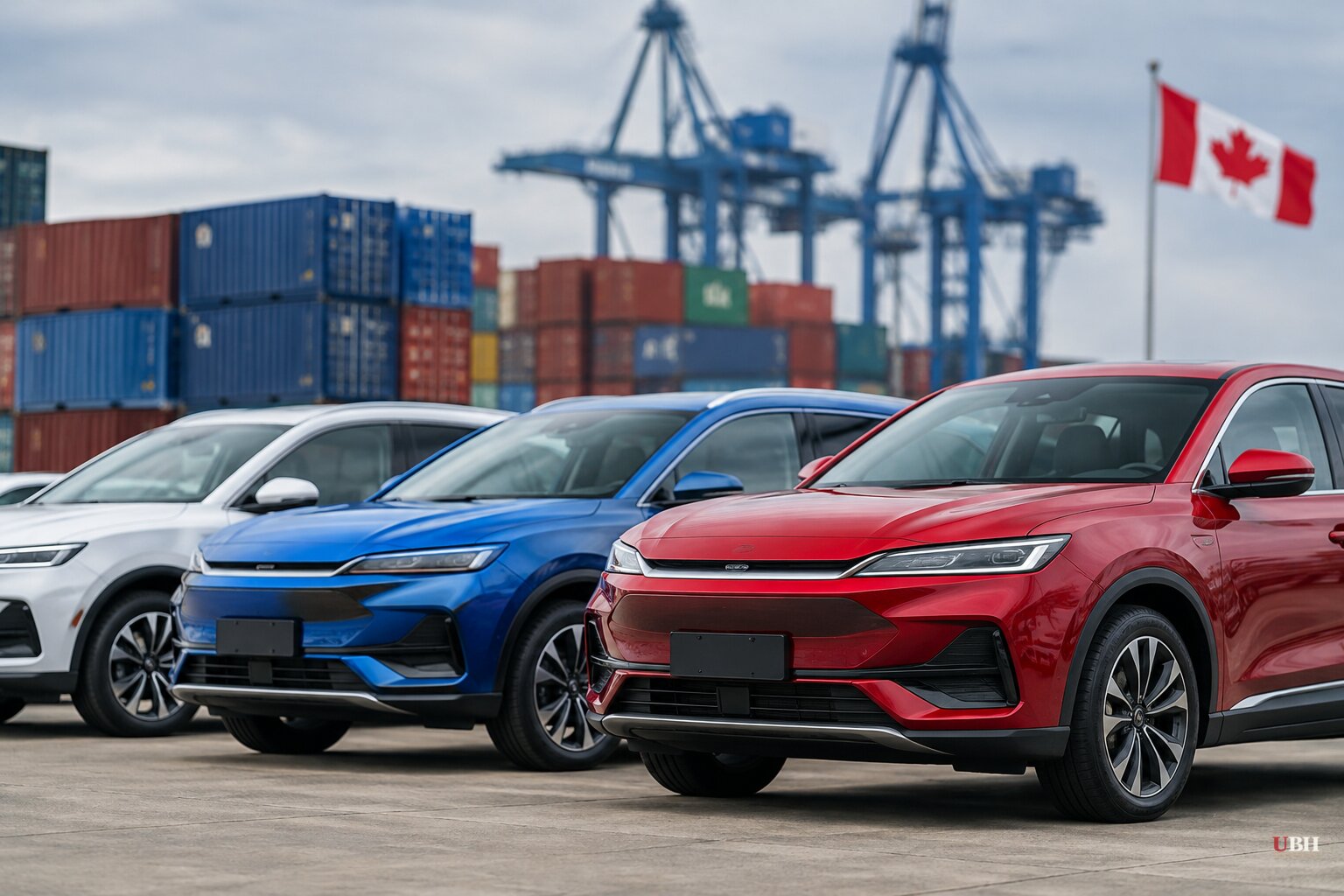
Since Carney said in Manila on Saturday, Nov. 14, that Canada would not accept a trade deal that guts its auto industry, he has gone a step further: on Monday, Nov. 16, in Phnom Penh, he said Canada could pursue Chinese automakers if the talks with Washington fail.
Carney was in Cambodia for the Francophonie Summit. He said negotiations with the United States remain his priority. But he said their outcome could decide whether Canada looks to European, Chinese or Japanese automakers instead.
"We have the best auto workers in the world, and we want them fully deployed, full opportunity, in an integrated North American market," Carney told reporters. "That market has become less integrated because of U.S. trade actions."
Carney: 'Action, reaction'
Asked whether the prospect of Chinese investment was leverage against Washington, Carney said no. "It's not leverage. But action, reaction," he said.
"If they're not fully utilized in a North American context, that provides other opportunities," he added. "Canada is going to move forward either way."
He set conditions for any Chinese involvement. It would have to include real manufacturing in Canada, proper labor standards, and domestic supply chains that grow over time, including Canadian critical minerals used in EVs. "It's not just about kit cars," he said.
The Epoch Times reported that Carney also floated wider cooperation with China in agriculture, energy and financial services. It also noted the tone is a shift from his 2025 election campaign, when he described China as Canada's top security threat.
Washington and Ontario push back
Navarro answered within hours on X. "Are u really threatening to play China off the U.S.? This is offensive in the extreme," he wrote. "You should be far more worried China is going to eat Canada alive."
Ford, whose province is the center of Canada's auto industry, criticized the idea on Monday. "The federal government's focus needs to be on protecting Canadian auto workers, not undermining them by importing even more state-subsidized cheap Chinese cars," he said.
Brian Kingston, president and CEO of the Canadian Vehicle Manufacturers' Association, put the industry's exposure bluntly: there "is no auto industry in Canada without US market access."
Carney's argument runs the other way. He says the integrated North American market has already frayed because of U.S. trade actions, and that Canada has to have options if it keeps fraying. Trump has repeatedly pushed automakers to shift production from Canada to the United States.
What the January deal did and didn't deliver
The Chinese opening is not hypothetical. Under the January agreement between Carney and Xi, Canada cut its 100% tariff on Chinese electric vehicles to 6.1%, initially allowing up to 49,000 vehicles a year, with the cap rising over time. In exchange, China agreed to lower tariffs on Canadian agricultural products, including canola.
Canada had imposed the 100% EV tariff in 2024, along with a 25% tariff on Chinese steel and aluminum, after the U.S. took similar steps. China retaliated against Canadian canola oil, pork, seafood and other farm exports.
Uptake has been modest so far. Figures reported by Breitbart put Chinese EV imports at about 16,200 through the end of September, well under the 49,000 allowance.
Carney said when the deal was signed that he expected it to draw Chinese investment into Canada's auto sector and create jobs. Ford objected then too, warning that Chinese EVs could threaten Canadian jobs and put access to the U.S. market at risk. He also urged Canadians to boycott Chinese EVs and said Carney never consulted him before the deal.
The Detroit Three problem
Ford, General Motors and Stellantis run plants across Canada, the United States and Mexico. Parts often cross borders several times before a vehicle is finished. That is the supply chain Carney says he wants to keep intact, and the one U.S. tariffs have disrupted.
No one in these remarks has explained how a Chinese-linked plant in Canada would sell into the U.S. market. Kingston's point is that without that access the Canadian industry has little to run on.
Carney is due to meet Xi on the sidelines of the APEC summit in Shenzhen on Tuesday, Nov. 17. Chinese auto manufacturing is expected to be on the agenda. Whether Carney comes away with a concrete investment commitment, and how Washington responds before a U.S. deal is signed, is the open question.
No trade agreement between Canada and the United States has been announced.
Sources used for this briefing
6 links from 6 independent newsrooms (syndicated copies of the same report count once)
These are the sources it draws on, linked so you can verify.
More coverage: China


