
Unbiased headlines. Facts, not spin.
Unbiased Headlines is an independently owned news organization. We bring you the facts, not opinions, written fresh from 110+ named sources. Sources linked so you can verify it yourself.
 economy
Major Story (7/10)
New International Student Enrollment Down 15% This Fall After 17.7% Drop Last Year
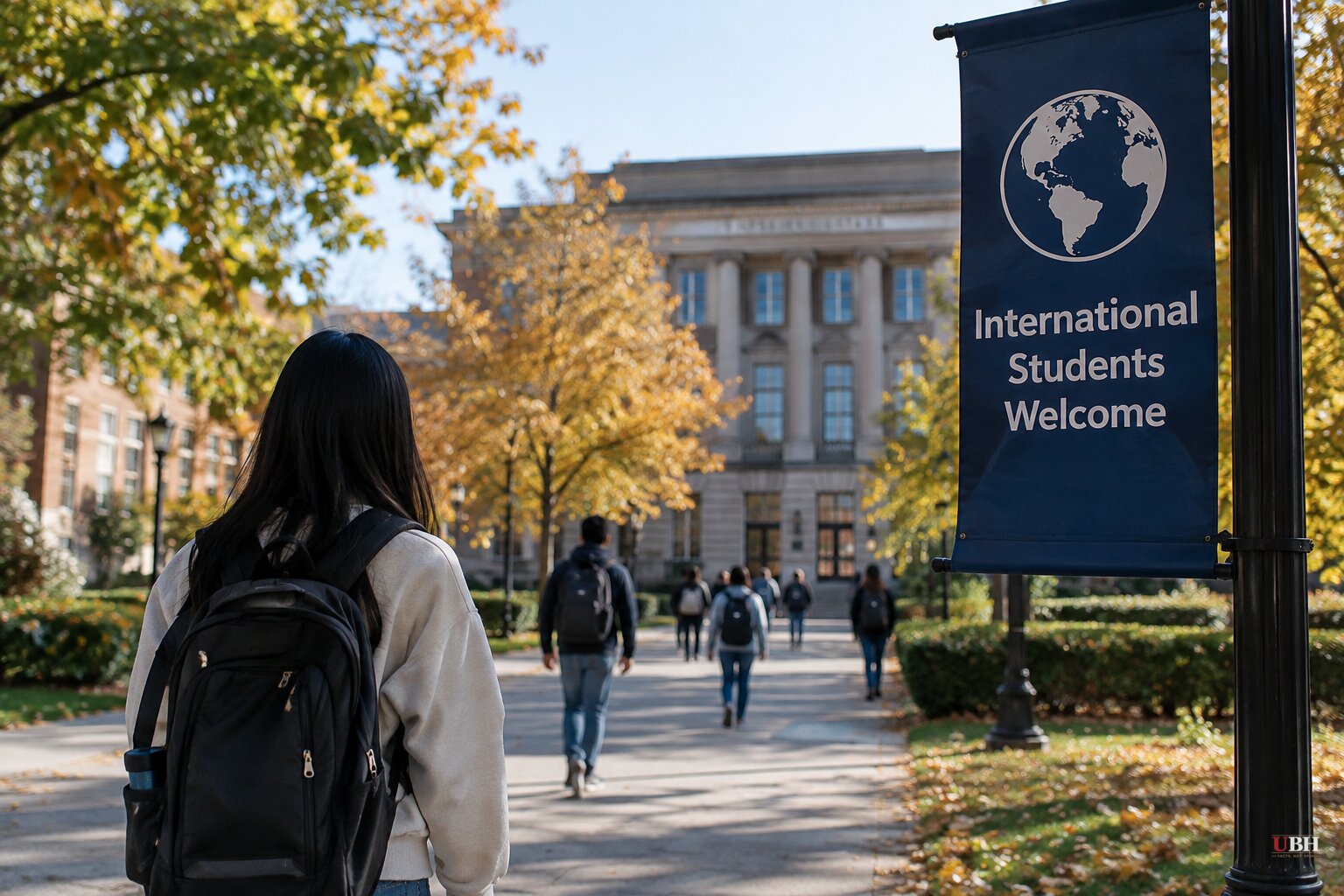
New international enrollment at U.S. colleges has now fallen two years in a row, and this fall's numbers show no turnaround.
The Institute of International Education (IIE), working with the State Department, released its annual Open Doors report and a fall snapshot on Monday, Nov. 16. The fall survey covered 809 colleges.
The numbers
In the 2025-26 academic year, U.S. campuses hosted roughly 1.1 million international students, down 2.7% from the year before. New international enrollment, meaning students arriving at their institution for the first time, fell 17.7%.
The fall 2026 snapshot points the same direction. Total international enrollment at surveyed schools is down 9%. New students are down 15%, and international graduate enrollment is down 15%.
The damage is concentrated in master's programs. Master's enrollment fell 22.4% to 237,655 students. Undergraduate enrollment barely moved, slipping 0.3% to 356,165. Doctoral enrollment actually rose 3.1% to 158,152.
India is still the top sender with 339,435 students, but that is a 6.5% decline. China is second at 254,458, down 4.3%. Graduate students from India fell 34%, roughly 61,000 fewer people, according to the IIE data.
It was not a drop everywhere. Nepal rose nearly 17% to 29,058. Vietnam grew 6.5% to 27,257. Ghana hit a record 13,268. Nigeria fell 5.6% to 20,634, and Saudi Arabia fell 11%.
The policy backdrop
The Department of Homeland Security has proposed requiring schools to pay a $70,000 fee for every student in the Optional Practical Training program, which lets graduates work in the U.S. in their field. The rule is not final and is expected to draw legal challenges.
OPT participation still rose in 2025-26, but the fall survey shows it down 6%. Of the schools surveyed, 95% predicted international students would look to another country if OPT options are limited.
This summer, DHS also finalized a rule ending the traditional "duration of status" system and capping most F-1 and J-1 visas at four years without federal approval. A federal judge has temporarily blocked it.
DHS Secretary Markwayne Mullin has said the changes are meant to crack down on loopholes that students exploit by extending their studies. The administration has also argued that stricter enforcement is needed to prevent visa fraud, and it says the U.S. still welcomes qualified international students who meet visa requirements.
What schools say is driving it
The survey asked colleges directly. Some 88% blamed the visa application process, and 70% blamed travel restrictions. Another 60% cited competition from other countries.
Policy is not the only factor, according to Mirka Martel, IIE's head of research, evaluation and learning. "There are more countries actively investing in and recruiting international students," she said. Rising U.S. degree costs also showed up in the survey.
Critics of the administration put the blame squarely on Washington. Veena Dubal, general counsel of the American Association of University Professors, said: "It feels like an unsafe place. That's the message that the Trump administration has been sending to families all over the world and they're listening."
Fanta Aw, CEO of NAFSA: Association of International Educators, said in a Sept. 14 statement that the U.S. "should be strengthening our ability to attract the best and brightest, not creating new barriers to it."
Gerardo Blanco, director of Boston College's Center for International Higher Education, offered a different read. "This could have been worse," he said. He added that he thinks the administration "likely intended to bring the decreases to the double digits and to keep them that way." The administration has not said that was its goal.
The money
International students typically pay full tuition, which makes them a revenue line schools lean on. Robert Franek, editor-in-chief of The Princeton Review, said fewer of them means "fewer research dollars, fewer scholarship dollars for students here in the states."
A NAFSA analysis put international students' contribution to the U.S. economy at nearly $40 billion in 2025-26. It estimates this year's enrollment decline will cost roughly $2.4 billion.
Some schools are already cutting. The University of North Texas has announced plans to eliminate or merge about 70 academic programs, citing financial pressures that include falling international enrollment. Ohio State reported a 13% drop in international enrollment this fall, including a 20% drop in students from China.
There is a strategic angle as well. Blanco warned that a shrinking graduate pipeline could hurt the U.S. in its race with China on artificial intelligence and other fields. He noted that most postdoctoral researchers in American labs were born abroad.
What comes next
The $70,000 OPT fee is still only a proposal, and challenges are expected if DHS finalizes it. The four-year visa cap remains blocked by the court injunction while that litigation continues. IIE has said its fall snapshot is an early look, and fuller data will come next year.
That data will show whether the 15% decline in new students this fall holds, and whether doctoral and undergraduate numbers stay steady as master's enrollment falls.
Sources used for this briefing
7 links from 7 independent newsrooms (syndicated copies of the same report count once)
These are the sources it draws on, linked so you can verify.


