
Unbiased headlines. Facts, not spin.
Unbiased Headlines is an independently owned news organization. We bring you the facts, not opinions, written fresh from 110+ named sources. Sources linked so you can verify it yourself.
 economy
Notable (6/10)
China's Singles' Day Sales Are Tracking Last Year's Pace as Trade Surplus Passes $1 Trillion
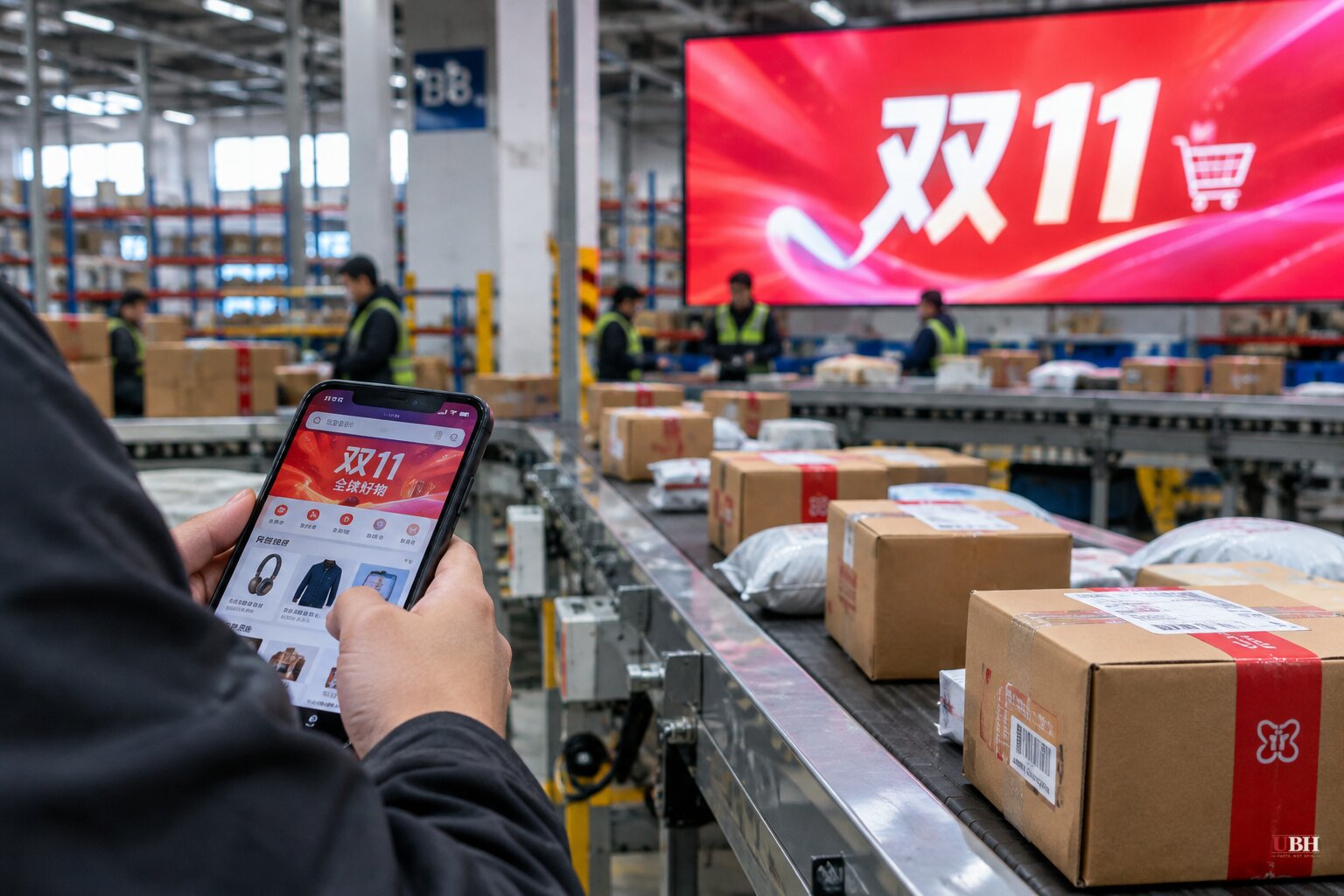
Since China's October numbers showed factory output slowing to 4.8% and retail sales rising just 0.4%, more evidence has piled up that the domestic consumer is not coming to the rescue. The country's biggest online shopping festival is flat, and the export machine is running hotter than ever.
Singles' Day fails to lift spending
The retail data platform Syntun put cumulative Singles' Day sales through Oct. 31 at just over 1 trillion yuan ($154 billion). That is broadly in line with the same period last year.
Retailers have grown sales mostly by stretching the festival out. The event centers on Nov. 11 but now starts weeks earlier. Total sales in 2025 hit a record of almost 1.7 trillion yuan ($254 billion).
"Optimism over a recovery in domestic demand has faded," said Max Zenglein, Asia Pacific senior economist at The Conference Board. "Improvements in sentiment have repeatedly proved short-lived."
Alibaba is leaning on artificial intelligence to coax shoppers. It built its Qwen AI into the Taobao and Tmall platforms to help people find products and place orders. AI token plans are being promoted during the festival for the first time. Chinese media reported that a livestream by the influencer Li Jiaqi sold plans covering roughly 2 trillion tokens within half an hour.
Shoppers are not matching the sales pitch. Gabby Liang, 24, of Foshan, said she has "been buying much less online, especially when it comes to non-essential items."
The property drag
Households hold most of their wealth in housing, and housing keeps sliding. Home prices are down roughly 20% or more from their 2021 peak, with smaller cities and the resale market falling harder, according to the AP. New home prices fell again in October, a 41st straight monthly decline.
Andy Rothman, founder and CEO of the advisory firm Sinology, said prices look to be stabilizing in larger cities. Many homeowners still worry they could fall further, he said.
Youth joblessness adds to the caution. Unemployment among 16-to-24-year-olds, excluding students, was 18% in September. The overall rate eased to 5.1% in October from 5.2%. Consumer inflation slowed to 0.7% in October.
Exports carry the load
China's customs data show October exports up 35.2% from a year earlier, ahead of the 33.5% economists forecast. Imports jumped 41.6%, well above the 32% forecast in a Reuters poll.
The trade surplus reached $1.04 trillion in the first 10 months. That is the second straight year above $1 trillion, and it came a month earlier than in 2025. Last year's full-year surplus was a record $1.2 trillion, and China is on course to exceed it.
The surplus with the United States narrowed slightly to $32.71 billion in October from $34.01 billion in September.
The National Bureau of Statistics frames the strength as quality. Spokesperson Fu Linghui said high-end and intelligent manufacturing contributed more than half of industrial output growth in the first 10 months. He also acknowledged that households' ability and willingness to spend need to improve.
No new stimulus expected
Analysts do not expect Beijing to change course. Third-quarter growth ran at 4.5%, and the government's target range is 4.5% to 5.0%.
"No new stimulus measures are expected to be introduced for the remainder of the year," said Zhaopeng Xing, senior China strategist at ANZ. He added that annual growth should stay above 4.5%.
Goldman Sachs forecasts growth of 4.6% this year, down from 5% in 2025, and 4.5% in 2027. It sees consumer inflation of 0.8% this year and 0.5% in 2027. The bank cites weak domestic demand, abundant supply and possible disruption from AI, and says that pace still keeps China on track to double 2020 per capita income by 2035.
The argument from Xing and Goldman is that exports and high-tech output are enough to hit the targets. The counterpoint comes from Lynn Song, ING's chief economist for Greater China. He called October's data "a worrying start" for the fourth quarter and said "the domestic economy at large would benefit from more policy support."
Reuters reported that strong high-tech demand masks weakness in traditional, domestically oriented industries. It also eases the pressure on policymakers to shore up consumption.
Trade friction ahead of Shenzhen
The surplus lands as Xi Jinping and President Donald Trump are expected to meet for the third time this year at the APEC summit in Shenzhen, due the week after the Nov. 10 trade release. Washington and Beijing formally extended their trade truce by two months on Nov. 9, a day before it was due to expire. China has said any expansion of U.S. farm purchases depends on implementing agreed reciprocal tariff cuts.
European leaders have called for more trade curbs on China, even after an agreement with Beijing to limit Chinese hybrid vehicle exports to the bloc over the next few years. Those limits have not taken effect, so factories are expected to pull shipments forward.
"The risk of additional tariffs and other trade barriers will remain elevated in 2027," said Joe Peissel, lead macroeconomist at Trivium China.
The AI dependency
China's export boom is tied to the global build-out of AI infrastructure. On Monday, Nov. 16, Dow Jones reported that Friday's U.S. chip selloff spread to Asia, with Taiwan's Taiex leading regional markets lower as chip and hardware makers fell sharply. No source ties that move to China's export outlook.
It does show where the risk sits. If AI spending cools, a Chinese economy where retail sales grew 0.4% in October and fixed-asset investment fell 8.1% over the first 10 months has little else to fall back on. Whether Beijing holds to its no-new-stimulus stance through the fourth quarter is the open question.
Sources used for this briefing
6 links from 6 independent newsrooms (syndicated copies of the same report count once)
These are the sources it draws on, linked so you can verify.


