
Unbiased headlines. Facts, not spin.
Unbiased Headlines is an independently owned news organization. We bring you the facts, not opinions, written fresh from 110+ named sources. Sources linked so you can verify it yourself.
 economy
Major Story (8/10)
Jensen Huang Steps Down as Nvidia CEO, Bessent Reportedly Blames Lutnick, and Trump Is Due in Shenzhen Next Week
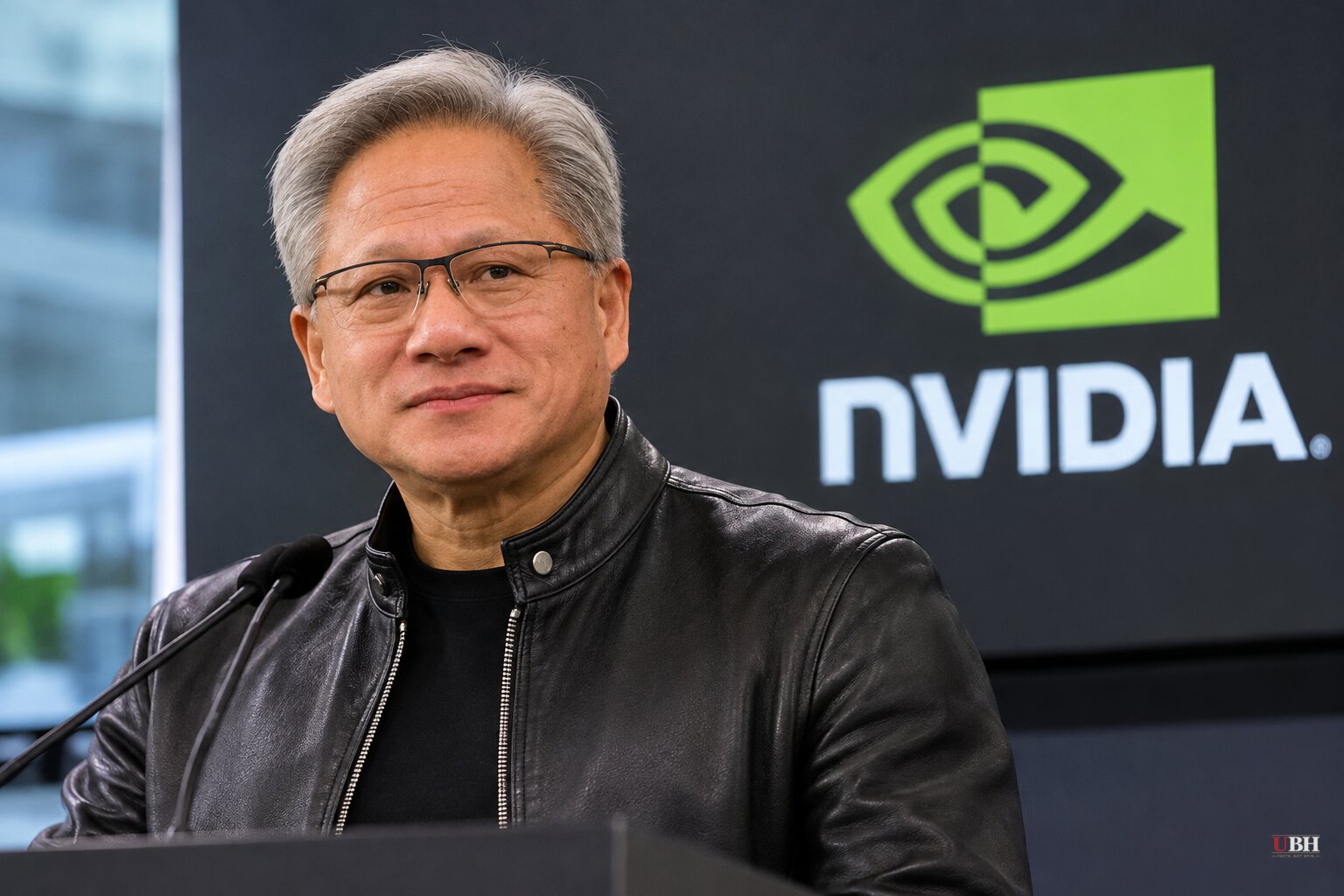
Since Nvidia's board opened an investigation into Jensen Huang's relationship with Alice Huang on Nov. 8, the company's co-founder has resigned as CEO, and the fight has moved from the boardroom to Washington.
Nvidia announced Thursday, Nov. 12 that Huang is stepping down after 33 years. Colette Kress, the executive vice president and chief financial officer, has agreed to lead the company. CBC News calculated that the turmoil and the resignation have cost Nvidia more than $1 trillion in market value.
Alice Huang, a Chinese citizen and former Megaspeed executive, is unrelated to Jensen Huang. US officials suspect she worked for Chinese intelligence. China denies the allegation and has said the US is "fabricating" the spy claims to justify a tech "blockade." Megaspeed denies wrongdoing.
Washington opens its own inquiries
House Republican committee leaders asked Huang on Thursday to sit for a closed-door briefing on his ties to Alice Huang. They wrote that recent reports "raise significant national security concerns regarding the PRC's access to sensitive U.S. technology." CBC reports that Rep. Brian Mast, the Republican chair of the House Foreign Affairs Committee, told reporters Thursday that Huang has agreed to go before the committee ahead of its Thanksgiving break.
Sen. Richard Blumenthal, D-Conn., renewed his warning on Thursday. He had pressed Huang in November 2025 about Nvidia's ballroom donation and its White House contacts.
Rep. Robert Garcia, D-Calif., the expected incoming House Oversight chairman, vowed to investigate corporate corruption when Democrats take control in January.
Bessent versus Lutnick
CBS News reports that Bessent is blaming Lutnick for letting Megaspeed funnel Nvidia chips to China. Bessent is upset that Commerce never banned exports to the firm, CBS said.
That tracks with an earlier New York Times account that Commerce was investigating Megaspeed until August 2025, when the probe was abruptly transferred to the Department of Justice following outreach from Nvidia's general counsel. CBC reports that multiple US outlets say Lutnick's department turned a blind eye to evidence China was getting top-end chips through intermediaries.
What Nvidia asked for on H200 licenses
Semafor reports that in January, Nvidia general counsel Tim Teter told more than a dozen government officials on a call: "I was with the president when he and Jensen discussed this so I want to let you know what the president wanted. He wants this to go fast." Semafor's account comes from people with access to a detailed account of the call.
At issue were license conditions for H200 sales to China. They included requirements that sellers know their cloud customers and run know-your-customer checks on buyers of more than a few thousand chips. Teter called the cloud-customer rule a "poison pill," according to Semafor's sources. Nvidia wanted the checks to start in the tens of thousands of chips, equivalent to billions of dollars of product.
Nvidia declined to comment. A spokesperson for Commerce's Bureau of Industry and Security said it was "completely routine" for the department to work with individual companies, and that "often the conditions change in response to legitimate commercial considerations." The spokesperson said Nvidia went through the same process as any other applicant, and that the state, defense, energy and commerce departments review the final conditions.
Trump's trades and Trump's defense
The Guardian, citing an analysis by the anti-corruption group DeKleptocracy, reports that Trump's public financial disclosures indicate he bought between $1 million and $5 million of Nvidia stock in the days before his administration rescinded the Biden-era AI chip diffusion rule in May 2025. The disclosures also indicate at least three purchases of $250,001 to $500,000 in the days after Trump said in December 2025 that he would allow H200 sales to China.
Trump also bought shares in other tech companies, including Apple, Meta and Microsoft, and he appears to have made dozens of Nvidia transactions since taking office. DeKleptocracy wrote that "Trump's corruption may have motivated him" to deliver the AI industry's technology to China. The group offers that as its conclusion.
Nvidia has committed at least $26 million to Trump projects, including $25 million for the White House ballroom and $1 million for his 2025 inaugural fund, according to CNBC's account of documents obtained by The Washington Post. The company initially sought to keep the ballroom gift anonymous.
Trump has defended Huang, calling him an "honorable guy" and saying he had heard nothing suggesting wrongdoing. The New York Times reported that Trump was briefed on the suspected Chinese operation in October 2025 and chose not to act, and that Secretary of State Marco Rubio oversaw a classified memo on it this spring.
Shenzhen next
Trump is due to travel to Shenzhen next week for the APEC summit, where he is due to meet Xi. Huang went with Trump to Beijing in May in hopes of unlocking H200 sales. No breakthrough was announced, and shipments have stayed low because Beijing has been slow to approve imports, a bid to support domestic chipmakers. Huang's place in the next delegation is now in doubt.
Whether Trump changes the H200 terms before facing Xi remains an open question. Garcia's promised investigation cannot begin before Democrats take control of the House in January.
Sources used for this briefing
8 links from 8 independent newsrooms (syndicated copies of the same report count once)
These are the sources it draws on, linked so you can verify.


