
Unbiased headlines. Facts, not spin.
Unbiased Headlines is an independently owned news organization. We bring you the facts, not opinions, written fresh from 110+ named sources. Sources linked so you can verify it yourself.
 economy
Major Story (8/10)
FAA Ground Stop: Bedford Apologizes, Duffy Says Remote Router Work Will Be Rescheduled, L3Harris Says It Is Backing the Probe
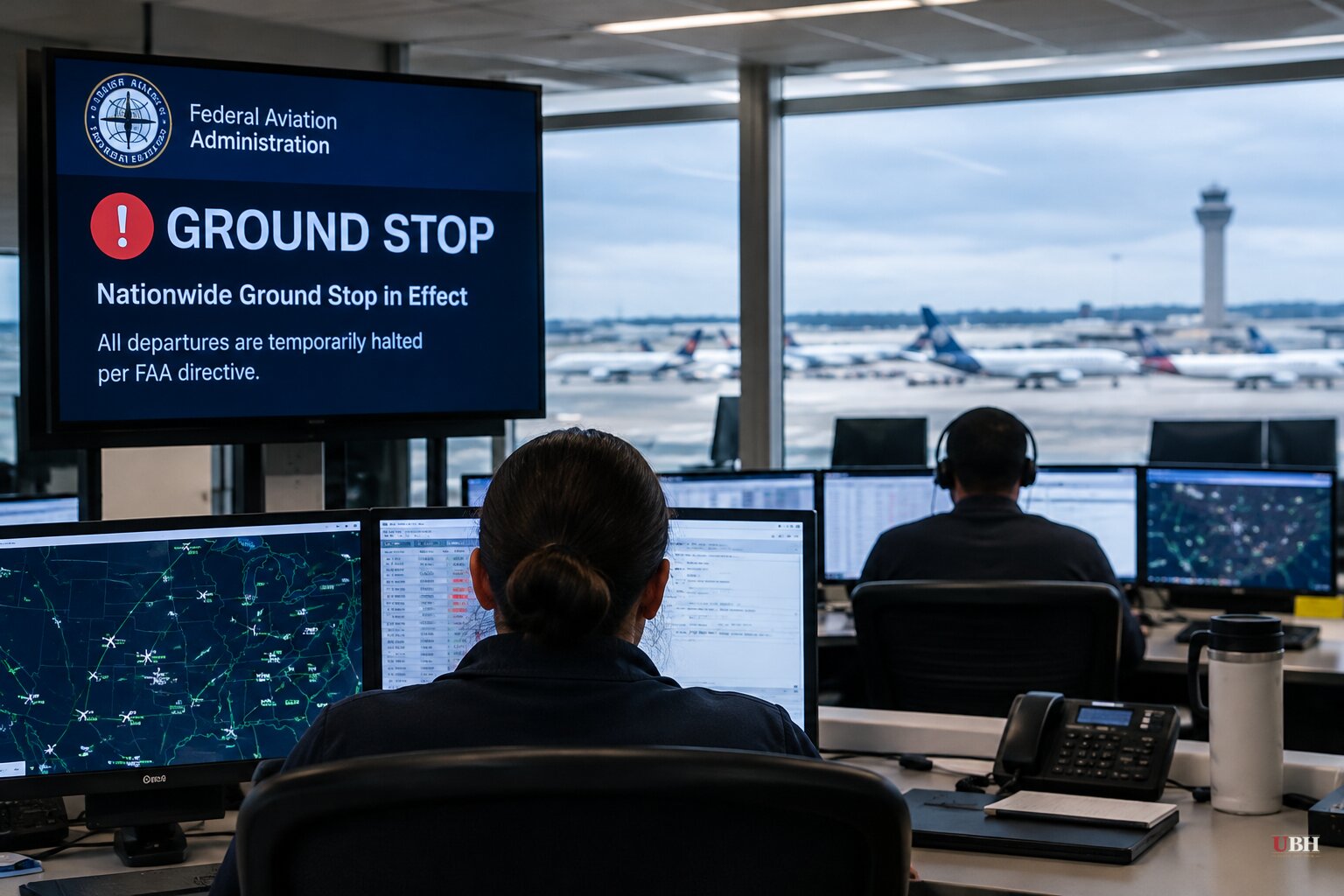
Since Friday's nationwide ground stop, which ran from 3:54 p.m. to 8:15 p.m. ET on Nov. 13, the FAA has moved from describing the cause to apologizing for the fallout and promising changes to how it schedules network work.
Bedford opened Saturday's Department of Transportation briefing with an apology. "A sincere apology to the American traveling public," he said. "Tens of thousands of Americans had their flights disrupted yesterday, and I want you to understand we did that out of an abundance of caution."
He said schedule problems should be resolved by Sunday evening, Nov. 15.
What the FAA says happened
Duffy said a contractor was replacing a router at a remote FAA site as part of a copper-to-fiber upgrade when the new connection began flooding other routers in the air traffic control network. He put the volume at roughly 1,000 connection attempts every four to five seconds.
That disrupted radar feeds and communications between controllers and aircraft. Bedford said about 45 minutes of network "instability" passed before the ground stop, and that officials could not pin down the cause in that window.
Bedford said no FAA facilities went dark. "We were unwilling to take any risk that this propagation could actually result in a center losing connectivity with aircraft," he said. He added that he stands behind the decision: "I think that was the right call."
The FAA's acting chief technology officer, Rebecca Guy, said engineers found two points pinging the network at that rate, disabled both right away and stabilized it. A root cause analysis is still underway.
Fault still undetermined
The officials did not fully agree on how far the investigation has gotten. Bedford said, "I do think we've identified the fault," and called it "a defective piece of equipment." Duffy said, "We haven't determined what the fault was."
Duffy framed the open question bluntly: "Was it user error, installator error from L3Harris, or did they install a faulty router?" He also said the contractor "didn't meet the moment."
He described the FAA's leverage as limited. "They own this network. They're our prime contractor. I can't go somewhere else," Duffy said, adding, "we're going to hold people accountable."
L3Harris pushed back on the framing in a statement posted to its website. The company said it has worked with the FAA to modernize communications infrastructure and has completed more than 70% of the copper-to-fiber conversions. "We are supporting the FAA in its investigation to understand the conditions that led to the Nov. 13 ground stop of our nation's air travel," it said. The company has not accepted fault.
Timing of the work questioned
Reporters asked why a cutover was done at 3 p.m. on a Friday rather than overnight. Duffy said switchovers at larger airports happen late at night, while remote ones happen during the day.
"There will be reevaluation of when we do this work," he said.
Duffy also said the work was routine and that copper-to-fiber conversion is something "virtually every single institution in America" has already done. He said the FAA may be the last because "the investments haven't been made."
Congress approved $12.5 billion in July 2025 to modernize the air traffic control system. Duffy said Saturday the FAA needs more, and urged lawmakers of both parties to commit to funding. "We can fight on a lot of things, but we're not going to fight on this," he said.
Cyberattack and AI ruled out
Bedford said there was "zero evidence of anything nefarious and zero evidence of anything AI-related." Duffy said, "We don't believe this was cyber at all."
The AI question arose because the FAA announced a new tool for air traffic controllers a day before the outage. The controllers' union has said it was not consulted on the design of that system. Duffy said the tool, called SMART and built by Air Space Intelligence, is not connected to the older routers and communications equipment that failed. He described it as a prompt a flight manager can accept or deny.
Scale of the disruption
The count varies by tracker. FlightAware recorded nearly 25,000 delays and more than 9,000 cancellations on Friday, though CNBC noted some disruption was weather-related. Cirium put Friday evening cancellations at more than 8,200.
On Saturday, Cirium recorded more than 4,000 cancellations, about 18% of flights departing the U.S. FlightAware showed more than 3,700 cancellations as of 9:40 a.m. ET.
The halt was the longest in flight departures to U.S. airports since 9/11, according to CNBC. TechCrunch put it as only the third nationwide ground stop of the century.
Airlines have been working to reposition planes and crews. Delta offered crews double pay to pick up trips, according to internal messages seen by CNBC. American and United also offered extra pay, according to people familiar with their plans. American and other carriers said they would rebook customers with no fee or fare difference.
Fox News correspondent David Spunt reported light security lines and only a handful of cancellations at Reagan National on Saturday afternoon.
Thanksgiving travel is the next test. A Memphis traveler, Sara Yacoubian, told Fox News Digital the outage "scared me" and that she is driving for the holiday instead of flying.
The open items are concrete: the FAA's root cause analysis, a determination of whether L3Harris or its equipment is responsible, and whatever new rules emerge for when remote network cutovers are allowed. Bedford's Sunday evening recovery target comes first.
Sources used for this briefing
8 links from 8 independent newsrooms (syndicated copies of the same report count once)
These are the sources it draws on, linked so you can verify.


