
Unbiased headlines. Facts, not spin.
Unbiased Headlines is an independently owned news organization. We bring you the facts, not opinions, written fresh from 110+ named sources. Sources linked so you can verify it yourself.
 economy
Low Interest (4/10)
Eurotunnel Gets Approval for Two-Year Drive-Through Fingerprint Trial, but Start Date Unknown
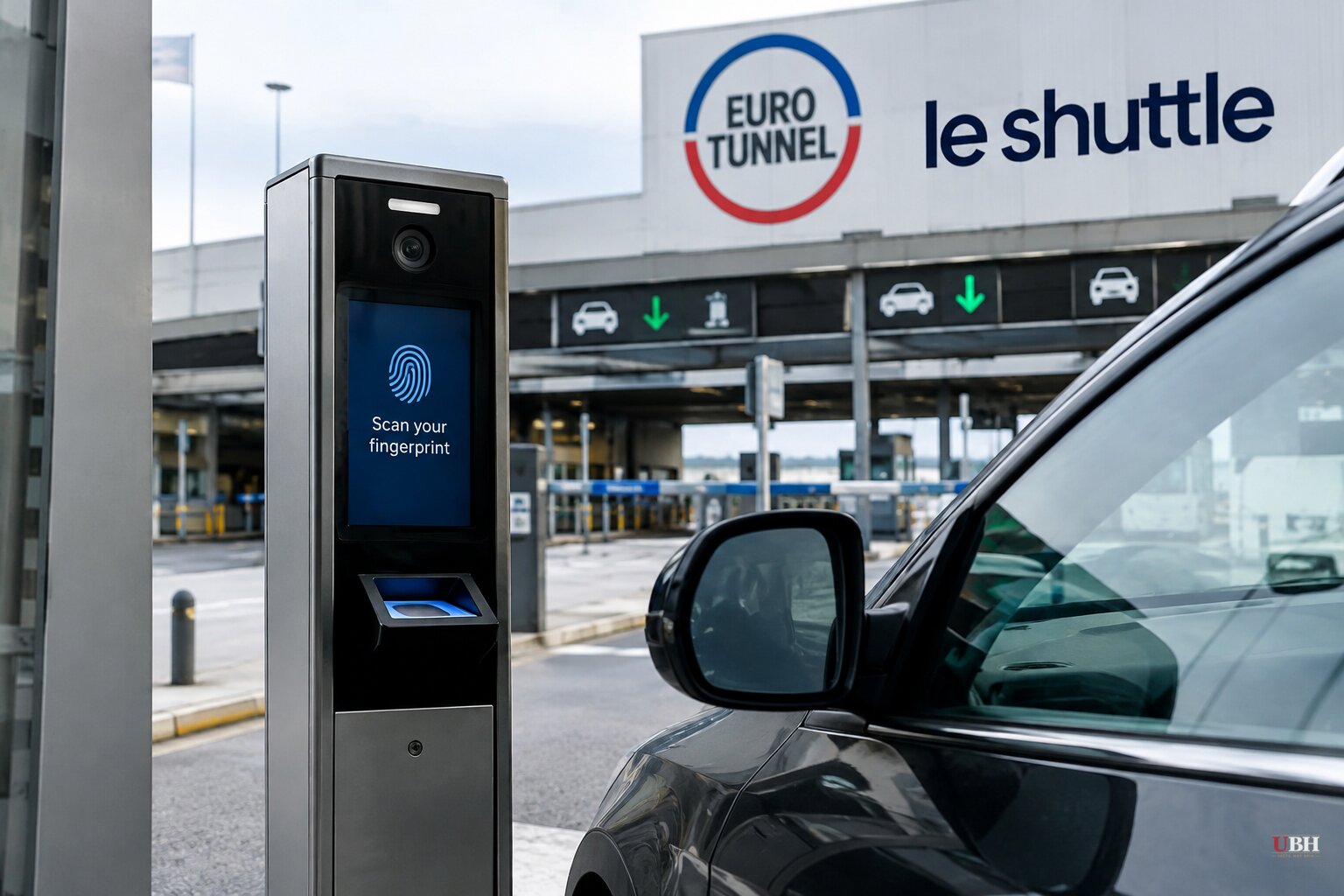
Eurotunnel is set to trial drive-through fingerprint and facial-image checks at Folkestone and Calais. The European Commission and French authorities have signed off, according to Getlink chief executive Yann Leriche.
The catch: nothing is switched on yet.
What was approved
Getlink, which owns Eurotunnel, says it has been authorised to run a two-year trial. Drivers and passengers will pull up to a kiosk, hand over passport data, and give fingerprints and a facial image without getting out of the vehicle.
Each kiosk will sit under what Leriche called an "eagle eye" camera. Police will monitor the cameras remotely, much as airport e-gates work without an officer at every gate. Leriche said the same camera approach is already used to supervise fingerprinting and facial imaging at airports in Rome and Paris.
Getlink says 120 kiosks are in place on each side of the Channel.
Leriche said the company wants to go further than a copy of the airport experience. "This is not something people in airports experience, but nobody approached this before, thinking we could have an airport experience at the border here. But we said: why not?"
Why Getlink pushed for it
The trigger is the EU Entry/Exit System, or EES. It requires non-EU citizens, British passport holders included, to give fingerprints and a facial image when entering and leaving the Schengen area.
EES was supposed to be active across the EU by 9 September. Nine of the 27 member states, France among them, have not fully deployed it because of continued technical problems.
For Eurotunnel, the system has always carried a specific risk: miles-long tailbacks on the approach to the terminal.
Getlink's earlier plans did not solve that. One had staff handing tablets to people in cars so they could self-register. Another had passengers park and walk into the terminal. Both would have needed police officers physically present for first-time fingerprinting.
Leriche said he told the authorities as much. "We told the authorities: it is going to be a mess. Many people are going to the wrong place and you can't have police jumping from one place to the next to solve the issues. It would also means customers would have a bad experience, particularly at peak time."
The company's stated fear is "short-term and long-term chaos" in Folkestone and Calais.
Where French sign-off stands
Leriche said it took "many, many discussions" with the Commission and French authorities to win approval for camera supervision at each kiosk. He said French authorities are on board because the approach is also more efficient for them. "We are all aligned on the trial," he said.
That alignment has not yet produced a working system. Leriche said the kiosks are ready, but their connection to the French system is not functioning. He said he does not know when France will introduce the system.
Whether the drive-through model actually prevents queues therefore remains untested. The idea of reducing police presence and keeping cars moving is Getlink's claim about how it will perform, not a demonstrated result.
What comes next
Getlink hopes the two-year trial will become permanent. In the coming weeks, Leriche plans to meet UK and French authorities and present a 40-page proposal to make Eurotunnel a "laboratory" for an "intelligent border." The proposal draws on emerging technology and lessons from the United States and Singapore.
The trial also raises a policy question that the border authorities will have to answer in public: how much of first-time biometric enrolment can run under remote camera supervision rather than an officer standing beside the traveller. Getlink says the Commission and France have accepted the model for the trial period. Neither has yet published the terms.
The open question is timing. Until the kiosks connect to the French system, and until Paris sets a date for its own EES rollout at the Channel crossings, the approval stays on paper.
Sources used for this briefing
7 links from 6 independent newsrooms (syndicated copies of the same report count once)
These are the sources it draws on, linked so you can verify.


