
Unbiased headlines. Facts, not spin.
Unbiased Headlines is an independently owned news organization. We bring you the facts, not opinions, written fresh from 110+ named sources. Sources linked so you can verify it yourself.
 economy
Notable (6/10)
Event date: November 13, 2026 ·
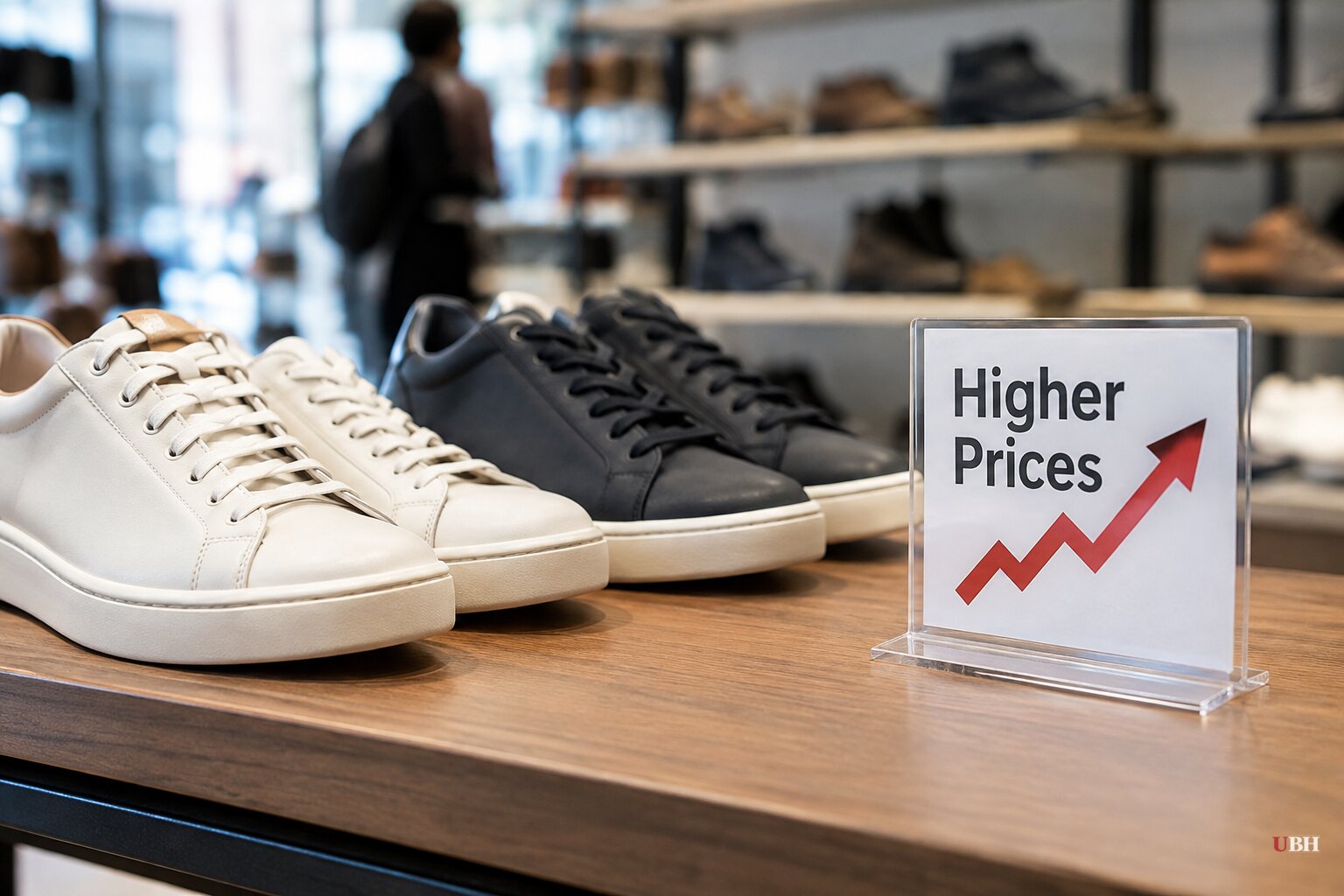
Shoe Prices Reach Record High as Producer Inflation Hits 6.5%, Highest Since 2022
Since gas fell below $4 a gallon on Nov. 10, the same day the Bureau of Labor Statistics reported a hotter-than-expected October consumer price index, new data on producer prices and footwear shows inflation moving from the pump into goods.
Shoes at a record
The Footwear Distributors and Retailers of America (FDRA) said retail footwear prices rose 2.1% from six months earlier, based on BLS data. That is the slowest pace in a few months, but prices sit at a record level.
There is no clean year-over-year figure. The government shutdown last year kept BLS from collecting October 2025 data. The FDRA suggested a six-month comparison as the best stand-in.
Footwear inflation averaged just 0.35% per six-month stretch from 2000 through June 2026. In the first half of this year it hit 2.3%, the biggest semiannual jump since the pandemic supply-chain mess four years ago.
"We expect to see record footwear prices for the full year," FDRA chief economist Gary Raines said. He pointed to average duties on footwear that have been "trending higher over the last year and a half." He said the group has "more early evidence that retail footwear prices are set to continue rising, albeit at a decelerating rate, as we head into 2027."
What the shoe companies say
The brands blame several costs at once. Some shoe materials are petroleum byproducts, and the war in Iran sent oil prices up.
Crocs CEO Andrew Rees said in April that its foam resin clogs faced cost pressure from the oil spike. Executives at Adidas, Steve Madden and Birkenstock have each said higher freight costs tied to oil hurt their businesses.
Deckers Brands raised the price of its classic Ugg sheepskin boot 2.6% to $195. It also said Hoka running shoes would see some increases this fall.
Birkenstock CFO Ivica Krolo told analysts in August: "Our pricing decisions are made with the goal of passing through inflation and protecting gross margin. Something that we do very consistently." He suggested price-conscious shoppers were trading down to the brand's cheaper offerings.
Companies have tried to hold prices on their biggest sellers, such as Nike Air Force 1s and Crocs classic clogs. Increases are showing up on less central products.
Producer prices run hot
The Labor Department said its producer price index for final demand rose 0.3% in October. Economists surveyed by Econoday had forecast 0.4%. The annual rate was 6.5%, the largest since November 2022, and just under the 6.6% expected.
September was revised up to a 1.4% monthly gain from 1.3%.
Goods are the pressure point. Goods prices rose 0.5% in October and are up 10.2% from a year earlier, the biggest annual advance since October 2022. September's annual pace was 9.8%.
That came with energy easing. Diesel fell 7.9% and final demand energy prices slipped 0.1%. Gasoline rose 0.5% after a 20.6% jump in September.
More than 60% of the goods increase came from items other than food and energy. That category rose 0.5% on the month and is up 5.2% from a year ago.
Food at the producer level climbed 1.3%, and finished consumer foods rose 1.6%. Transportation and warehousing prices jumped 2%, with truck freight up 3.9%. Processed goods are up 14.6% from a year ago, the most since July 2022.
The consumer side
October's CPI rose 0.4%, against a 0.3% consensus. Core prices, which exclude food and energy, rose 0.3%, versus 0.2% expected. Shelter made up more than 30% of the monthly increase. Food rose 0.5%.
The energy index rose 0.7%, a sharp slowdown from a September spike of more than 5%.
Tariff-sensitive items were mixed. Apparel inched up 0.1% and new vehicles rose 0.2%. Appliances and smartphones jumped more than 1%, and televisions rose 3.3%.
Real average hourly and weekly earnings were unchanged over the month, the BLS said.
Oliver Rust, head of data at Truflation, said core goods inflation is strengthening and accelerating. "Elevated oil prices, tariffs and import costs are now filtering into core goods, whether through transportation, the logistics of moving goods, or manufacturing," he told The Epoch Times. "It's most evident in vehicle prices and apparel."
What comes next
BLS did not publish an annual CPI rate for October because of last year's data gap. The Cleveland Fed's inflation nowcasting model puts it at 3.7%, with core at 2.5%.
For the November report, the same model forecasts annual inflation of 3.9% and core of 2.8%. If those numbers hold, core inflation would be accelerating even as gas prices fall.
Sources used for this briefing
6 links from 5 independent newsrooms (syndicated copies of the same report count once)
These are the sources it draws on, linked so you can verify.


