
Unbiased headlines. Facts, not spin.
Unbiased Headlines is an independently owned news organization. We bring you the facts, not opinions, written fresh from 110+ named sources. Sources linked so you can verify it yourself.
 economy
Breaking / Critical (9/10)
Xi Pledges Tariff Cuts and 'Full Manufacturing Access' at APEC as Putin Lands After Kerch Bridge Strike
Since Xi hosted Trump in Beijing in May and visited the White House in September, the two men have met twice this year. Thursday's session in Shenzhen would be the third, and the first with Vladimir Putin at the table.
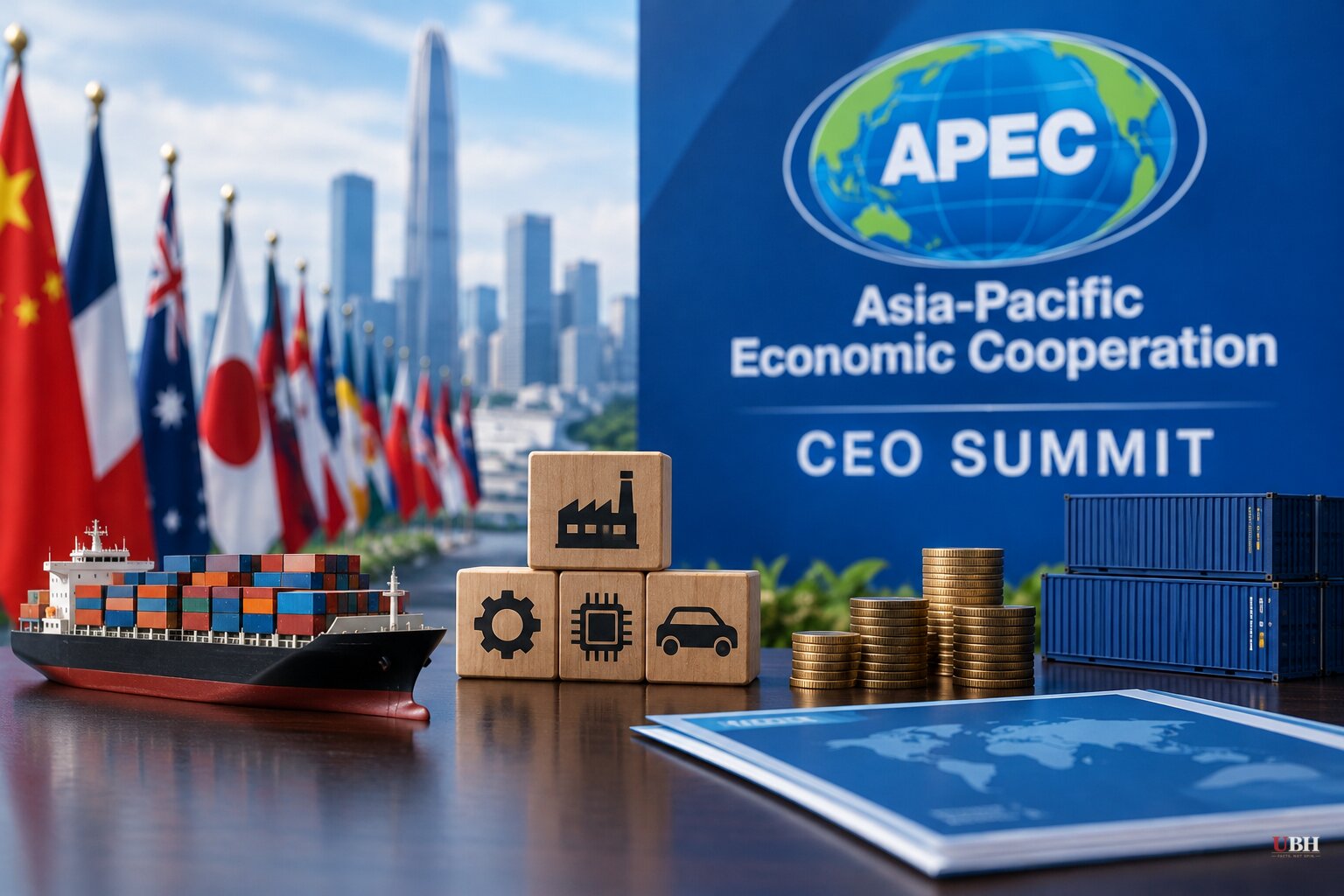
The warm-up came today, Wednesday, Nov. 18, when Xi opened the APEC CEO Summit with a pitch to the business executives in the room.
What Xi promised
"We should remove trade and investment barriers," Xi said in the official English translation. He called on members to "firmly uphold the rules-based multilateral trading system with the World Trade Organization at its core."
Then he got specific about China. "China will not only cut tariffs and expand market access, but also go a step further," Xi said. He promised to "reform" rules and regulations to give foreign businesses "full manufacturing access."
He did not mention U.S. tariffs by name. He also did not address the fresh American restrictions on Chinese access to advanced AI chips from suppliers such as Nvidia. Beijing has pledged to retaliate for those curbs.
Xi also pushed AI cooperation. He said "unicorn companies and large AI models have emerged in large numbers" and urged APEC members to coordinate on the digital economy.
The tariff cut that hasn't happened
The U.S. and China agreed last year to keep tariffs lower. Neither side has yet carried out a planned $30 billion cut in duties on goods from the other.
That is the gap between the speech and the record. Xi is offering lower tariffs to the room while the one concrete, already-agreed reduction with Washington sits unimplemented.
China's critics have a long-running complaint. Washington, Brussels and others say Beijing's policies favor manufacturers at the expense of Chinese consumers and produce annual trade surpluses above $1 trillion. They say those policies threaten their industries and jobs, and that China's dominance of supply chains gives it political leverage.
Beijing's answer is that its growth model fits an economy still catching up with the world's richest countries.
Putin arrives after a battlefield blow
Putin landed in Shenzhen overnight, after a Ukrainian strike destroyed the central road section of the Kerch Bridge linking Russia to Crimea.
At the business summit, Putin said Western sanctions imposed since his 2022 invasion of Ukraine have "failed" and that Russia has come through "with dignity." He said the EU is losing its industrial capacity and falling behind in the competition, and he highlighted Russia's ability to withstand a sharp drop in its U.S. dollar- and euro-denominated transactions.
He called for "unity rather than division, equality rather than hegemony, partnership rather than isolation, and dialogue rather than ultimatums." He said he expects Thursday's meeting to be "highly useful."
State media in both countries reported that Xi and Putin began their own bilateral talks Wednesday. Putin foreign policy adviser Yury Ushakov told reporters Monday that the "significance and symbolism" of the three-way meeting "are hard to overestimate."
What Trump brings
Trump was expected to arrive Wednesday after meetings with Southeast Asian and other regional leaders in Manila. Nuclear weapons are expected to feature in Thursday's discussions alongside trade, artificial intelligence, and the wars in Ukraine and Iran.
A White House statement said the two countries "agreed to build a constructive relationship of strategic stability on the basis of respect, fairness, and reciprocity," and that they plan to support each other at APEC and at the G20 summit in Florida in December. Neither side has released a formal agenda.
Ali Wyne, a senior adviser on U.S.-China relations at Crisis Group, expects little. "Trump will work to strengthen his rapport with Xi, but the meeting is unlikely to produce any substantive breakthroughs," he said. Al Jazeera notes the earlier Beijing and Washington meetings were heavy on ceremony and light on results.
James Gorrie, writing in a commentary for The Epoch Times, argues the optics are "not great" for Trump and the U.S. He writes that China and Russia seem "less interested in arms control and more interested in shifting the balance of power in their favor." He also notes that Beijing is the main buyer of sanctioned Iranian oil while the U.S.-Israeli war against Iran continues.
Politics at home
The summit comes days after Democrats won control of both chambers of Congress, which Al Jazeera says will likely check Trump's power in his last two years in office. Beijing, that outlet adds, is increasingly looking past the Trump era.
The Guardian reports Marco Rubio said Trump is serious about meeting North Korea's Kim Jong-un. No date or location has been announced.
The open questions are all on Thursday's calendar. Nuclear weapons are expected to be on the table. The $30 billion tariff cut remains unimplemented. China has promised a response to the chip curbs but has not said what it will be.
Whether any of those moves forward in Shenzhen will be visible by Thursday, Nov. 19.
Sources used for this briefing
8 links from 8 independent newsrooms (syndicated copies of the same report count once)
These are the sources it draws on, linked so you can verify.


