
Unbiased headlines. Facts, not spin.
Unbiased Headlines is an independently owned news organization. We bring you the facts, not opinions, written fresh from 110+ named sources. Sources linked so you can verify it yourself.
 economy
Notable (6/10)
Event date: November 16, 2026 ·
St Kitts and Nevis Tells EU It Will Wind Down Citizenship-by-Investment Program After Visa-Free Warning
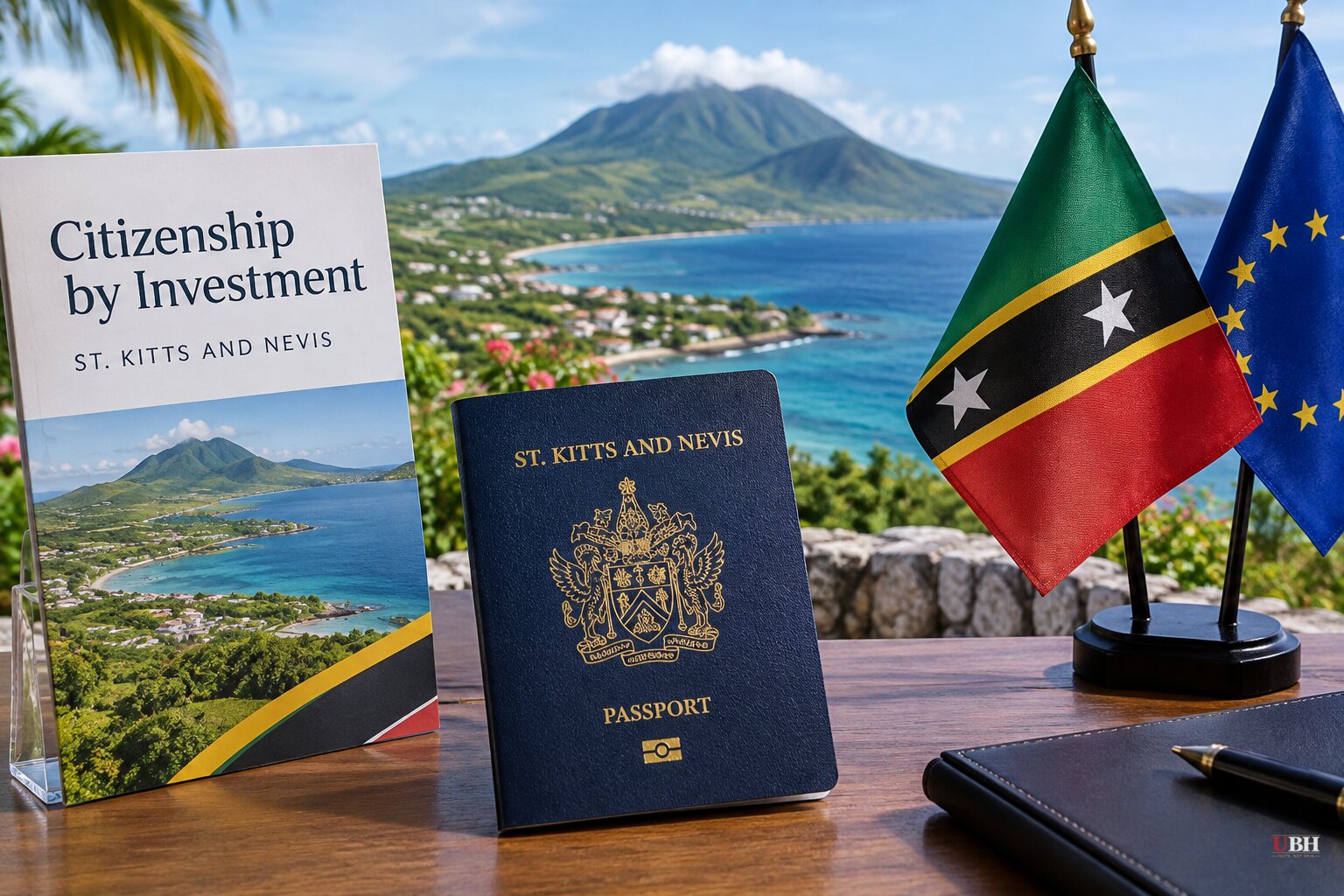
St Kitts and Nevis will shut down the citizenship-by-investment program it invented, and the country's own prime minister says it has been living off the money.
In a national address on Friday, Nov. 13, Prime Minister Terrance Drew said he had formally told the European Union of the decision. "St. Kitts and Nevis will wind down its Citizenship by Investment programme responsibly on a timeline now being negotiated with the EU," he said.
No closing date has been announced. The country's Citizenship by Investment Unit said in a statement on Nov. 16 that the program stays open and fully operational until a final application-receipt date is communicated to authorised agents. People who already hold citizenship are not affected, the unit said. Drew put it this way: "Nothing changes tonight for any person who lawfully holds our citizenship."
What the EU asked for
The European Commission wrote in June to the five Eastern Caribbean governments that sell citizenship: St Kitts and Nevis, Antigua and Barbuda, Dominica, Grenada and St Lucia. The letters asked each to phase out its program by June 1, 2028. Antigua's government says its letter is dated June 25.
The Commission warns that countries keeping the programs risk losing visa-free access to the 29-country Schengen area. Under a revised EU visa-suspension mechanism, running an investor-citizenship program can itself be grounds for suspension, though suspension is not automatic.
A Commission spokesperson said the bloc has told the five partners that such schemes are incompatible with the visa-free regime "due to security concerns." The EU's argument is that buyers can get citizenship, and with it Schengen entry, with few ties to the country issuing the passport.
Governments were given until Oct. 31 to say whether they would continue, a date later pushed to Nov. 12, according to St Lucia Prime Minister Philip J. Pierre. Brussels has not publicly confirmed the Nov. 12 date.
The money at stake
Drew said the program generated US$2.4 billion between 2008 and 2025, roughly half of federal government cash revenue. It paid for roads, schools, housing and pandemic recovery.
"That money did a lot of good. But it also created a danger," Drew said. "When one source pays for half or more of everything, you are at its mercy."
The dependence extends past one island. A 2025 International Monetary Fund paper found that citizenship-by-investment inflows in 2023 equaled about a fifth of the combined GDP of the eight-member Eastern Caribbean Currency Union. The same paper estimated that program-linked direct investment was equal to 100% to 170% of all foreign direct investment in the region.
The St Kitts program, established in 1984, requires a contribution of at least $250,000 to an approved government fund, or an investment from $325,000 in qualifying real estate, plus fees. European Commission figures show the country issued 55,281 passports from 2015 through 2024, including 6,437 in 2024. It received 223 applications in 2024, the fewest of the five major Caribbean schemes.
Chinese nationals have been a major source of applicants. A 2023 Florida International University report cited a diplomat's estimate that they made up 60% of applications in 2022. Commission assessments have also flagged applicants from Nigeria, Russia, Syria, Iran, Iraq, Yemen, Libya and Lebanon across the region's programs. Kristin Surak, a London School of Economics researcher, says demand from Americans has grown since 2020.
Drew blames past governments
Drew said the concerns about the program stem from mismanagement by earlier administrations. He cited years of underselling to undercut rival countries, a controversial prison project, weak escrow protections, and investment money not being properly paid into the citizenship unit.
He said his government has led reforms with international partners, including the U.S. Treasury. But he argued that keeping the program would put visa-free travel to Europe and correspondent banking relationships at risk. That could disrupt overseas card use and remittances from relatives abroad. "No responsible leader would gamble with that. I will not gamble with that," he said.
Not everyone agrees
Mark Brantley, premier of Nevis, said he understood the country "was given very little choice" but does not support winding down the program. He called the June 2028 deadline "frankly ludicrous."
"I have not yet seen from the EU any corresponding suggestions of assistance," Brantley said. He argued that these programs have contributed significantly to GDP and to the water, education and health services people rely on.
Other governments are not rushing to follow. Grenada Prime Minister Dickon Mitchell, sworn in for a second term on Nov. 8 after his party won 14 of 15 seats, said his position is that "we would like to maintain both," meaning the program and Schengen access. His government has not said publicly whether it sent Brussels a written reply.
St Lucia has answered the Commission in writing, Pierre said on Nov. 9, but he declined to release the letter. "It's not a St Lucia problem," he said, adding that St Lucia depends the least on program revenue among the five.
Antigua's Gaston Browne said in October his country would "very likely" commit to a phase-out. In an Oct. 30 letter to the EU's internal affairs commissioner, Antigua indicated it would end its program if given a transition period until 2030, two years past the Commission's date.
The open questions are specific. St Kitts has not said when it will stop taking applications or how pending files will be handled. Brussels has not said whether it will accept anything later than June 1, 2028. And Dominica has not publicly stated its answer to the Commission.
Sources used for this briefing
7 links from 7 independent newsrooms (syndicated copies of the same report count once)
These are the sources it draws on, linked so you can verify.


