
Unbiased headlines. Facts, not spin.
Unbiased Headlines is an independently owned news organization. We bring you the facts, not opinions, written fresh from 110+ named sources. Sources linked so you can verify it yourself.
 economy
Notable (6/10)
Jobless Claims Rise to 203,000 and Continuing Claims Jump 70,000 to 1.763 Million
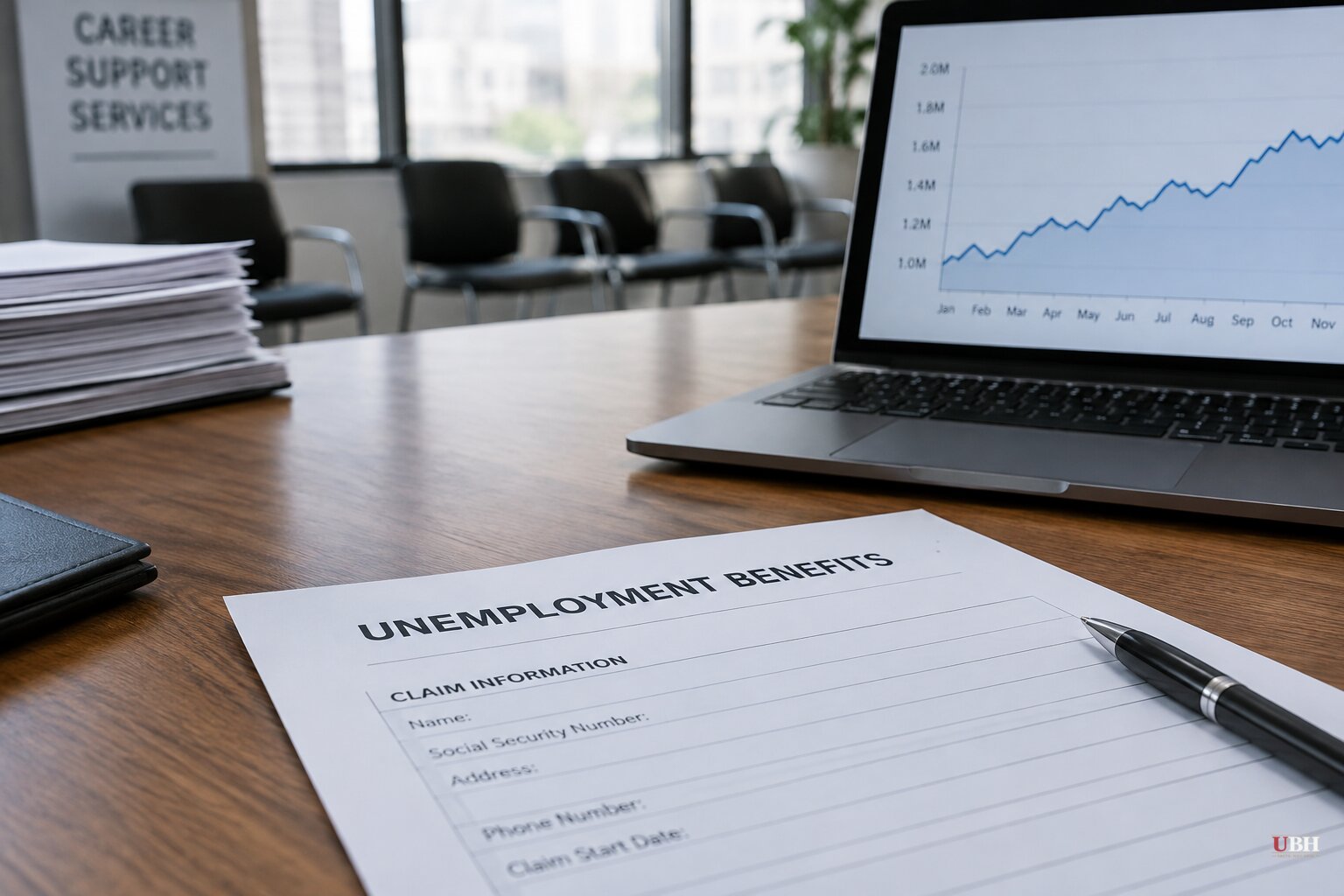
Since claims touched 189,000 in July, the lowest reading since 1969, the weekly numbers have hovered near 200,000. Thursday's report, covering the week ended Nov. 14, nudged them the wrong way.
The Labor Department said initial claims for unemployment benefits rose by 1,000 to a seasonally adjusted 203,000. The prior week was revised up to 202,000 from 200,000. Economists surveyed by The Wall Street Journal and Reuters had expected about 197,000. Other consensus tallies put it at 198,000.
The four-week average, which smooths out noise, rose 2,000 to 197,750. Before seasonal adjustment, actual claims under state programs were 197,492, down 11,941 from the prior week. Seasonal factors had predicted a drop of 12,534.
The continuing-claims jump is the number to watch
Continuing claims are the better gauge of how long people stay unemployed. They rose by 70,000 to 1.763 million in the week ended Nov. 7, from a downwardly revised 1.693 million. Consensus was roughly 1.703 million to 1.710 million.
That is the highest level since August. The data lag the initial-claims figures by a week.
The seasonally adjusted insured unemployment rate held at 1.1%. Continuing claims also remain about 186,000 below their level a year ago, according to ZeroHedge's comparison of the series.
So few people are being laid off, but those who are may be taking longer to find work. That fits the "low-hire, low-fire" description economists have used for this market all year.
Manufacturing softened the same morning
The Philadelphia Fed's November manufacturing index fell to 6.3 from 20.9 in October. Forecasters had expected 20.1. It is the weakest reading since May, when the index went negative.
The dollar traded softer in currency markets after the data, with dollar-yen slipping from 159.97 to 159.93 and the euro edging up from $1.0990 to $1.1000.
The Fed backdrop
The claims data land while Federal Reserve officials are citing labor-market strength to argue for tighter policy against elevated inflation. Dow Jones Newswires noted that cracks in employment could undermine expectations for more rate hikes in coming months. Minutes of the Fed's Oct. 27-28 meeting showed several policymakers had seen signs of modest tightening in the labor market.
Goldman Sachs economist David Mericle, in a note titled "US Daily: Adding A Third Hike," expects a second 25-basis-point hike in December and a third in March 2027. He does not see the first cut until December 2027. ZeroHedge, which cited the note, read the data as a labor market strong enough to tighten into.
Two readings of one number
The Associated Press framed the report as reassurance. Slightly more people applied for aid, it said, but layoffs remain low and most workers enjoy solid job security. Claims have stayed below 220,000 all year. That suggests most companies are confident enough in sales to keep their people.
The case for caution rests on continuing claims. ZeroHedge's analysis points out that initial claims have flatlined near 200,000 while the stock of people still collecting benefits has turned up. Its conclusion: few people are fired, but those who are take longer to land the next job.
The broader data are not weak. Employers added 165,000 jobs in October, well above the 65,000 forecast by economists polled by LSEG. The unemployment rate dipped to 4.1% from 4.2%. GDP grew at a 3.4% annual rate in the third quarter, up from 2.2% in the second, and the Atlanta Fed forecasts 3.2% for the fourth quarter.
The Bureau of Labor Statistics also reported third-quarter nonfarm productivity up 3.6% annualized, with unit labor costs down 0.7%.
AI and hiring
Economists are watching whether artificial intelligence is displacing workers. So far it has not produced a pickup in layoffs, according to the AP. Some companies may instead be holding back on hiring while they integrate the technology.
That would be consistent with low firing, weak rehiring and rising continuing claims, but no source in the data establishes the link.
What comes next
One week of continuing claims is not a trend. The next few weekly reports will show whether the 70,000 jump holds or reverses, and whether initial claims break out of their roughly 200,000 range. Those readings, along with the Fed's December meeting where Goldman expects another hike, will test whether the labor market is as sturdy as the policy case assumes.
Sources used for this briefing
7 links from 7 independent newsrooms (syndicated copies of the same report count once)
These are the sources it draws on, linked so you can verify.


