
Unbiased headlines. Facts, not spin.
Unbiased Headlines is an independently owned news organization. We bring you the facts, not opinions, written fresh from 110+ named sources. Sources linked so you can verify it yourself.
 economy
Notable (6/10)
Event date: November 12, 2026 ·
Congressional Biotech Commission Flags 57 US-China Drug Licensing Deals Since 2023
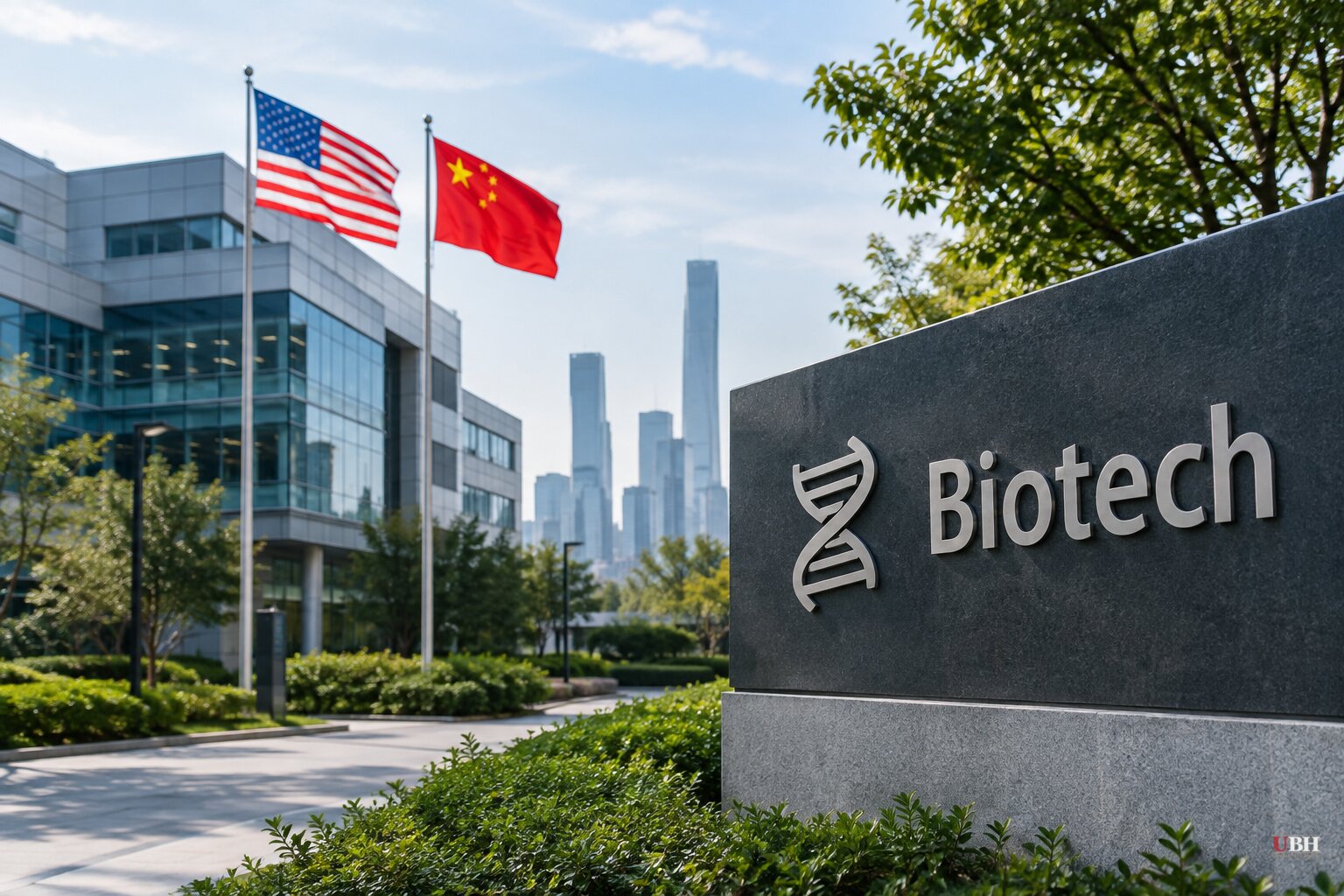
A commission created by Congress says American and European drugmakers are helping build China's pharmaceutical industry, and it wants policymakers to treat that as a problem.
The National Security Commission on Emerging Biotechnology analyzed 57 licensing deals struck between the start of 2023 and the month before its analysis. Its finding: Western companies are increasingly licensing drugs from Chinese firms, which redirects U.S. capital away from domestic innovation and toward China.
What the commission found
The deals are moving earlier in the drug-discovery process. They increasingly rest on preclinical evidence, and upfront payments arrive earlier in research and development.
That means Chinese partners get more than cash. They get experience in developing and commercializing treatments.
The commission says royalties and equity in joint ventures can flow back to China, funding more research and infrastructure and attracting international talent. It calls this a "flywheel effect."
AstraZeneca, Bristol Myers Squibb and Pfizer are among the drugmakers drawn to China's growing life sciences investment and the prospect of faster clinical trials and product approvals.
The commission compares the pattern to earlier technology transfers in automobiles, semiconductors and industrial chemicals, which it says gave Chinese industry a competitive edge and leverage over global markets. "The end game is the same for the [Chinese Communist Party] in the pharmaceutical industry," the commission said, describing the goal as greater U.S. dependence on Chinese innovation.
Caitlin Frazer, the commission's executive director, said Beijing has pursued "a deliberate strategy" for decades to dominate biotechnology at every level of the value chain. She said U.S.-China pharma deals are starting to favor Chinese startups, which risks eroding biotech research and development in the United States. "This trend should be alarming for policymakers," Frazer said.
Beijing has also recently proposed export restrictions covering some technologies, including cell and gene therapy platforms. The proposal sharpened concern that the United States could lose access to them.
The industry's side of the deal
The companies see these agreements differently, according to the commission's own description. Western firms treat them as a way to outsource part of drug discovery and to verify early results. A typical deal gives a multinational the right to develop or commercialize a treatment that a Chinese biotech created.
China also offers something the U.S. system often does not: speed. Faster trials and quicker approvals are part of the draw for AstraZeneca, Bristol Myers Squibb and Pfizer. The commission's warning is that the long-term cost of that speed may exceed the short-term gain.
The manufacturing side
Licensing is one piece. Manufacturing is the other, and the numbers there are lopsided.
Milton Ezrati, writing in The Epoch Times, puts China's share at about 41 percent of the key starting materials used to make active pharmaceutical ingredients. He says China supplies more than 99 percent of U.S. imports for 10 percent of critical pharmaceutical inputs. By his count, one-fourth of imported medicinal inputs come from product lines where China accounts for at least three-quarters of U.S. imports.
Other countries are more exposed. Ezrati writes that India depends on China for 70 percent of its APIs and 90 percent of its critical antibiotics.
He argues Beijing has so far held back from playing this pharmaceutical card, even though it has used its rare-earth dominance to great effect, but that the threat is implicit. That is his reading, not a Chinese government statement. No Chinese official has threatened a drug cutoff in the material reviewed.
Ezrati also credits Chinese state support: subsidies and easy credit from state-owned banks that let producers undercut rivals elsewhere until those rivals fail. Pfizer CEO Albert Bourla, citing the 2025 Nature Index, has noted that eight of the top 10 universities in STEM research are in China. Clinical trial activity is also shifting there from the United States.
Quality questions
A report from Maldives Insight, relayed by the Indian news agency IANS on Nov. 10, raised separate concerns about regulatory compliance. It said recent inspections at some Chinese manufacturing facilities found deficiencies in documentation, manufacturing processes and quality assurance systems.
The same report cautioned that such findings "do not represent the entire Chinese pharmaceutical industry." It said they show how hard it is for regulators to monitor supply chains spanning multiple countries and thousands of facilities.
Why drugs are different from chips
Brookings Institution senior fellow Marta Wosińska has pointed to the human stakes. A drug shortage can delay treatment for seizures, infections or severe pain. A chip shortage might delay replacing a car or phone.
The commission's concern is that China could scale up production, corner a market and then control access to key products and ingredients.
What comes next
The commission has put the 57-deal analysis in front of Congress and urged policymakers to act. No legislation or executive action responding to the findings has been described.
The open question is whether Washington will touch deals that U.S. companies sign voluntarily, with their own money, for their own pipelines. Whether Beijing's proposed export curbs on cell and gene therapy platforms are finalized is another thing to watch.
Sources used for this briefing
6 links from 6 independent newsrooms (syndicated copies of the same report count once)
These are the sources it draws on, linked so you can verify.


