
Unbiased headlines. Facts, not spin.
Unbiased Headlines is an independently owned news organization. We bring you the facts, not opinions, written fresh from 110+ named sources. Sources linked so you can verify it yourself.
 economy
Major Story (7/10)
Fed Minutes Call Wage Growth Moderate as Inflation Runs at 3.7% and October CPI Rises 0.4%
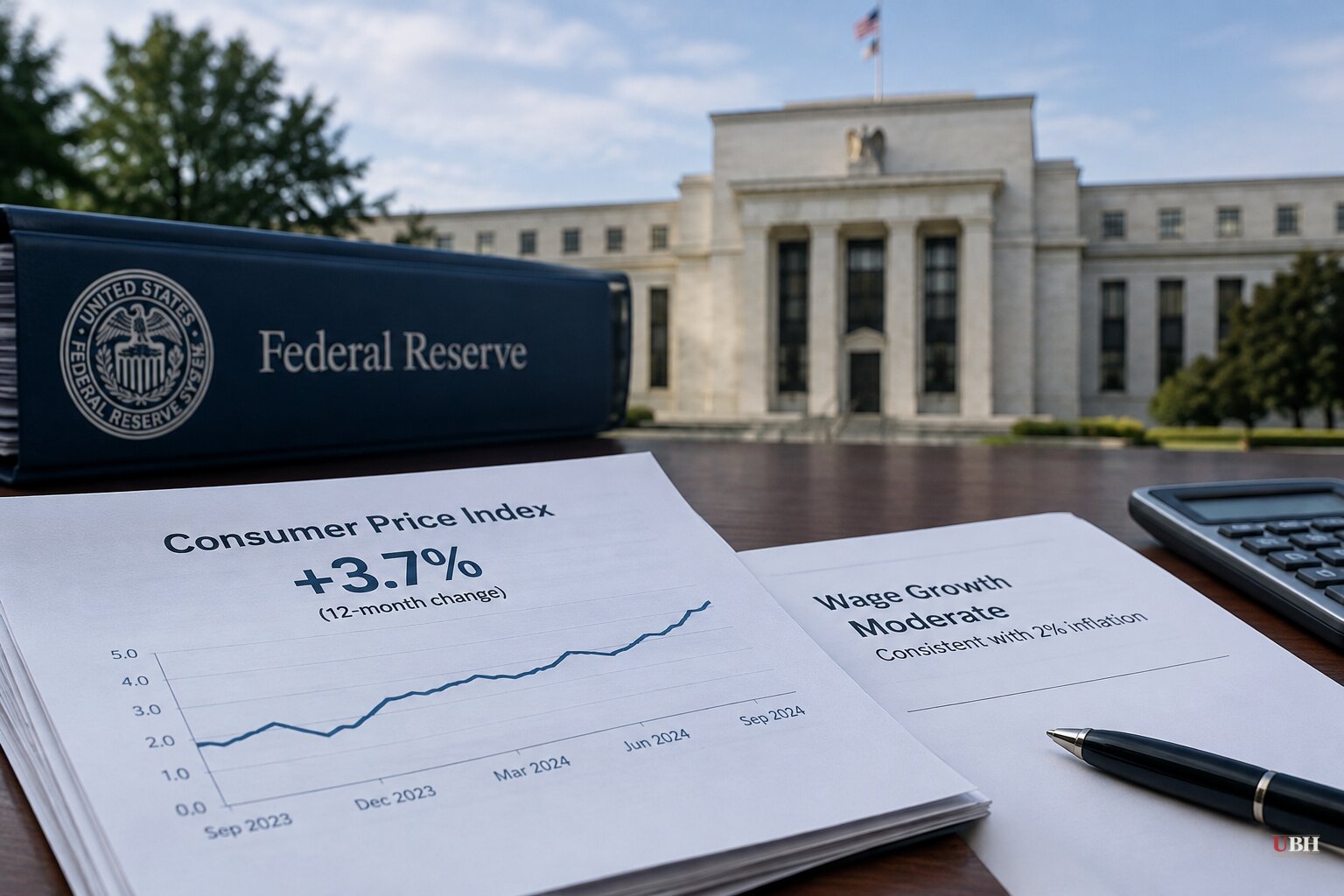
The Federal Reserve thinks wages are not the problem. Prices are.
Minutes from the Federal Open Market Committee meeting that ended Oct. 28 say most participants "judged that aggregate nominal wage growth remained moderate and was broadly consistent with the committee's 2% inflation objective." The Bureau of Labor Statistics put consumer price inflation at 3.7% over the 12 months through September 2026. That is well above the 2% target.
What the minutes say about pay
The committee found pockets of strength. Many participants "observed that shortages of skilled workers needed for data center construction and related industries had contributed to sizable wage premiums in those industries."
A few noted that reduced labor supply in industries reliant on immigrant workers "could add to sectoral wage pressures." The minutes add that neither development appeared to have a material effect on aggregate wage measures.
The minutes describe the economy as stable and close to maximum employment, with inflation still above target.
For the Fed, that is the better of two possible readings. Moderate wage growth means no wage-price spiral, which is the feedback loop where higher labor costs push up prices and workers then demand more pay to keep up. UBS's Paul Donovan said the minutes' language implies labor costs are not what is driving inflation.
The household side
Donovan drew a harsher conclusion for families. "Fed members acknowledged that wage growth is consistent with their inflation target, but inflation is not consistent with their target," he told clients. "This is a subtle way of saying that wages are falling behind inflation."
He also said the minutes convey that "consumer resilience continues to depend on lowering savings rates and engaging in side hustles."
That is Donovan's reading, not a Fed finding. The Fed's own wording is that wage growth is moderate. But the two statements fit together: if pay is growing at a pace the Fed considers compatible with 2% inflation, and prices are rising at 3.7%, the squeeze falls on household budgets.
The October price data
The Labor Department's October Consumer Price Index, released Tuesday, showed prices up 0.4% for the month. September's gain was 0.6%. Gasoline rose 1% in October after jumping 9.1% in September, which accounts for most of the slowdown in the headline number.
Core prices, which strip out food and energy, rose 0.3% for the third straight month.
Breitbart Business Digest argues the details are worse than the headline. Its own calculation covers 119 detailed CPI categories over three-month annualized periods. From May through July, 42% of those categories rose faster than a 3% annual pace. From August through October, the share was 56.3%.
The number of categories rising above 5% doubled, from 26 to 52, by the same calculation. Breitbart also counted 141 detailed categories and found that 61 showed falling prices in March, against 38 in October. That is a drop from 43% to 27%.
Those are Breitbart's tabulations, not official statistics. The method tracks one that Fed Chair Kevin Warsh highlighted at Jackson Hole in August. Warsh said 54% of the components of the Fed's preferred inflation gauge had risen more than 3% over the prior year. The pre-pandemic average was 32%.
Breitbart's conclusion is that inflation is "spreading" beyond energy into food and non-housing services. The Fed minutes take a different view on one narrow point. Participants saw no material wage-driven pressure in aggregate. Both can be true: prices can broaden without wages leading them.
Breitbart also notes that 12-month comparisons are not available this month because of last year's government shutdown. That leaves the three-month snapshots as the only way to judge the October trend.
What comes next
The committee's next rate-setting meeting is in December. The meeting notes describe an economy that is stable and close to maximum employment while inflation runs ahead of target, which suggests tensions in the Fed's mandate may call for a rate hike. Fortune reports that interest rate traders assign a 91% probability of a 25 basis point hike at the December meeting, per CME's FedWatch. That is a market pricing figure, not something stated in the minutes. Fed Governor Christopher Waller has called for a larger, 50 basis point increase, saying the central bank needs to "shock people."
Households are already adjusting. According to Donovan's reading of the minutes, they are doing it by saving less and taking on extra work.
Sources used for this briefing
4 links from 3 independent newsrooms (syndicated copies of the same report count once)
These are the sources it draws on, linked so you can verify.


