
Unbiased headlines. Facts, not spin.
Unbiased Headlines is an independently owned news organization. We bring you the facts, not opinions, written fresh from 110+ named sources. Sources linked so you can verify it yourself.
 economy
Major Story (8/10)
IMF's Georgieva Says AI Demand and Iran War Energy Shock Are Pushing Global Inflation to 4.7%
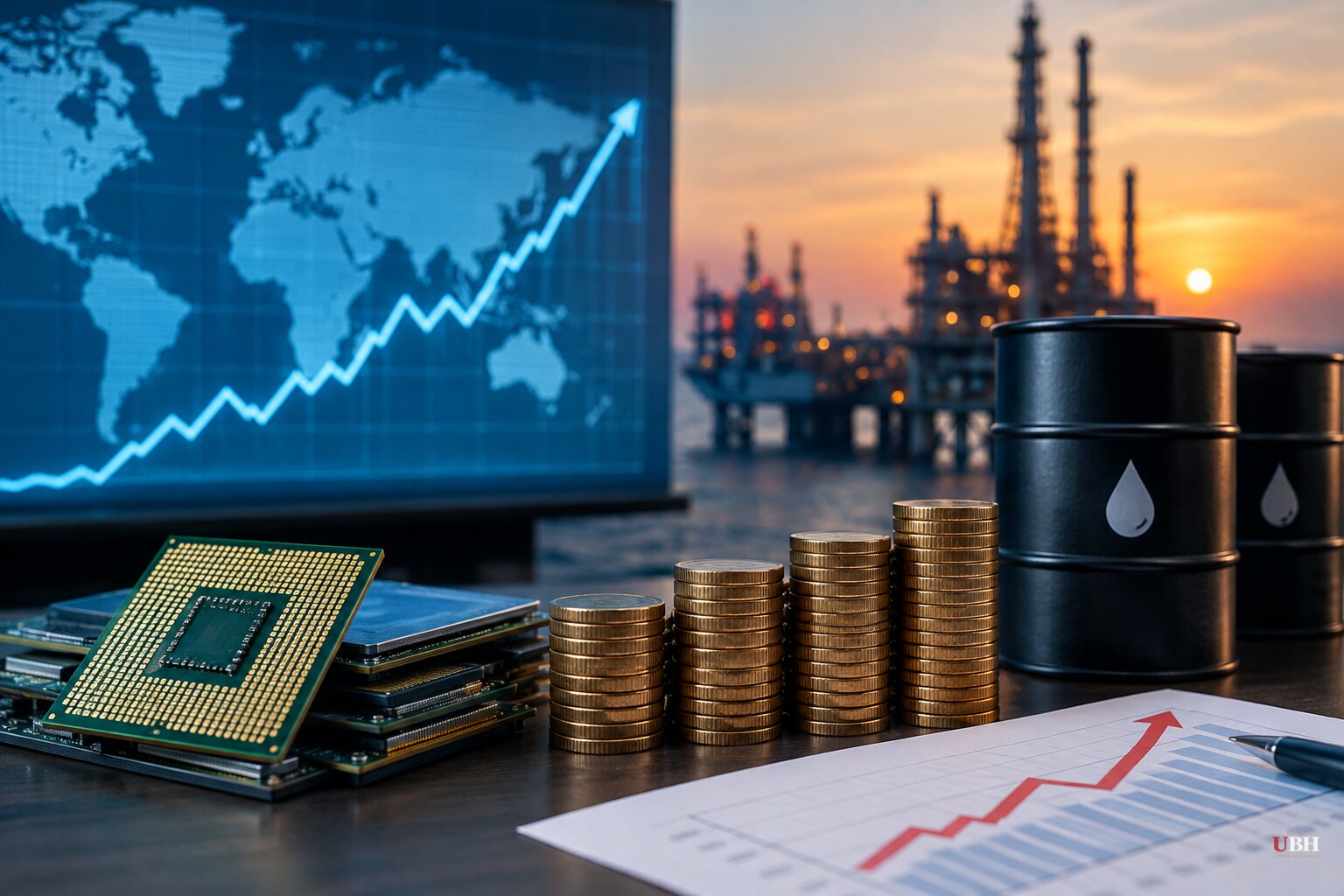
Two forces are pushing prices up at once, and only one of them is expected to fade.
Kristalina Georgieva, managing director of the International Monetary Fund, said at the 2026 APEC summit in Shenzhen that demand for AI hardware and related tech products is raising consumer prices worldwide. Combined with the energy shock from the Middle East war, she said, the two factors will push global inflation to 4.7% this year.
"This calls for a tightening of monetary policy in many economies," Georgieva said.
Central banks have already moved
The Iran war began in February and drove oil above $100 a barrel. Central banks responded. The European Central Bank raised rates in June, its first hike since 2023. The Federal Reserve followed in September, and the Bank of England raised rates earlier this month.
Financial markets expect more increases next year, according to the Guardian's reporting on the IMF remarks. Oil has fallen back in recent weeks after the U.S. midterm elections and a rise in crude supply, but the inflation pressure has not gone away.
Georgieva was blunt about the difference between the two drivers. The energy shock "would eventually dissipate," she said. "AI is for ever." AI hardware and related products now make up more than one-tenth of world goods trade, she said, and that share is rising fast.
The affordability argument
Economist E.J. Antoni, writing for Fox News, argues the squeeze is temporary. In his telling, affordability was improving until February: real weekly paychecks rose roughly 2% from January 2025 through February 2026, which he says reversed half of the losses of the Biden years, when weekly pay grew about 17% but bought about 4% less. Then the Iran war hit, he writes, and oil jumped from $60 or $70 a barrel to $100 or $120. His conclusion is that affordability starts improving again once the wars in Iran and Ukraine end.
Georgieva's account complicates that. She names AI demand as a separate inflation driver that, in her words, is not going away when the war does. Antoni's piece does not address it.
Small businesses are absorbing the costs
Bank of America's 2026 Business Owner Report shows what the price pressure looks like on Main Street. Ninety-one percent of small and midsize business owners say their costs rose over the past year, up from 77% a year earlier. Seventy-nine percent raised prices, and those who did raised them by nearly 13% on average. Three-quarters worry about more inflation ahead.
Still, they are not retreating. Forty-nine percent plan to expand in the next 12 months and 58% expect revenue to rise. Thirty-nine percent plan to hire, 49% expect to hold staffing steady, and just 4% expect to cut. Labor shortages affect 55% of owners, down from 61% last year.
AI is already standard equipment: 84% of owners use it, most often for marketing and advertising (52%) and data analysis (41%). Among those using or planning to use it, 60% expect it to move employees into new or redesigned roles, 52% expect to hire people to manage AI tools, and 33% expect it to reduce headcount.
"What stands out is that they are not standing still," said Sharon Miller, president of business banking at Bank of America.
The Fed is planning for AI scenarios
New Fed Chairman Kevin Warsh, nominated by President Trump this spring, told a Federal Reserve Board and San Francisco Fed conference on productivity and jobs that Board staff "has begun to evaluate various contingencies, applying stylized, model-based frameworks to generate scenarios."
They are "illustrative scenarios, not forecasts," Warsh said. He laid out three broad paths: AI-driven productivity gains shared across labor and capital with GDP growth running persistently above trend; widespread automation that raises unemployment; or AI that "disappoints" on expected returns and slows the economy.
He also flagged security risk. "SI [Super intelligence] empowers all, including bad actors, so we are thinking especially of critical infrastructures and their potential vulnerabilities," Warsh said.
Debt risk in the AI buildout
The day before Georgieva spoke, the ECB's financial stability review warned about the growing debt AI companies are taking on to fund expansion. The central bank said there are "historic parallels" with the dotcom bubble and the subprime mortgage bubble that preceded the 2008 financial crisis.
Economists cited in the Guardian's report also warn that fears of an AI bubble and jittery equity markets could dent business investment, and that high inflation could slow household demand.
The open question for 2027 is whether oil's recent retreat holds and whether central banks keep tightening. Georgieva says policy should tighten in many economies. The ECB is already flagging what a debt-fueled AI crash could do. Markets are betting rates go higher.
Sources used for this briefing
6 links from 6 independent newsrooms (syndicated copies of the same report count once)
These are the sources it draws on, linked so you can verify.
More coverage: Iran


