
Unbiased headlines. Facts, not spin.
Unbiased Headlines is an independently owned news organization. We bring you the facts, not opinions, written fresh from 110+ named sources. Sources linked so you can verify it yourself.
 economy
Major Story (8/10)
Dutch Government Calls MATCH Act 'Unacceptable' as Lawmakers Push to Attach It to Defense Bill
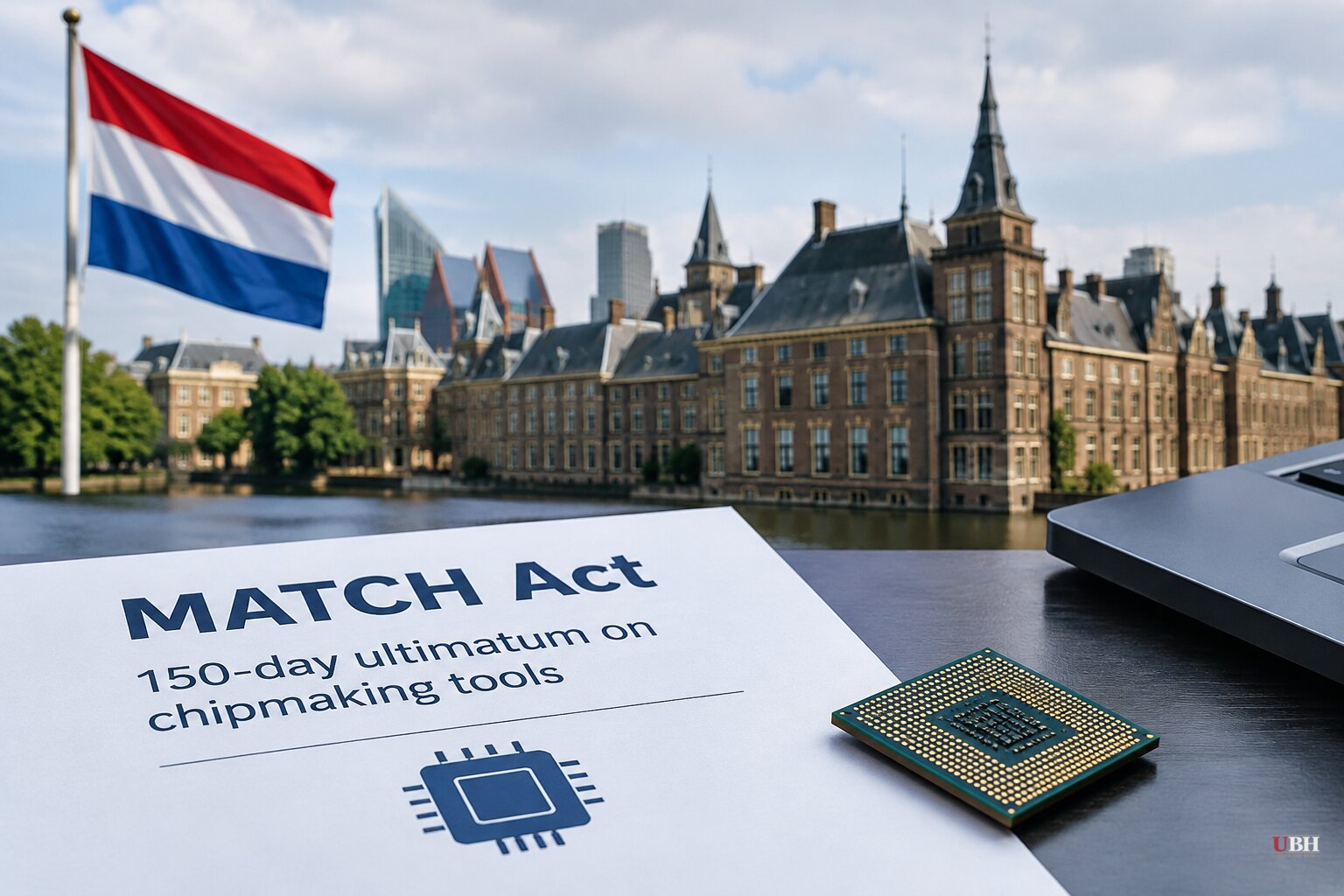
Since the Commerce Department's Nov. 16 rule on remote access to advanced AI computing, the China chip fight has widened from Nvidia's customers to Washington's allies. The newest flashpoint is the MATCH Act, and the Dutch government wants it dead.
What the bill would do
The Multilateral Alignment of Technology Controls on Hardware Act was introduced in April with bipartisan backing. According to its Senate sponsors, it would give allies such as the Netherlands and Japan 150 days to match U.S. limits on selling and servicing advanced chipmaking equipment in China.
If they don't, the Commerce Department would be required to apply American export controls to their equipment anyway.
The bill would cover more of ASML's older DUV lithography tools. It would also tighten rules on servicing machines already installed in China. ASML has never shipped its most advanced EUV machines to China, and the Netherlands already restricted some DUV exports in 2023.
Senior lawmakers pushed last week to attach the bill to the year-end National Defense Authorization Act, according to Politico. The bill has not been added to the NDAA.
The Dutch response
A Dutch foreign ministry spokesperson put the government's position bluntly to Politico: "Each country is responsible for its own national security policy and subsequently its export control policy. Extraterritorial measures run counter to this principle and are unacceptable between partners."
Politico reported that Prime Minister Rob Jetten and Foreign Trade Minister Sjoerd Sjoerdsma have both lobbied Washington in recent months against the bill. Germany has also raised concerns. The German firm ZEISS makes the lenses and mirrors inside ASML's machines.
ASML finance chief Roger Dassen said last month that limiting sales would only push Chinese rivals to build their own tools faster, according to Politico.
The exposure is real. China accounted for nearly a third of ASML's revenue last year, Politico reported.
Dutch member of the European Parliament Bart Groothuis went after the logic itself. He questioned why the U.S. would block European machine sales while American companies sell AI chips to China. "It's not right, it doesn't make any sense," he said.
The numbers give him something to point at. Crypto Briefing cited figures showing more than 879,000 Nvidia H200 and AMD MI325X chips were approved for Chinese buyers between December 2025 and May 2026.
Why Washington is pressing
Support for the bill has grown since The New York Times reported in October on ties between former Nvidia chief executive Jensen Huang and a businesswoman U.S. officials suspect of spying for China. Nvidia has pushed back on that report, and the claims remain unproven.
Hanna Dohmen of Georgetown's Center for Security and Emerging Technology told Politico Europe that "people in Washington, in particular lawmakers, are very upset by that news."
The underlying argument from the bill's backers is simple. Allied tools in Chinese fabs undercut U.S. controls, and unilateral American rules leave gaps. Whether allies accept a deadline-backed demand is another matter.
Foundry rule adds a second layer
The Nov. 16 Bureau of Industry and Security update also reaches into chip manufacturing. It requires BIS approval for foundry work at 14nm and more advanced nodes. Foundries must run compliance checks on customers, and chip designers must apply to BIS before foundries can take their orders.
People close to foundries told Shanghai Securities News that approval for 14nm and 7nm orders is highly likely. They said 5nm and below depends on chip size and end use. Overseas reports say TSMC and Samsung have suspended some shipments to China while they apply for licenses. Neither company has been quoted confirming that here.
On Nov. 19, Chinese A-share AI chip stocks including Enflame Technology, MetaX and Moore Threads fell sharply. The trigger was a rumor that Samsung had launched a "deep-probe" review of its foundry business. Shanghai Securities News checked with foundries and chip designers and found Samsung had issued no such document or rule.
Market fallout in Asia
On Tuesday, Nov. 17, Malaysian data-center firms MN Holdings and Critical Holdings each fell nearly 20%. YTL Power, an Nvidia infrastructure partner, fell nearly 10%, and parent YTL Corp fell 8%. Singapore's Frencken, an ASML supplier, fell 3.91%. SMIC, China's largest contract chipmaker, rose 7%.
Singaporean authorities have begun consulting businesses and U.S. officials on the scope of the rules, according to Reuters.
Counterpoint Research's Neil Shah said the compliance burden is shifting from hardware makers to cloud providers and their customers. He added that in the long term the rules could "accelerate the separation of the Chinese and U.S. technology ecosystems."
Saxo's Charu Chanana said operators that depend on Chinese customers could see lower utilization, price pressure and delayed expansion.
What comes next
The NDAA is the year-end vehicle, and the decision is whether MATCH language makes it into the final text. If it does, the 150-day clock would start at enactment. That would put the Netherlands and Japan on a deadline to rewrite their own export rules or watch Commerce apply American ones to ASML and other allied-made tools.
Sources used for this briefing
8 links from 8 independent newsrooms (syndicated copies of the same report count once)
These are the sources it draws on, linked so you can verify.


