
Unbiased headlines. Facts, not spin.
Unbiased Headlines is an independently owned news organization. We bring you the facts, not opinions, written fresh from 110+ named sources. Sources linked so you can verify it yourself.
 economy
Major Story (7/10)
Event date: November 17, 2026 ·
ProPublica Database Lists $28.5 Billion in Tariff Refunds Across 343 Public Companies, Led by FedEx at $3.3 Billion
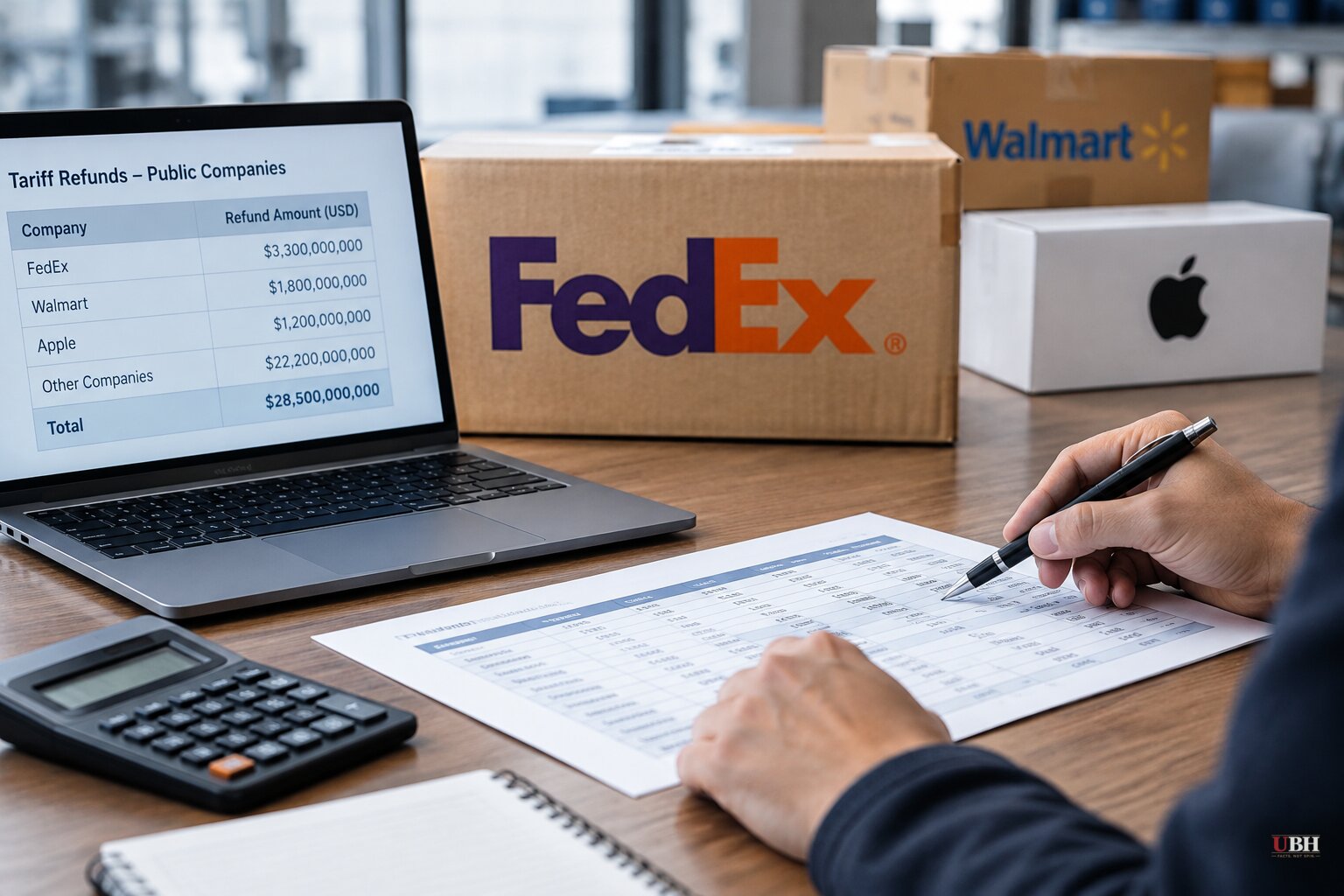
Since the Supreme Court struck down Trump's emergency tariffs on Feb. 20, the question of who keeps the refund money has moved from lawsuits and senators' letters to hard numbers. ProPublica published a database Thursday, Nov. 19 identifying 343 publicly traded companies that report $28.5 billion in tariff refunds, either already received or expected.
The figure mixes cash in hand with anticipated payments. It is not confirmed cash delivered to all 343 companies.
The biggest recipients
FedEx tops the list at $3.3 billion. Walmart follows at $2.9 billion, then Apple at $2.2 billion, Ford at $1.3 billion and Target at $994 million. Nike, Home Depot and Amazon are also among the largest recipients or expected beneficiaries.
ProPublica ranks each company by the larger of what it expects to receive or has already recovered, using financial disclosures.
The database can lag the companies' own numbers. Target's third-quarter earnings, released Wednesday, showed $301 million in pretax tariff refund benefits. That added $228 million to net earnings, or 50 cents a share. Target's total recognized refund benefit for the first nine months of 2026 was about $1.3 billion, above the $994 million in the database.
What companies are doing with the money
The treatment varies widely.
Walmart said it received about $2.9 billion in the quarter ended July 31. It booked the money as a reduction in cost of sales and said a significant portion went into pricing and other measures to offset costs for customers. Walmart's CFO has said the company received substantially all of the refunds it was eligible for.
FedEx reported $3.3 billion in cash refunds through Sept. 30. It also recorded $2.7 billion in estimated obligations to return money to customers who paid the original tariff charges. FedEx and UPS both run online systems where eligible customers can track and request refunds.
Apple received about $2.19 billion. In May, the company said it would reinvest any refund money in U.S. innovation and advanced manufacturing. Apple executives have maintained the company largely absorbed tariff costs to avoid sudden price increases. Apple still faces a proposed class-action lawsuit alleging customers were overcharged because of tariff-related pricing decisions.
A separate ProPublica analysis found at least nine companies whose refunds show up in bonus arrangements. Stanley Black & Decker, which reported at least $298 million in refunds, disclosed that part of the gain was offset by incentive compensation costs. TJX, parent of TJ Maxx and Marshalls, received $331 million and was also on that list.
The consumer question
The legal mechanics are simple. Importers of record paid the tariffs at the border, and importers that filed successful claims were generally eligible for refunds. In March, the U.S. Court of International Trade ordered Customs and Border Protection to issue about $166 billion to importers, plus interest. Court filings show more than $100 billion had gone out by August.
Consumers got none of it directly.
That is the basis for a Nov. 11 letter to the Federal Trade Commission from Sens. Elizabeth Warren, Ed Markey, Sheldon Whitehouse, Tammy Baldwin, Richard Blumenthal, Elissa Slotkin, Cory Booker and Mark Kelly. They argue that companies that raised prices citing tariff costs, then declined to share refunds, may be violating the FTC Act.
In the letter, the senators wrote: "By increasing consumer prices, ostensibly due to tariff costs, and then refusing to provide refunds to consumers when they are later reimbursed for those tariff costs, corporations may be in violation of the FTC Act." USA TODAY reported that Warren is expected to chair the Senate Banking Committee next year after Democrats won a Senate majority.
The companies' position, as stated in their own filings and statements, is that the refunds belong to the importer that paid the duty, and that many already gave value back through lower prices, absorbed costs or customer repayment programs. Walmart points to its pricing investments. Apple says it ate much of the cost. FedEx has set aside $2.7 billion to return to customers.
How much cost actually reached shoppers is the unsettled part. Independent analyses show some importers passed along at least part of the tariff cost, others absorbed it, and many did a mix. The Tax Foundation estimates the tariffs cost the average household about $1,000 in 2025, with roughly $700 of that from the tariffs the Supreme Court struck down.
The administration has since imposed similar import taxes under different authorities. The Tax Foundation puts the cost at an average of $820 per household this year.
What comes next
The $28.5 billion in the database covers only publicly traded companies that disclosed refunds. Against roughly $166 billion in total refunds owed, that leaves most of the money unaccounted for in public filings, including the share going to private importers.
The senators' letter is a request for an investigation, not an investigation itself. Whether the FTC treats an importer keeping a lawful refund as an unfair or deceptive practice is an open legal question, and the pending Apple class action and the suit over Stanley Black & Decker's refund are likely to test it first.
Sources used for this briefing
6 links from 6 independent newsrooms (syndicated copies of the same report count once)
These are the sources it draws on, linked so you can verify.


