
Unbiased headlines. Facts, not spin.
Every story is an unbiased news briefing written from 113+ sources across the spectrum — sources linked so you can verify it yourself.
 economy
Breaking / Critical (9/10)
September 23, 2026 at 03:15 PM
economy
Breaking / Critical (9/10)
September 23, 2026 at 03:15 PM
Xi Arrives in Washington as China Burns Through Oil Reserves It Built for This Exact Moment
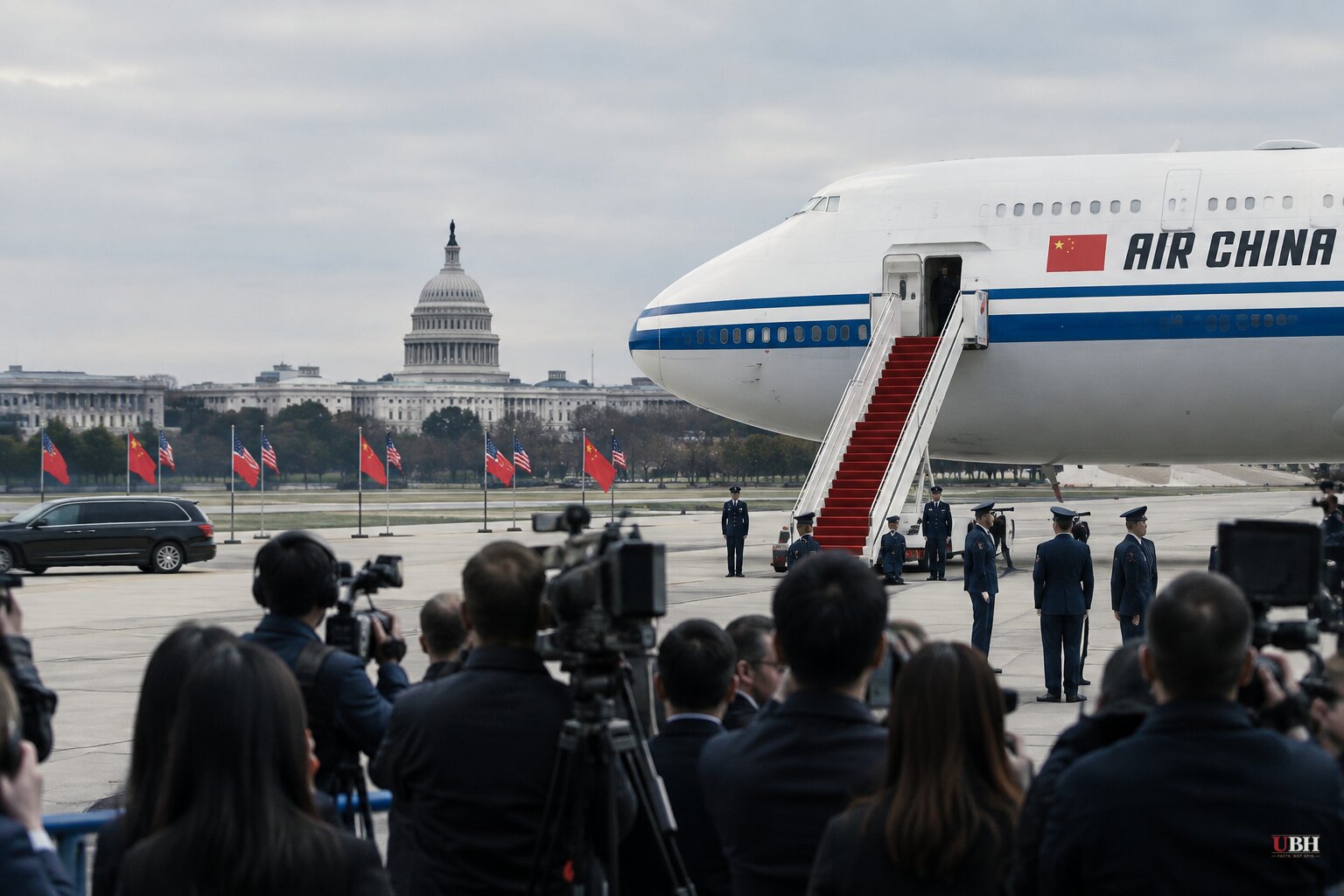
Xi Jinping arrived in Washington Wednesday, September 23, for his first visit to the U.S. capital in more than a decade, ahead of Thursday's summit with President Trump at the White House. It's the second Trump-Xi meeting since the two leaders sat down in Beijing in May.
China's oil balance sheet tells part of the story. In August, Chinese refiners processed 13.91 million barrels of crude a day while imports and domestic production together supplied only about 13.27 million, according to Epoch Times. That 640,000-barrel-per-day gap came out of storage. China drew down roughly 639,000 barrels a day from its reserves that month alone, the third inventory draw in four months, with the pace of depletion accelerating as Middle East supply stays disrupted.
China still has a cushion. Onshore crude inventories stood at roughly 1.23 billion barrels as of September 9, according to Epoch Times, built up through years of aggressive stockpiling that the U.S. Energy Information Administration estimates added an average of 1.1 million barrels a day to Chinese reserves last year, per OilPrice.com. But the trend has shifted.
Iran's Exports Have Collapsed
China bought more than 80% of Iran's seaborne oil exports in 2025, roughly 1.4 million barrels a day, according to Kpler data cited by both OilPrice.com and Newsweek. That relationship worked because Tehran needed a buyer willing to skirt U.S. sanctions and Beijing wanted discounted crude.
A U.S. naval blockade of the Strait of Hormuz has gutted that trade. Iranian crude loadings fell from about 2 million barrels a day in March to somewhere between 220,000 and 255,000 barrels a day in August, Epoch Times reported. China's overall oil imports rose 6.2% month-over-month in August, the highest in four months, but were still more than 23% below year-ago levels.
Chinese Foreign Minister Wang Yi met his Iranian counterpart Abbas Araghchi in Beijing on September 16, the fourth such meeting in three months, according to OilPrice.com. Wang called on "all parties" to reopen the Strait of Hormuz but offered no concrete mediation plan and didn't publicly pressure Iran directly. Elizabeth Freund Larus of the Pacific Forum told RFE/RL, as cited by OilPrice.com, that "China isn't going to do the heavy lifting" to restart U.S.-Iran talks, adding that Beijing benefits geopolitically from a conflict that's draining U.S. military resources even as it pays more for energy.
Sanctions Question Hangs Over the Summit
Treasury Secretary Scott Bessent has announced sanctions targeting countries that support Iran, and the Daily Signal reported that Adam Savit of the America First Policy Institute expects Trump to press China directly on its role, noting that Iran's oil sales to China accounted for roughly 90% of Tehran's oil revenue before the war, according to Savit. Beijing has denied directly funding Iran.
Heritage Foundation's Andrew Harding told the Daily Signal there's "an interesting tightrope" where Washington wants to hold Iran's backers accountable while keeping the broader U.S.-China relationship stable. Michael Lucci of State Armor put it more bluntly to the same outlet: both countries are "competing extremely viciously" while publicly acting as if the relationship is fine.
The Price Tag on Both Sides
The conflict isn't cheap for either government. The Congressional Budget Office puts the Pentagon's cost for the Iran war at more than $38 billion through August 1, per OilPrice.com, which also noted the U.S. now lacks a deployed aircraft carrier in the Western Pacific for the first time since World War II, a gap that has unsettled allies watching China's military buildup.
For Trump, the pain shows up at the pump. Newsweek reported U.S. crude passed $100 a barrel this month and national diesel prices hit a record $6.45 a gallon, while gasoline has climbed from under $3 before the war to over $4 now, adding pressure ahead of the midterms. Shanghai crude futures hit a record 929.4 yuan, about $137.80, per barrel this month after Houthi drone strikes damaged Saudi Arabia's East-West pipeline, according to OilPrice.com. Newsweek also reported that Saudi Arabia has asked China to lean on Tehran to rein in Houthi attacks, which have expanded toward the Bab el-Mandeb chokepoint in recent weeks, citing Reuters.
Trade Truce Clock Is Ticking
Separately from Iran, a tariff truce reached after last October's Trump-Xi meeting in South Korea expires November 10. U.S. Trade Representative Jamieson Greer said this month the two sides will make "some announcements on agriculture and non-tariff barriers," The Standard reported, with traders watching for progress on a mutual tariff reduction covering $30 billion in goods. Boeing CEO Kelly Ortberg downplayed expectations of a major new China order tied to the summit, telling investors any additional purchases beyond the roughly 200 planes already committed will come "at their pace."
What gets said in the Oval Office Thursday about Iran sanctions, and whether Bessent's sanctions list ends up including Chinese entities, remains the open question hanging over a relationship both governments are publicly calling stable while working to reduce their dependence on each other.
Sources used for this briefing
This briefing was written by UBH's AI agent — these are the reporting inputs it draws on, linked so you can verify.


