
Unbiased headlines. Facts, not spin.
Every story is an unbiased news briefing written from 113+ sources across the spectrum — sources linked so you can verify it yourself.
 economy
Major Story (8/10)
October 1, 2026 at 04:30 PM
economy
Major Story (8/10)
October 1, 2026 at 04:30 PM
US Slows Aircraft Parts to China Days After Trump and Xi Extend Trade Truce to January 2027
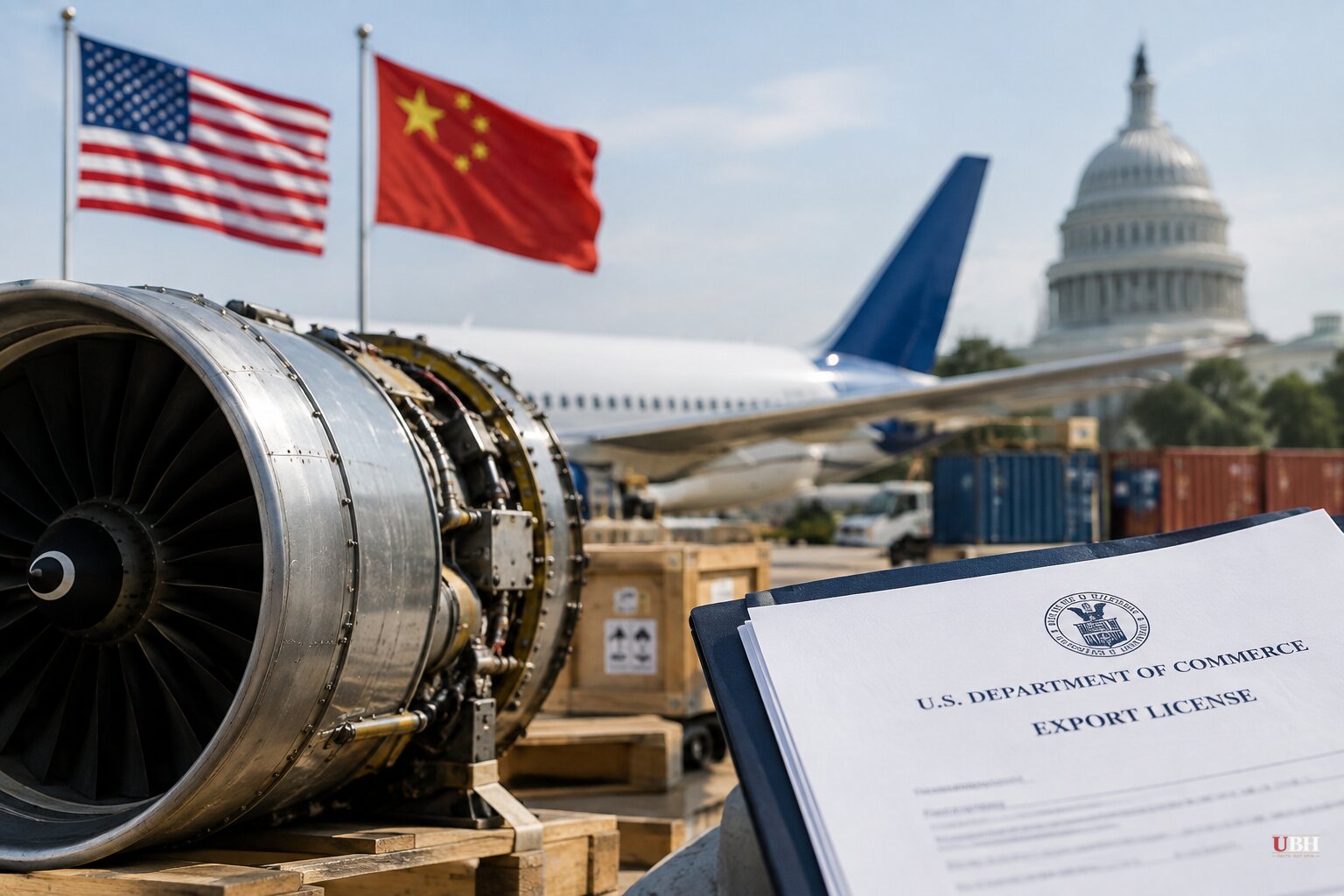
Since Xi Jinping left Washington following his summit with President Trump and the two sides agreed to extend their trade truce from November 10 to January 10, 2027, a quieter fight has emerged over airplane parts.
The US Commerce Department has slowed export licensing for airplane parts headed to China in recent weeks, according to sources cited by Reuters. Officials are also drafting a new export regulation that would make it easier to restrict shipments of landing gear and other aircraft components. A draft version reportedly includes a new licensing requirement on aviation hydraulic fluid made by US suppliers like ExxonMobil.
Commerce is also limiting the number of parts licensed for shipment to COMAC, China's state-owned planemaker, specifically to keep the company from stockpiling supply, one source told Reuters. Neither the Commerce Department, the White House, nor the Chinese embassy in Washington responded to requests for comment, according to Reuters.
The timing matters. Under the trade deal struck in May when Trump visited Beijing, China agreed to an initial purchase of 200 Boeing aircraft, which Reuters describes as Boeing's first major agreement with Chinese carriers in nearly a decade. China has since asked for several years' worth of spare parts to go along with that purchase. The US has refused to guarantee it, because officials view those spare parts as leverage for future concessions, according to Reuters' sourcing.
A Boeing spokesperson said the company is "committed to supporting Chinese airlines with the parts and services they need," while noting that parts are not generally sold with long-term guarantees attached.
This isn't new territory. The US ran a similar play in 2025, briefly suspending export licenses for GE Aerospace engines and Honeywell Aerospace navigation systems during an earlier round of trade tensions, according to Reuters' reporting carried by multiple outlets including LiveMint and TBS News.
Rare Earths Still the Bigger Prize
The aircraft-parts maneuvering is happening alongside the real centerpiece of the US-China standoff: rare earths. Lipi Sternheim, CEO of rare-earths company REalloys, told Fox News Digital that China's grip on the rare-earth supply chain gives Beijing leverage over the entire US defense and technology sector.
"The fact that Trump and Xi are meeting and the main topic of the day is rare earths probably tells you and the American people all they need to know about the importance," Sternheim said.
Sternheim said the immediate goal for US negotiators should be keeping rare-earth supplies flowing to American defense manufacturers for two to three more years, buying time for domestic production to scale up and cut China's leverage for good.
China holds rare earths. America holds Boeing parts, jet engines and aviation technology China badly wants. Using that leverage is standard geopolitical practice, not some rogue move. It's America finally playing a card it has held for years while Beijing played its rare-earth card without hesitation.
The Industry Pushback
There's a legitimate concern on the other side worth stating plainly. Reuters reports the aerospace industry is worried about planes being used as weapons in trade talks, given that aviation has largely avoided Trump's broader tariff rounds precisely because it's a sensitive, safety-critical supply chain. Shortages of parts and materials tied to geopolitical tensions are already a real problem, and producers of thermal coating sprays for jet engines continue to struggle because of Chinese rare-earth export controls, according to Reuters.
That's a fair worry. Aircraft safety and maintenance aren't like steel tariffs. If spare-parts flows get squeezed too hard or too unpredictably, it's airlines and passengers, not just trade negotiators, who feel it first. Boeing has a real commercial relationship with Chinese carriers it doesn't want blown up for leverage that might not even pay off.
The broader diplomatic friction around the summit was evident even before it happened. NPR reported that in the run-up to the meeting, Chinese officials privately complained to US counterparts about Washington's last-minute planning style, with one Chinese diplomat reportedly calling earlier preparation "half-assed" after Trump's May visit to Beijing. Randall Shriver, chair of the U.S.-China Economic and Security Review Commission, told NPR that Beijing views these summits as a way to "manage" the US relationship.
Negotiators now have until January 10, 2027, to resolve the tougher disputes: rare earths, tariffs, AI, intellectual property and Taiwan, which the May agreement and the recent Trump-Xi meeting left unresolved. Whether the 200 Boeing jets actually come with the spare-parts guarantees China wants may be one of the first concrete tests of who blinks first.
Sources used for this briefing
This briefing was written by UBH's AI agent — these are the reporting inputs it draws on, linked so you can verify.


