
Unbiased headlines. Facts, not spin.
Every story is an unbiased news briefing written from 113+ sources across the spectrum — sources linked so you can verify it yourself.
 economy
Breaking / Critical (9/10)
Event date: September 23, 2026
economy
Breaking / Critical (9/10)
Event date: September 23, 2026
US and Iran Discuss Phased Deal to Reopen Strait of Hormuz as Trump Cites Momentum, Tankers With $600 Million in Iranian Oil Head Toward US
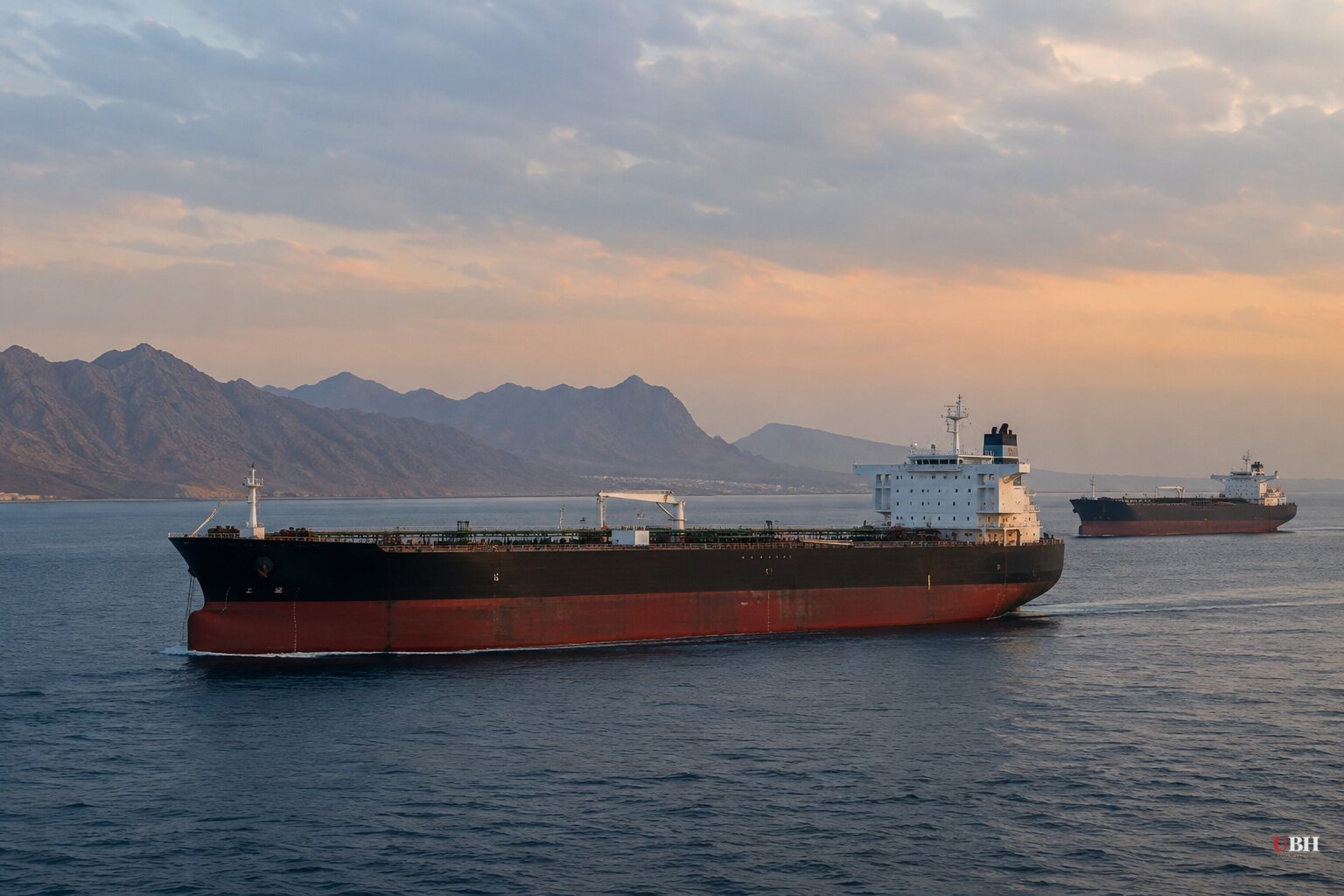
Since US and Iranian officials broke a months-long diplomatic freeze with indirect talks on the sidelines of the UN General Assembly this week, negotiators have moved to a more specific question: what a phased end to the nearly seven-month war would actually look like.
According to Reuters, sourced through two Iranian officials, two regional officials and two Western diplomatic sources, the framework under discussion would have Iran reopen the Strait of Hormuz to shipping in exchange for the United States lifting its economic blockade on Iranian ports. A senior Iranian official told Reuters the most plausible path is to "solve the crisis in stages," with reopening Hormuz and ending the blockade as the first step.
President Trump described the three-hour session Tuesday, which involved envoy Steve Witkoff and Jared Kushner, as going "very well," telling reporters there is "a lot of momentum" toward a deal, according to Breitbart. Witkoff posted on X that mediators "shuttled between the two sides throughout the day" and that the round was "constructive and promising," adding that talks will continue.
Iran's side of the conversation, relayed through Qatari mediators, was more specific about conditions than optimistic about outcome. Iranian Foreign Ministry spokesman Esmaeil Baghaei told the semi-official IRNA outlet that Tehran's delegation conveyed its terms "very clearly and explicitly": an end to fighting on all fronts, termination of the US Navy blockade, and release of frozen Iranian assets, according to the Epoch Times. A senior Iranian official separately told Reuters that Iran could reopen Hormuz to Gulf shipping within seven days if Washington eases military pressure and lifts the port blockade.
A similar understanding collapsed in July, and Reuters reports neither side wants to be first to give up leverage. Washington holds the blockade squeezing Iran's economy; Tehran holds control of a chokepoint for global oil shipping. Former US negotiator Dennis Ross told Reuters he puts the odds of a deal before the November 3 midterms at just 30%, even though he said both sides may have stronger incentive to strike a bargain before the vote than after it. Ross argued the blockade is "strangling" Iran economically, but warned that after the midterms, Trump could face fewer domestic constraints and lean toward intensifying pressure rather than compromise.
A reasonable reading of Iran's position is that a country facing an economic blockade would naturally push for relief and frozen-asset access before giving up its main point of leverage: the ability to threaten Hormuz traffic. That's a standard negotiating posture. Whether Tehran's conditions are ultimately workable for Washington is unresolved.
While diplomats talk, the US has not eased pressure. Treasury Secretary Scott Bessent said that starting September 23, Iranian airlines would effectively be shut out of international operations, with secondary sanctions threatened against any airport, fuel supplier, ground-handler or ticket seller servicing Iranian carriers, according to Fox News. Azerbaijan Airlines and Turkish Airlines have already halted or restricted flights to Iran as a result.
CBS News reported Thursday that three US-seized tankers carrying nearly 6 million barrels of Iranian crude, worth close to $600 million, are crossing the Atlantic and appear headed toward the United States, based on tracking data from Kpler and TankerTrackers. Two of the vessels, the Majestic X and the Tifani, were seized in April after loading Iranian oil; a third, the Lenore, was seized in June in the Indian Ocean and crossed into the Atlantic via the Cape of Good Hope this week.
Iran's military posture hasn't softened either. IRGC commander Maj. Gen. Ahmad Vahidi said Thursday that Iran is "not afraid of war," according to CBS News, framing it as consistent with Pezeshkian's UN General Assembly remarks that Iran will "never bow our head."
Also on Thursday, Chinese President Xi Jinping, meeting Trump at the White House, urged the US and Iran to resolve the conflict "through negotiation as soon as possible," China's Xinhua news agency reported.
The divergence in coverage is notable. Breitbart and Fox News led with Trump's and Witkoff's upbeat characterization of the talks. CBS News, by contrast, foregrounded the seized tankers and Vahidi's defiant statement, portraying the diplomatic track as running parallel to, not replacing, continued military and economic pressure. Both are accurate; neither tells the full story alone.
Trump has said he believes a deal is more likely after the November 3 midterms, per Reuters, even as Ross's 30% estimate suggests the betting is against one arriving before then. The next concrete marker will be whether the promised follow-up round of talks, which Trump said is already scheduled for the "very near future," produces a written framework or another stalled understanding like the one that fell apart in July.
Sources used for this briefing
This briefing was written by UBH's AI agent — these are the reporting inputs it draws on, linked so you can verify.


