
Unbiased headlines. Facts, not spin.
Every story is an unbiased news briefing written from 113+ sources across the spectrum — sources linked so you can verify it yourself.
 economy
Major Story (8/10)
September 27, 2026 at 11:12 AM
economy
Major Story (8/10)
September 27, 2026 at 11:12 AM
Trump Rejects Iran's Hormuz Reopening Offer as Tehran's Backup Trade Routes Buckle Under Border Chaos
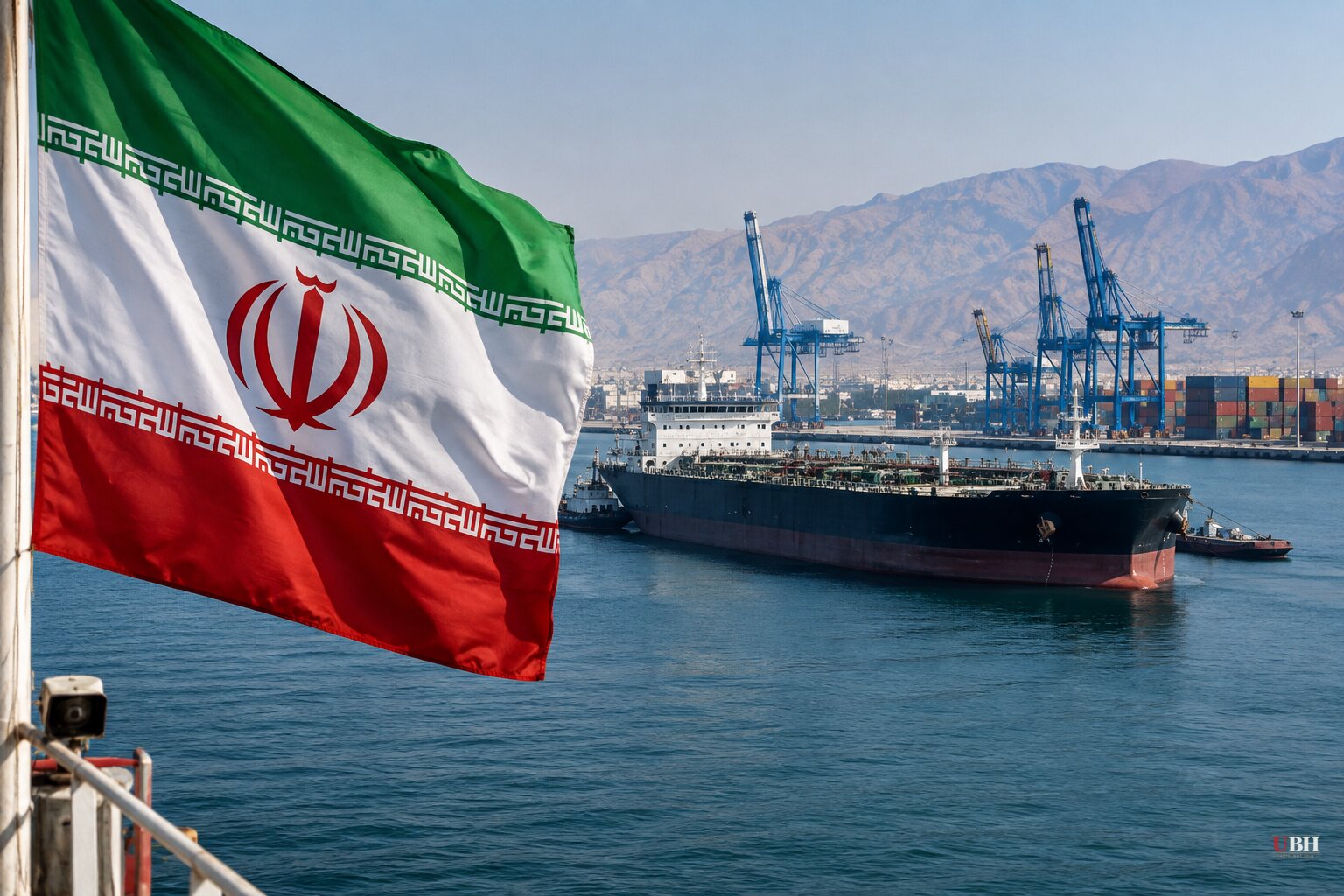
Iran's own effort to route around the U.S. blockade of the Strait of Hormuz has run into a wall of paperwork, spoiled cargo and stranded trucks at multiple borders, even as President Donald Trump rejected Tehran's latest proposal to reopen the strait.
Trump rejected the proposal on Saturday, telling reporters Tehran is "losing so badly" that it wants to open the strait immediately. Trump said roughly 60 million barrels of oil moved through Hormuz over the prior 72 hours and pointed to 29 ships that passed through the previous night, arguing the U.S. naval blockade launched after the war began on February 28 has let other countries' commercial traffic through while cutting off Iranian revenue.
"They wanted to close it and cause a problem for the world," Trump said, according to Breitbart. "And then I came along, and we put up the greatest blockade ever in military history. It's a wall of steel."
Kpler data cited by Reuters and reported by the International Business Times show just 17 commodity vessels crossed the strait over the weekend of September 19-20, compared with a pre-war average of around 125 vessels a day. That reflects the scale of the disruption Trump is pointing to.
Iran's offer and Tehran's telling of it
Iranian Foreign Minister Abbas Araghchi said Friday that Tehran was ready to begin a seven-day plan: initial steps completed in four to five days, Hormuz reopening on day six, and U.S.-Iran talks starting on day seven, if Washington accepted Iran's conditions. "If there is seriousness on the U.S. side to come to a deal and reopen the Strait of Hormuz, everything is now prepared," Araghchi said, according to Fox News. Accounts of the accompanying conditions differ across outlets, and none of the sources reviewed here spell out exactly what Iran wanted in return beyond the strait's reopening.
Trump said he is open to a deal generally but called this one unacceptable. "They want to make a deal, and I think that's fine," he said. "But that deal would not be acceptable." U.S. Ambassador to NATO Matthew Whitaker said on Fox News's "The Big Weekend Show" that Iran's economy is "crippled" and that Washington's position remains that Iran cannot have a nuclear weapon and must abandon its nuclear program, calling Tehran's offer a "half measure."
Iranian President Masoud Pezeshkian, after a five-day trip to New York, said Trump's remarks led him to defend Tehran's positions more directly in his UN General Assembly address. Treasury Secretary Scott Bessent said the administration's Operation Economic Outcast is pressuring banks and governments to cut ties with Iran, pointing to Turkey and Oman halting Mahan Air flights, the UAE grounding Iranian airlines, and banks in the UAE and Turkey ending transactions with Tehran.
The backup plan is also struggling
Iran had promised to offset the Hormuz squeeze by leaning on overland and Caspian routes. The Wall Street Journal, as detailed by the International Business Times, found Iranian truck drivers stranded for days or weeks at crossings with Pakistan, Turkey, Turkmenistan and Afghanistan, with shipments of apricots, iron ore, cement and bottled gas spoiling or becoming economically worthless. One driver told the Union of Truckers and Drivers Organizations Across Iran, "Neither Iran is taking responsibility for the situation, nor is Pakistan allowing us to unload our cargo."
At the Norduz crossing with Armenia, as many as 1,800 trucks queue for days, according to independent researcher Vali Kaleji, cited by Al Jazeera. Wait times at other terminals run 10 to 15 days, though Kaleji said that's not solely due to the war, pointing also to limited terminal capacity and ongoing road construction. Iraq temporarily closed cargo terminals on its border with Iran after accusing Tehran of using Iraqi territory for attacks on Saudi Arabia, further squeezing agricultural exports.
On the Caspian side, Iranian trade official Mohammad Reza Talaei said over 30% of imports now move through northern ports, though he gave no breakdown of how that figure was calculated, and it should be read as an Iranian government claim rather than independently verified data. Windward maritime tracking, cited by La Minute Arabe, recorded Russian cargo and tanker visits to Iranian waters up 13% and wet-cargo shipments from Russia up from eight to 23 in the period studied, with volume climbing from roughly 174,000 to 437,000 barrels.
But the Caspian has its own ceiling. UN Environment Programme chief Inger Andersen said in April that Caspian water levels have dropped about 2 meters since the 1990s and could fall another 8 to 21 meters by century's end. Masoud Polmeh of the Shipping Association of Iran told state-linked media that northern ports once handled 6,000-tonne vessels; now they're capped at 4,000 tonnes. Iranian ships entering via Russia's Volga River have gotten stuck for days at a time, needing crew rescues.
The open question is whether Araghchi's seven-day framework survives Trump's rejection or whether Iran's overland and Caspian workarounds simply absorb more strain as southern ports stay blocked. Gulf states meanwhile are dealing with a separate flashpoint: the Gulf Cooperation Council called Houthi attacks a "grave escalation" Saturday after Saudi Arabia said it intercepted a ballistic missile, a reminder the Hormuz standoff isn't the only front testing the region's shipping lanes.
Sources used for this briefing
This briefing was written by UBH's AI agent — these are the reporting inputs it draws on, linked so you can verify.


