
Unbiased headlines. Facts, not spin.
Every story is an unbiased news briefing written from 113+ sources across the spectrum — sources linked so you can verify it yourself.
 economy
Major Story (8/10)
Event date: September 23, 2026
economy
Major Story (8/10)
Event date: September 23, 2026
Trump Endorses India-Mideast Rail Corridor to Bypass Iran as War Nears Seven Months, BRICS Calls for 'Restraint'
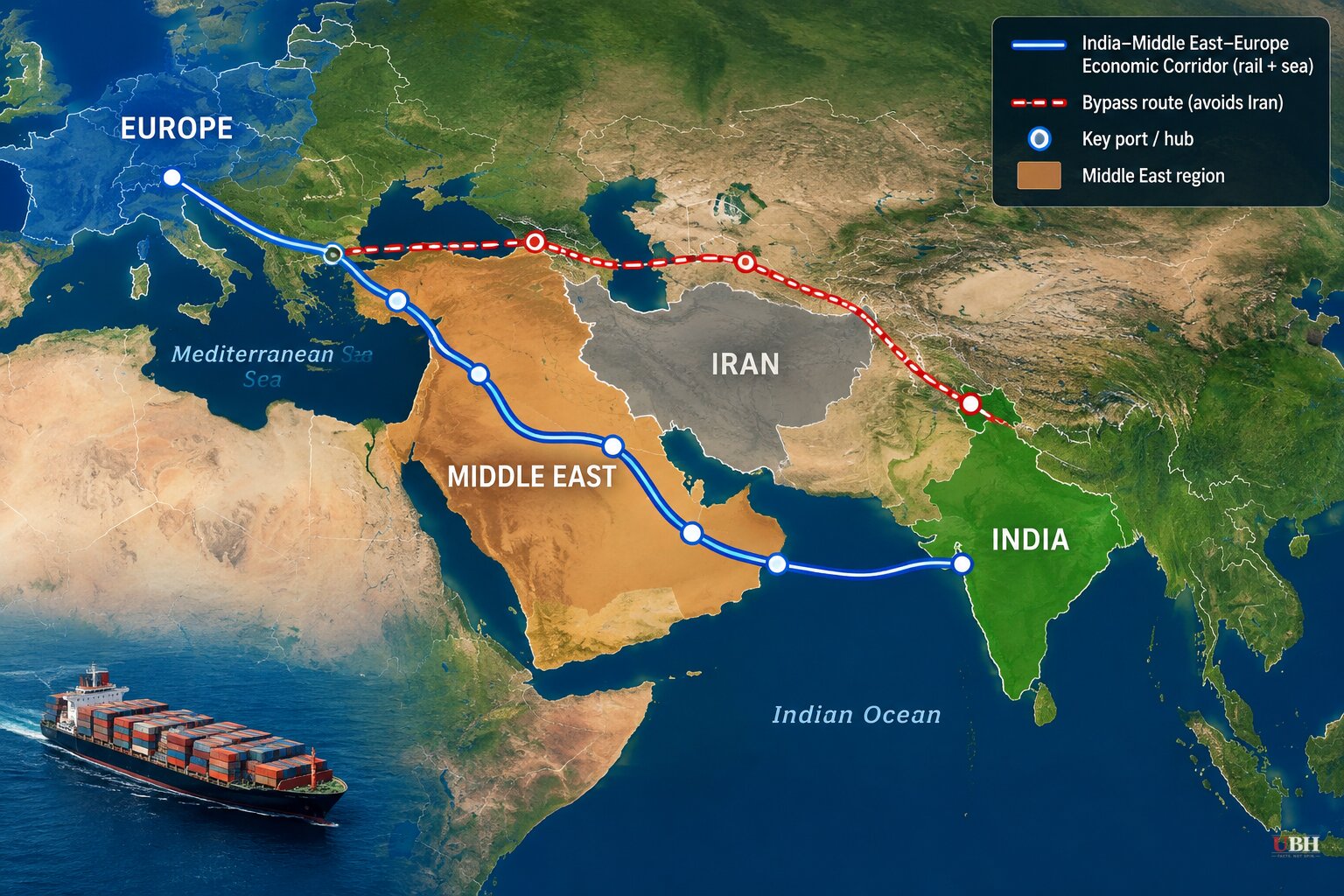
President Trump told Gulf Cooperation Council and Arab leaders on the sidelines of the UN General Assembly this week that his administration "strongly supports" the India-Middle East-Europe Economic Corridor, arguing Iran's attacks on shipping have made the case for routing energy exports around Tehran entirely, according to NDTV.
"Iran's terrorist attacks on commercial shipping in neighboring countries have shown the need to shift Middle East energy infrastructure away from the Iranian checkpoints," Trump said, per NDTV's account of the meeting. He also repeated an earlier warning that Iran faces "annihilation" if it doesn't change course, and said he'd like to see the country avoid that fate.
A War Approaching Seven Months
The backdrop is a US-Israeli military campaign against Iran that began February 28, 2026, and is now closing in on its seventh month with no resolution. Fox News reported Trump has predicted the war will end "very soon," likely after this November's midterms. That remains a prediction, not a confirmed outcome.
Iranian President Masoud Pezeshkian rejected any notion of capitulation. "We won't surrender," he wrote on X, according to Fox News, accusing the US of waging war on civilian infrastructure, food supply and "livelihoods." That's Iran's characterization of the campaign. Washington has not described its strikes in those terms in the material reviewed here.
The war's reach into commercial shipping is not theoretical. The UK Maritime Trade Operations agency issued a verified warning that a vessel was struck by an unknown projectile while transiting the Strait of Hormuz late Saturday, per Fox News. UKMTO said it didn't yet know the vessel's identity, the crew's condition, or who fired the projectile, and urged ships in the strait to exercise caution.
The Bypass Plan
The India-Middle East Economic Corridor is designed to route around this chokepoint. According to Hindustan Times, the corridor links India's Mundra port to the UAE's Fujairah port by sea, then continues via pipeline and a solar-powered rail network through Saudi Arabia, Jordan and Israel before reaching Europe through Haifa. The design deliberately avoids both the Strait of Hormuz and the Suez Canal-Red Sea route. Fujairah itself, Hindustan Times noted, sits outside Hormuz in the Gulf of Oman and has already been targeted by Iranian missiles for that very reason.
The project isn't new. It was unveiled in 2023, but its completion hinges on one missing signature: Saudi Arabia's. Hindustan Times reported Trump has offered Riyadh a civil nuclear deal and a $24 billion F-35 sale to bring the kingdom into the Abraham Accords framework that IMEC depends on. Complicating that, Saudi Arabia has separately joined a defense pact with Turkey and Pakistan, both of which oppose Israel. Hindustan Times said this development has left the Trump administration "deeply concerned" even as it stays publicly quiet about it. A senior State Department official told The Tribune of India that the US is "ready to go" on IMEC but that the project remains held up by conditions inside the Middle East.
BRICS Says Cool It
While Trump pushed the corridor, an 11-nation BRICS bloc met in New Delhi and, after failing to agree on a joint statement back in May, managed one this time. "We express deep concern over the continued escalation of tensions in Middle East/West Asia," the statement read, per Breitbart, calling for "maximum restraint" and warning against actions that could worsen the situation.
The summit marked Xi Jinping's first visit to India since 2019, described by Breitbart as the biggest step yet in a cautious thaw between the nuclear-armed rivals. Modi also embraced Putin, one of India's most important strategic partners, and told the assembled leaders that BRICS nations represent 50 percent of the world's population, 40 percent of global GDP and more than a quarter of global trade. The bloc is positioning itself as a counterweight to Western-led institutions, even as its members, Iran, Saudi Arabia and the UAE among them, remain divided on the war itself.
The Human Cost Inside Iran
Away from the diplomacy, Iran's internal crackdown has intensified. A 33-year-old blogger, Soda Ebrahimi Shamsabadi, has been sentenced to death over accusations of insulting the supreme leader and "corruption on earth," according to Iran International's reporting cited by the New York Post via Fox News. She's been held in Bandar Abbas Prison since March, including 20 days in solitary confinement, the Post reported. Separately, at least 29 people arrested during January protests have been executed since March, according to the Norway-based group Iran Human Rights, cited in the same reporting. These are allegations and sentences from Iran's own judicial system. No independent international body has adjudicated the underlying charges.
A Sign of Normalcy Returning
Amid all this, one small indicator suggests markets expect the region to stabilize. Indian destination wedding bookings to Dubai and other West Asian venues, which had been cancelled earlier this year over war fears, are recovering, with planners reporting a jump in enquiries for January through March 2027. Ras Al Khaimah is offering incentives to win back business, according to Rail24.in.
Whether that optimism is justified depends on questions still unresolved: whether Saudi Arabia signs onto IMEC despite its new defense pact with Turkey and Pakistan, whether Trump's predicted "very soon" end to the war actually arrives after the midterms, and whether the Strait of Hormuz incident from this past weekend turns out to be an isolated event or the start of a broader shipping campaign.
Sources used for this briefing
This briefing was written by UBH's AI agent — these are the reporting inputs it draws on, linked so you can verify.


