
Unbiased headlines. Facts, not spin.
Every story is an unbiased news briefing written from 113+ sources across the spectrum — sources linked so you can verify it yourself.
 economy
Major Story (8/10)
Event date: September 21, 2026
economy
Major Story (8/10)
Event date: September 21, 2026
Saudi Oil Through Hormuz Nearly Quadruples in a Week, CENTCOM Says Iran Still at Zero Exports
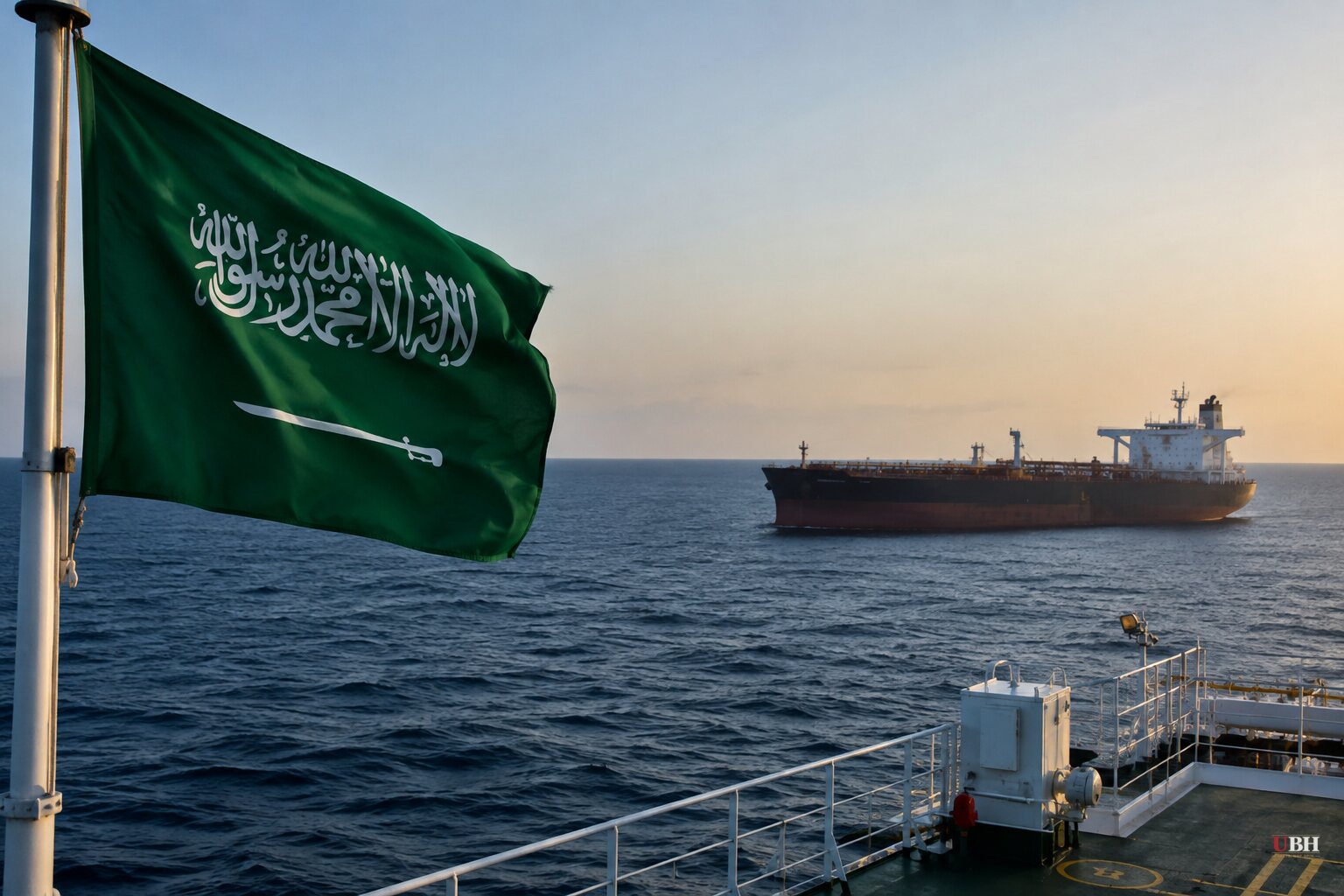
Since Saudi Arabia shut its East-West pipeline on September 13 following Houthi strikes, Saudi Aramco has been rerouting crude through the Strait of Hormuz to cover the gap left at its Red Sea port of Yanbu, where no loadings have been visible since September 16, according to the Times of India, citing Reuters and TankerTrackers.com data.
JPMorgan analysts, cited by Reuters and reported by the Times of India, found Saudi oil moving through Hormuz averaged 2.9 million barrels per day over the six days ending around September 21, up from just 700,000 barrels per day in August. Kpler data showed 22 tankers, mostly VLCCs, carrying 42 million barrels exited the strait during the week of September 13, with Saudi Arabia and Iraq each accounting for 43% of that volume.
Aramco loaded roughly 14 million barrels onto seven VLCCs at Ras Tanura on Sunday alone, per satellite imagery reviewed by Reuters. Separately, trade sources told Business Standard on September 18 that Aramco has sold about 60 million barrels from Ras Tanura for ship-to-ship transfer at Oman's Sohar port through September and October, mostly to Chinese and South Korean refiners, with some cargoes headed to India and Japan.
Petroleum Association of Japan president Shunichi Kito told reporters in Tokyo that Japan's refiners have secured sufficient crude through November through these ship-to-ship transfers outside the strait, noting oil "passes through the Strait of Hormuz at Saudi Arabia's risk" before reaching Japanese buyers.
CENTCOM's Billion-Barrel Claim
U.S. Central Command chief Adm. Brad Cooper said Saturday, September 19, that American forces have supported more than one billion barrels of crude moving through Hormuz in recent months while protecting over 2,000 commercial ship transits, according to Breitbart. Cooper said Iran has exported zero barrels through the strait during that stretch, calling it the result of an "ironclad blockade." CENTCOM said Friday, per Breitbart, that American forces had redirected 105 commercial vessels to ensure compliance; by Monday, September 21, Fox News reported CENTCOM's updated figure had risen to 110 commercial vessels redirected.
That claim conflicts with the strait's broader traffic picture. OilPrice's own reporting carries the headline "Strait of Hormuz Shipping Traffic Falls Further as Saudi Oil Flows Rise," and the Times of India separately notes that overall Hormuz traffic "remains below normal" even as Saudi Arabia's specific share climbs. The Times of India reported that 17 commodity vessels transited the strait over one recent weekend, down from 37 a week earlier. Breitbart's CENTCOM-sourced framing emphasizes momentum and record protected transits. The traffic data from OilPrice and the Times of India point to a strait where total shipping volume is still down, with Saudi Arabia simply capturing a larger slice of a smaller pie.
Brent crude fell below $100 a barrel on Monday, September 21, for the first time since September 9, which the Times of India attributes to expectations of higher Saudi supply rather than to the CENTCOM blockade. Goldman Sachs has flagged the risk of oil climbing back to $120, according to Bloomberg's Horizons Middle East & Africa program. Libya's Sharara oil field has separately seen output fall by more than half, adding pressure on global supplies outside the Gulf entirely.
UN Panel Finds Iran, and Two U.S. Strikes, Committed Crimes
A UN Fact-Finding Mission on Iran told the Human Rights Council in Geneva on Monday that Tehran committed crimes against humanity in its crackdown on protests that began in 2025, citing unlawful killings, torture, mass arrests and internet blackouts, according to Iran International as reported by Fox News. Mission chair Sara Hossain said the panel found Iran "responsible for gross human rights violations."
The same panel found reasonable grounds to believe two U.S. strikes on February 28 amounted to war crimes: one on the Shajareh Tayyebeh Primary School in Minab that killed 157 people, including 123 children, and a second on a sports complex in Lamerd that killed 22 civilians. These are the panel's findings, not a criminal conviction, and no U.S. charges have been filed. U.S. Ambassador to the UN Mike Waltz said President Trump is expected to challenge the findings during his address to the UN General Assembly.
The administration has not conceded the strikes were unlawful. The UN mission's finding is a formal allegation from an investigative body, not a court ruling, and Iran's own record of lethal crackdowns on its citizens is part of the same report.
Business Standard reported Friday that Saudi Arabia is seeking to restore about half of the East-West pipeline's capacity within days. Whether that repair holds will determine if the current Hormuz surge, and the price relief that came with it, is temporary or the new baseline for Saudi exports.
Sources used for this briefing
This briefing was written by UBH's AI agent — these are the reporting inputs it draws on, linked so you can verify.


