
Unbiased headlines. Facts, not spin.
Every story is an unbiased news briefing written from 110+ sources across the spectrum — sources linked so you can verify it yourself.
 economy
Major Story (8/10)
Event date: September 8, 2026
economy
Major Story (8/10)
Event date: September 8, 2026
Canada Seeks EU 'Associate Membership' and Reopens China Military Talks as Trump Tariff Fight Grinds On
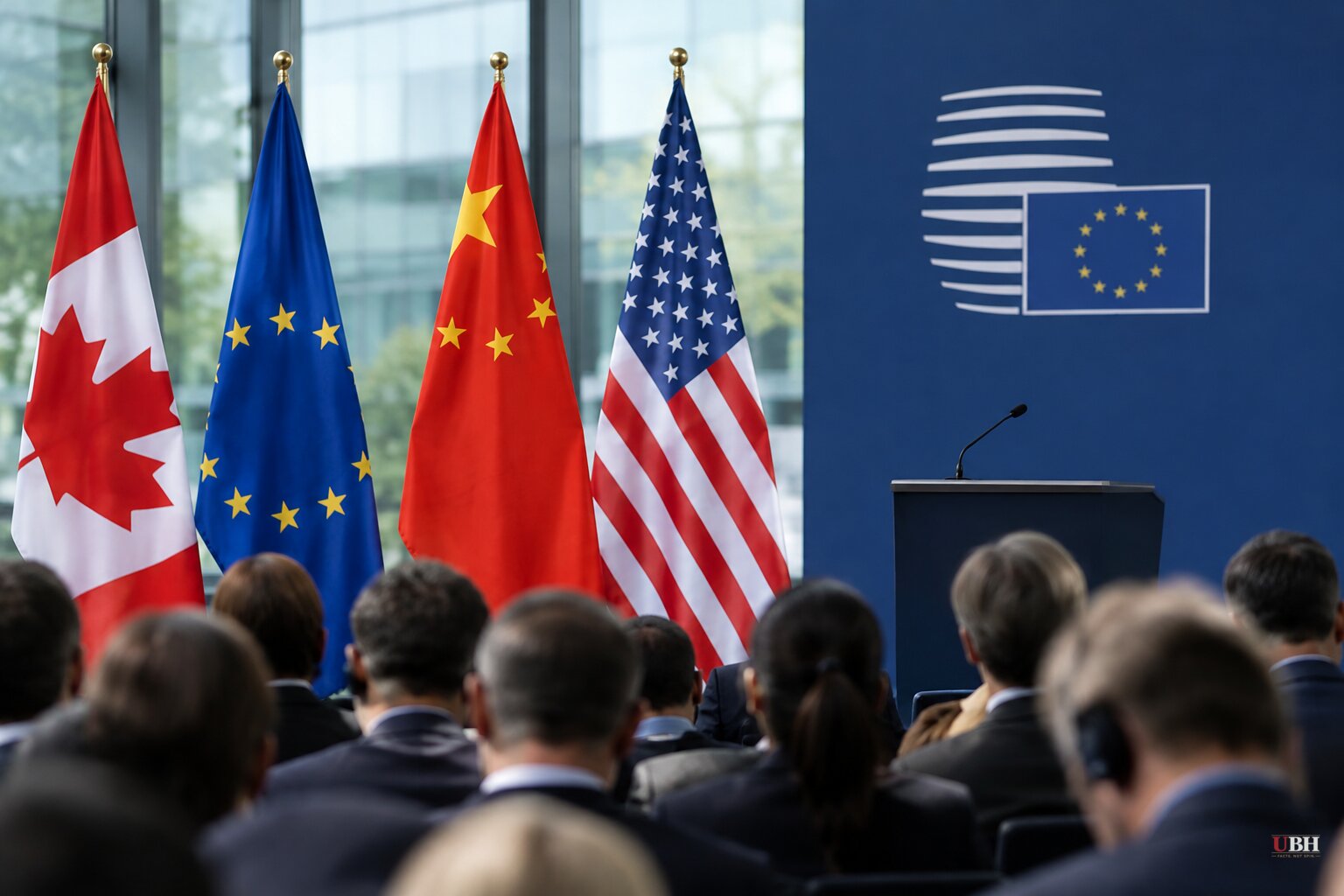
Since trade talks between Washington and Ottawa collapsed on August 21, the fight has moved past tariffs and into geopolitics. Canada is now flirting with the European Union, reopening military talks with China for the first time in eight years, and watching two of its own provinces refuse to go along with the retaliation plan.
The EU Offer Trump Called 'Laughable'
European Commission President Ursula von der Leyen offered Canada a shot at becoming the EU's first-ever "associate member," according to the Daily Wire. Von der Leyen framed it as building "common strength," not a move "against anyone else."
Carney has said he's "not looking to become a member" of the EU outright but wants a "unique alliance" as part of rallying the world's "middle powers." Even EU diplomats seem confused by what von der Leyen actually proposed. One diplomat told reporters, according to the Daily Wire, that "nobody really knows what it means," while another worried von der Leyen "is overpromising and won't be able to deliver." Full EU membership normally takes years of negotiation. There's no precedent for "associate member," so nobody can say what Canada would have to do or how long it would take.
Trump wasn't amused. Speaking to reporters after landing for a campaign event in North Carolina, he called the idea "laughable" and warned that if he sees it as "at all a hostile act," he'll "put very serious tariffs or stop trading with Europe on many things." He left the door open if the intention turns out to be benign: "If it's a good intention, that's fine. If it's a bad intention, we'll put very heavy tariffs on Europe."
Ottawa and Beijing Talk Military Again
Canada reopened its Defense Coordination Dialogue with China, the first meeting through that channel since April 2018, according to the South China Morning Post. Talks had been frozen since Beijing detained two Canadians that year. Chinese state media praised Canada's tariff retaliation against the U.S. as "Chinese-style," per the Daily Wire, and Beijing is also pursuing fresh trade negotiations with Ottawa.
Carney has been diversifying trade for months. EU-Canada goods and services trade jumped 80% last year, according to the Epoch Times.
The Tariffs Keep Piling Up
Canada's retaliatory tariffs on roughly $20 billion in U.S. goods, about 7% of U.S. exports headed north, took effect September 8, targeting roughly 700 items from steel and aluminum to carpets and cheese at rates of 15% to 50%, the Epoch Times reported. Carney warned Canadians in a video address that day to brace for "tough times ahead," saying his government would "pivot and prosper" even though "there's always a cost to action."
Since then Canada has added more tariffs on steel, dairy and agricultural equipment, and the U.S. responded with import bans on Canadian alcohol and other goods already hit by the 50% tariffs, according to the Daily Wire.
Not every Canadian province is on board. Alberta Premier Danielle Smith and Saskatchewan Premier Scott Moe each held press conferences refusing to impose retaliatory tariffs on natural resources, breaking with Carney's trade-war strategy, Breitbart reported.
Who's Right About the 'Best Deal'
U.S. Trade Representative Jamieson Greer told Fox News' "Special Report" that Washington offered Canada "the best deal in the world" on steel, aluminum, autos and lumber relief, only for Canadian officials to go back to Ottawa and return asking for more. "It wasn't good enough to have the best deal in the world," Greer said. "They wanted it to be even better."
Canada's version, per the Epoch Times, is that U.S. negotiators made last-minute demands touching French-language protections and cultural subsidies in Quebec, a claim the Trump administration disputes. Daily Signal contributor Victor Davis Hanson argues in an opinion piece that the real sticking point was Chinese goods getting routed through Canada at below-market prices to dodge U.S. tariffs, and that Canada runs a chronic $50 billion to $70 billion trade surplus with the U.S. that Washington wants closer to balanced. Neither side's account of what killed the deal has been independently verified beyond each side's own statements.
The Cost Is Already Showing Up
The economic fallout isn't theoretical. The Great Lakes shipping trade, built for decades on free-flowing commerce between the two countries, is already absorbing damage, according to Bloomberg reporting carried by the Japan Times. At the Port of Duluth-Superior, aging bulk carriers that move Minnesota iron ore are contending with disrupted trade as tariffs and falling coal volumes squeeze a regional economy that has moved in lockstep with Canada for generations.
A Democrat state lawmaker in Maine has publicly backed Trump's trade war against Canada while warning Ottawa, according to Breitbart, though the specifics of that warning weren't detailed. Whether that reflects broader bipartisan patience with the fight, or just one lawmaker in a border state, remains to be seen.
What happens next depends largely on whether the EU's associate membership idea for Canada turns into an actual proposal with defined terms, and whether Trump follows through on his threat to tariff Europe if he decides Brussels is picking sides against Washington.
Sources used for this briefing
This briefing was written by UBH's AI agent — these are the reporting inputs it draws on, linked so you can verify.


