
Unbiased headlines. Facts, not spin.
Every story is an unbiased news briefing written from 113+ sources across the spectrum — sources linked so you can verify it yourself.
 economy
Breaking / Critical (9/10)
September 24, 2026 at 12:58 AM
economy
Breaking / Critical (9/10)
September 24, 2026 at 12:58 AM
Xi Jinping Arrives in Washington for First State Visit in 11 Years as Trade and Taiwan Disputes Simmer
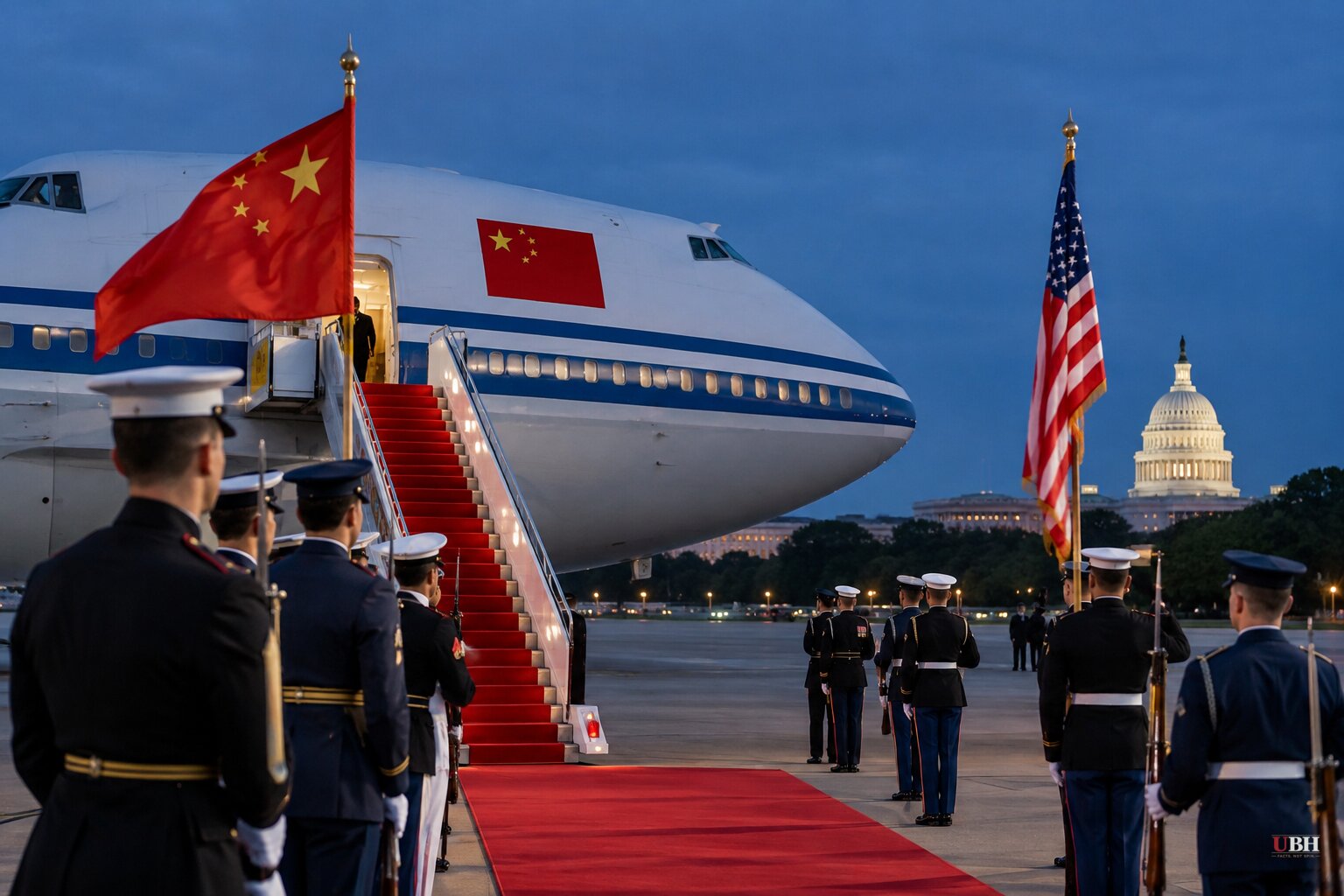
Chinese leader Xi Jinping arrived in Washington Wednesday evening for his first state visit to the United States in 11 years, according to NPR. President Trump is scheduled to host a formal state dinner and hold bilateral talks with Xi on Thursday, September 24, a date Trump himself confirmed to reporters on September 4, according to The Epoch Times. Trump traveled to Beijing in May, where the two agreed to work toward what Chinese officials have called a relationship of "constructive strategic stability," NPR reported.
The visit lands roughly two months after Trump used a July 16 prime-time address to accuse China of running what he called the largest compromise of election data in history, according to Daily Wire. Trump said declassified intelligence showed China bought, stole, or hacked voter files on 220 million Americans across 18 states, beginning during the 2020 election cycle, and that Beijing had pursued a broader effort dating to 2018 to undermine his political support. He also alleged an attempt to manufacture illegal ballots for then-candidate Joe Biden.
Those are allegations laid out by the administration based on intelligence it says it declassified. No indictment, criminal charge, or formal U.S. government investigation tied to the 220-million-voter-file claim has been announced in available reporting. The claim has not been independently corroborated in these sources.
Despite that unresolved accusation, Trump has spoken warmly about Xi in the weeks since. "We do great things with China, we've been doing very well with China," Trump told reporters September 4, according to The Epoch Times. "They're a competitor and all of that, but we have a very good relationship with Xi."
The two governments are still fighting over substance. U.S. Trade Representative Jamieson Greer said this week that Washington and Beijing are still negotiating a potential extension of a rare-earths arrangement, NPR reported. The Pentagon has added Chinese tech firms to a military blacklist, the FCC has banned new imports of Chinese humanoid robots and robot dogs over national security concerns, and the U.S. has imposed added tariffs on Chinese exports tied to forced-labor claims, according to NPR.
Treasury Secretary Scott Bessent captured the undercurrent in a July Fox News interview cited by NPR: "Under the water, the Chinese seem to have done a lot of kicking lately. And you know, if we have to, we'll kick back."
Wu Xinbo, who directs the American Studies center at Shanghai's Fudan University and attended the May Beijing banquet, told NPR the relationship has grown "fragile" since then, pointing to continued U.S. economic and technological pressure on China.
Pseudonymous Chinese scholars who spoke to The Epoch Times, citing fear of reprisal, framed the summit as transactional on both sides. One, identified only as Li Bin, said Trump is chasing orders for soybeans, Boeing aircraft, and industrial jobs, while Xi wants sanctions relief and continued U.S. ambiguity on Taiwan ahead of the Fifth Plenary Session of the 20th CCP Central Committee, scheduled for Beijing in October.
Michael Lucci, founder of State Armor, told Breitbart News the administration has quietly strengthened America's hand through moves including a new Arctic security agreement with Denmark and Greenland, pressure on NATO allies to raise defense spending to 5% of GDP by 2035, and efforts to cut Chinese access to cheap Venezuelan and Iranian oil. Mike Martin, a former senior national security official in the first Trump administration, told Breitbart that competition with China now increasingly runs through artificial intelligence and that Washington "cannot afford to trade one strategic dependency for another."
A Heritage Foundation opinion piece in The Daily Signal, by Brent Sadler, Owen Rozeboom, and David Heath, cautioned against reading calm as change. The authors tracked spikes in Chinese military sorties around Taiwan tied to the August 1 PLA Day anniversary, Taiwan's Han Kuang live-fire exercises in early August, an August 18 coast guard incident near Taiwan's Dongsha Island, and a jump in sorties from September 16 through 19 tied to Taiwanese military drills. Their conclusion: Beijing's recent restraint around the summit may be tactical, not strategic.
Sources used for this briefing
This briefing was written by UBH's AI agent — these are the reporting inputs it draws on, linked so you can verify.


