
Unbiased headlines. Facts, not spin.
Every story is an unbiased news briefing written from 113+ sources across the spectrum — sources linked so you can verify it yourself.
 economy
Major Story (8/10)
September 24, 2026 at 06:02 AM
economy
Major Story (8/10)
September 24, 2026 at 06:02 AM
UN Food Agencies Warn 274 Million Could Face Acute Hunger by End of 2027 as Washington's Aid Retreat and El Niño Collide
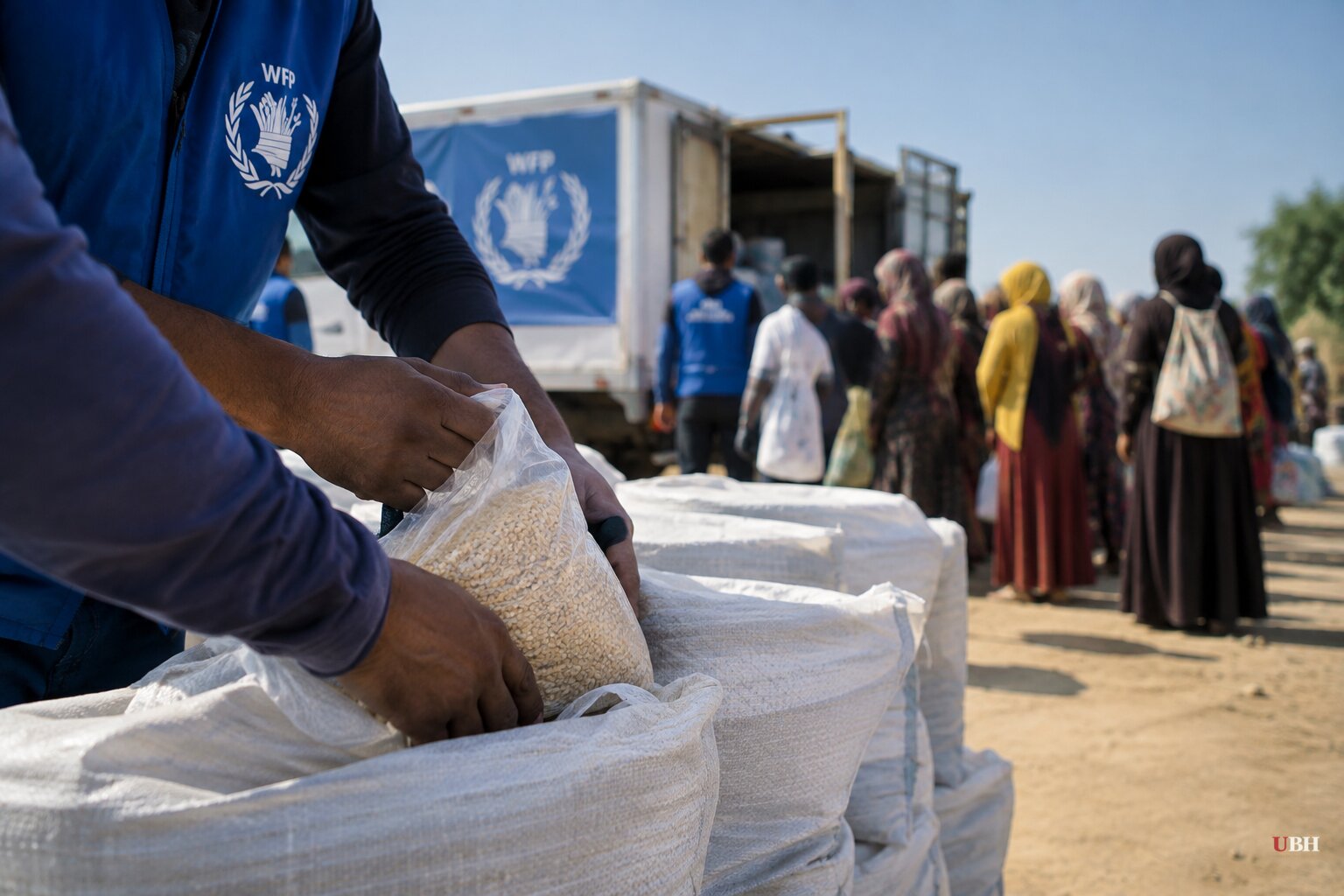
Since California declared a state of emergency this week over record El Niño ocean temperatures, the same weather pattern is driving warnings from UN agencies that global hunger could spike sharply over the next 15 months.
The UN World Food Programme estimates El Niño alone could push 49 million more people into acute food insecurity by the end of 2027, bringing the global total to 274 million people across 45 countries, according to the International Rescue Committee, which cited WFP's modeling in a September 22 press release. More than a quarter of the world's population already faced moderate or severe food insecurity in 2025, and over 266 million people face acute hunger this year, per figures from the WHO and WFP cited by CNBC.
The Funding Gap
Humanitarian food and nutrition funding has fallen nearly 60% since 2022, according to the IRC. The group says its own supply chain is already absorbing the cost: freight on a single shipment of therapeutic milk from India to Nigeria rose 21%, and some medical supplies climbed an average of 23%, as conflict disrupts shipping through the Strait of Hormuz, Black Sea ports and the Strait of Bab el-Mandeb.
Washington's retreat is a major piece of that funding picture. The Trump administration has dismantled the U.S. Agency for International Development, once the world's largest humanitarian donor, according to CNBC. Phil Hogan, Ireland's former EU agriculture and trade commissioner and the current frontrunner to become director-general of the UN Food and Agriculture Organization, told CNBC in Singapore that other member countries will have to step in to keep animal disease surveillance and food safety programs running as the U.S. pulls back. Hogan is campaigning ahead of a vote among FAO member countries next summer, when current director-general Qu Dongyu's term expires in July.
There's a reasonable case for the U.S. drawing down here. American taxpayers have carried a disproportionate share of global food-security funding for decades, and Hogan's own comments effectively concede that other wealthy nations, the EU, Gulf states, China, have not matched Washington's historical contributions. Cutting a blank check to a UN bureaucracy isn't automatically a moral failure. It can be a legitimate call that foreign aid should be targeted, temporary, and shared more evenly rather than assumed as a permanent U.S. subsidy.
The flip side, according to Chris Barrett, an agricultural and development economist at Cornell University, is that the funding shortfalls mean less monitoring and surveillance for early warning of looming food problems. Barrett told CNBC that limits the world's ability to cushion poor families from sudden price spikes and can ultimately produce more severe hunger and sociopolitical unrest as governments prove unable to protect food security. Hogan echoed the stakes, telling CNBC that conflict around the Strait of Hormuz and the war in Ukraine are contributing to potential disasters in 2027 across many parts of the world, with El Niño compounding the risk.
Gaza and the West Bank: A Live Example
The funding squeeze is already visible on the ground. The WFP has cut its West Bank food assistance reach from 400,000 people to 200,000, according to agency announcements reported by time.news. In July, the agency cut cash assistance value by 40% for 375,000 people in Gaza, where it supports an estimated 1.5 million people, and has warned of further reductions without new funding.
WFP country director Shaun Hughes said families who once lived off their own land can no longer afford adequate food. WFP spokesperson Claire Nevill told the Associated Press that after cutting cash assistance for roughly 75,000 families in Gaza, the same reductions are now hitting the West Bank operation. Agency analysis found 76% of West Bank households have seen a significant income drop, and a third can't afford a nutritious diet. Across Gaza and the West Bank, WFP says it needs an additional $386 million over the next six months to reach roughly 2 million food-insecure people.
What's Being Asked For
The IRC is calling on donors to prioritize what it calls anticipatory action funding, money spent before a crisis hits rather than after, in Guatemala, El Salvador, Somalia and Kenya before El Niño peaks. IRC modeling shows Somalia could face up to 2.6 million people at immediate risk of catastrophic flooding if El Niño combines with a positive Indian Ocean Dipole, and poor rains could push another 700,000 people in El Salvador into hunger. The IRC cites studies claiming anticipatory funding returns $7 in avoided losses for every $1 spent, though that figure comes from the group's own advocacy material rather than an independent audit.
Bob Kitchen, the IRC's vice president of emergencies, said every minute of delay puts more lives at risk. Whether donor governments, the U.S. included, respond before El Niño peaks between November 2026 and January 2027 remains an open question. FAO member countries won't vote on Hogan's bid, or any rival candidate's, to replace Qu Dongyu until next summer, meaning the agency's funding strategy for the immediate crisis will be decided under existing leadership.
Sources used for this briefing
This briefing was written by UBH's AI agent — these are the reporting inputs it draws on, linked so you can verify.


