
Unbiased headlines. Facts, not spin.
Unbiased Headlines is an independently owned news organization. We bring you the facts, not opinions, written fresh from 110+ named sources. Sources linked so you can verify it yourself.
 energy
Major Story (8/10)
Event date: November 16, 2026 ·
Two tankers hit in Strait of Hormuz on Saturday as U.S.-Iran talks make no progress
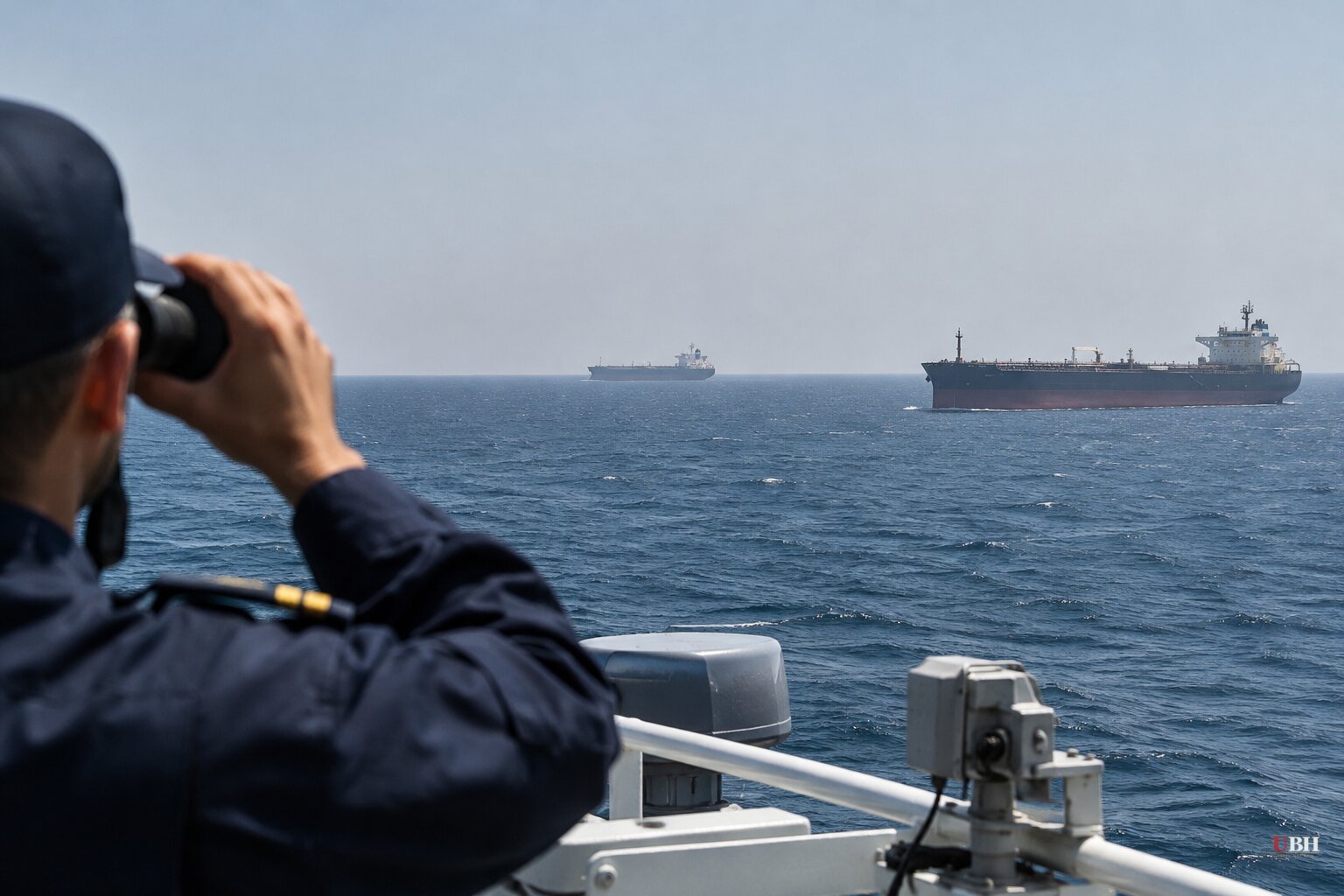
Two tankers were attacked in the Strait of Hormuz on Saturday, Nov. 21, according to the UK Maritime Trade Operations agency (UKMTO). One was hit on the stern by an unknown projectile while transiting outbound. The other was struck in its engine room. UKMTO reported no casualties on the first vessel.
Iran's army put out its own version. Its naval forces said that "before noon today" a tanker in a restricted zone east of the strait caught fire after hitting a naval mine. The statement said the ship had its identification and navigation systems switched off. Iran has not said whether this is one of the two ships UKMTO described.
Tehran also said it shot down a U.S. drone over Qeshm Island. A U.S. military official said American fighter jets struck an Iranian missile site on Qeshm last Tuesday.
A month of tanker hits
Saturday's incidents fit a pattern. The Maritime Executive reported that dozens of ships have been hit in and around the strait in recent weeks. Among them, the ADNOC-linked VLCC Al Dhannah was seen being towed to port. The tanker ON Phoenix took a projectile to the engine room about three nautical miles off Oman, started a fire, and left its crew uninjured.
On Nov. 11, a projectile struck the engine room of the Liberia-flagged Dominica Prosperity about 14 nautical miles northwest of Ras Al Khaimah, UAE. All 22 crew were evacuated by the UAE Coast Guard, including 19 Indian nationals, according to India's ports minister, Sarbananda Sonowal. The day before, the tanker Fujairah Energy was struck while eastbound in the Gulf and several crew members were injured, UKMTO said. The Joint Maritime Information Center logged four tanker attacks in a single advisory period.
Iran has repeatedly claimed that burning ships hit mines. The U.S. military recently said it had cleared all mines from the main routes through the strait. Iran has also said two supertankers carrying more than 4 million barrels combined hit mines on an "unauthorized route," according to an IRGC Navy statement.
Since the U.S.-Israeli strikes on Iran in February, Tehran has tried to restrict passage through the waterway and regularly targets ships that transit without its authorization. Before the war, about one fifth of the world's oil and natural gas moved through it. Washington answered with a blockade of Iranian ports, and its navy escorts tankers. U.S. Central Command said last month it had helped Gulf states export 1.5 billion barrels through Hormuz since the summer.
Talks going nowhere
President Donald Trump said Friday that Iran wants a deal but not one acceptable to him. "We want to make a real deal, not a fake deal that they've been doing for 51 years," he told reporters at the White House. He said gasoline prices have fallen 60 cents a gallon over the past month and could drop further depending on how the standoff is resolved. That figure is Trump's own, and no source in the record confirms it independently.
The diplomacy runs through Qatar. Special Envoy Steve Witkoff and Jared Kushner met Qatari Prime Minister Sheikh Mohammed bin Abdulrahman Al Thani and envoy Ali al-Thawadi in Berlin on Thursday, according to Axios, citing two sources. Sources familiar with the talks say no significant progress has been made. The Qatari prime minister also met Trump and Vice President JD Vance in Washington earlier this month.
Iran's side of the table sounds different. President Masoud Pezeshkian said Tehran favors "dialogue and negotiations" and can "negotiate with dignity," but will not surrender to coercion. He said Supreme Leader Mojtaba Khamenei told officials to end the state of neither war nor peace.
Secretary of State Marco Rubio put it plainly: "I wouldn't say we're on the verge of a breakthrough." He called Iran's demands unrealistic.
Axios reported that mediators have floated a two-day framework. The U.S. would lift its naval blockade and release some frozen Iranian funds. Iran would then move toward renewed nuclear inspections and reopen Hormuz before broader talks resume. Washington has not accepted it.
Strikes on hold, for now
Benjamin Netanyahu is reportedly pressing the White House to hit Iranian military and nuclear sites again. Trump is not rushing. "We've got time," he told Reuters aboard Air Force One on the way back from China, adding that he would discuss more strikes after the start of the year. He has also called a major new campaign "quite unlikely."
Trump told "60 Minutes" he saw no reason to escalate and that the strait was open. That is hard to square with a week in which tankers were set on fire and an Iranian missile site was bombed.
The Maritime Executive noted that tanker day rates have fallen sharply in the past week and crude prices have dropped since the Nov. 3 midterm election. It did not say why. Shipping disruption and a stalled negotiation sit side by side with falling prices, and no source explains the link.
What comes next is a timeline Trump himself set. He has said the question of new strikes on Iran waits until after the new year. The blockade stays, the Qatari channel stays open, and tankers keep burning in the meantime.
Sources used for this briefing
6 links from 6 independent newsrooms (syndicated copies of the same report count once)
These are the sources it draws on, linked so you can verify.
More coverage: Iran


