
Unbiased headlines. Facts, not spin.
Unbiased Headlines is an independently owned news organization. We bring you the facts, not opinions, written fresh from 110+ named sources. Sources linked so you can verify it yourself.
 energy
Low Interest (4/10)
Event date: November 20, 2026 ·
UK Nuclear Rule Overhaul Due End of 2027, but Only 10 of 47 Reforms Were Done as of September, Think Tank Says
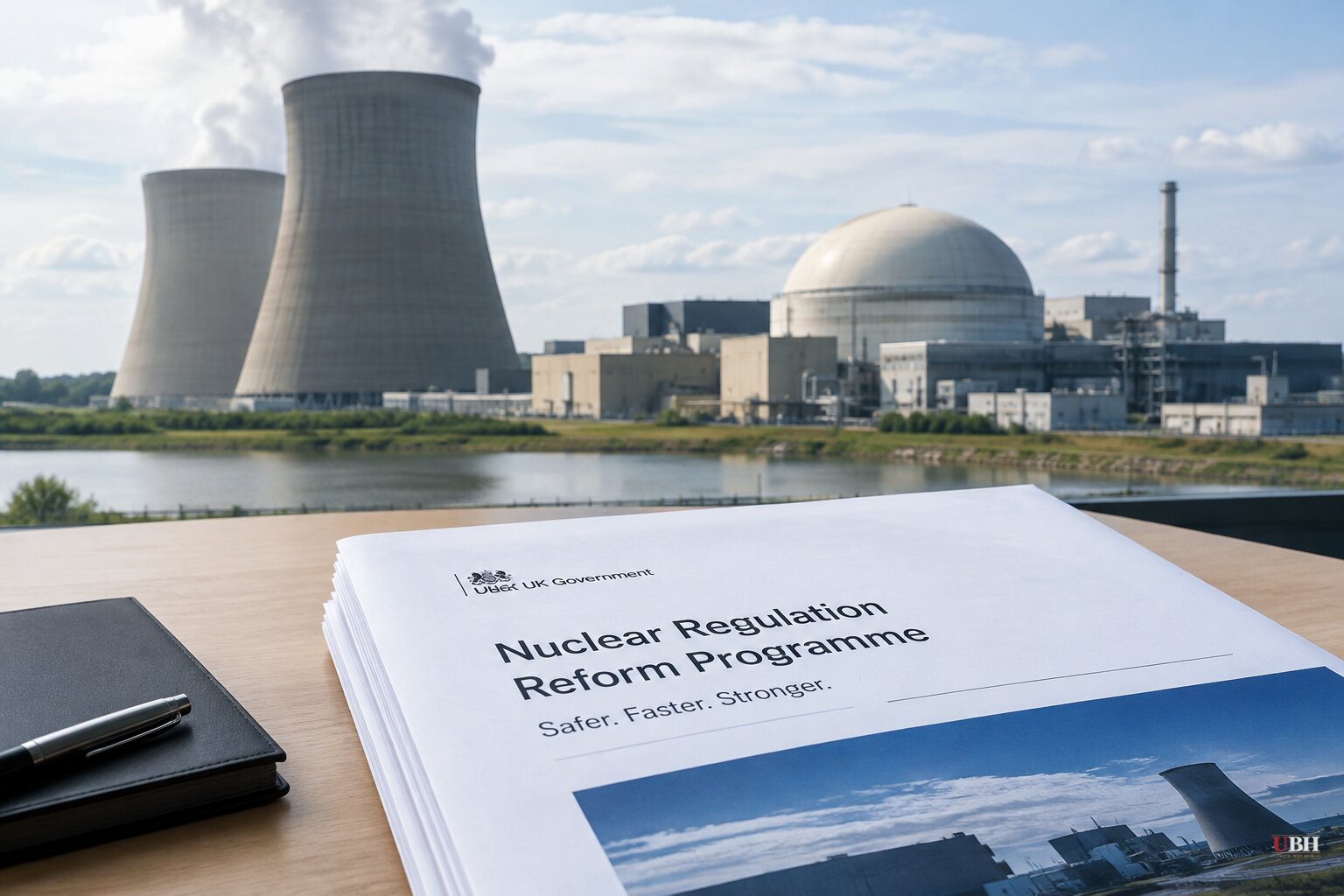
The UK government says it will finish rewriting its nuclear regulatory rules by the end of 2027. The goal is to build reactors faster in a country that has a reputation for building them slowly and at enormous cost.
The target is quadrupling nuclear output to 24 GW by 2050. The government expects British energy demand to rise around 40% by 2035.
The 47 recommendations
The reform traces to the 2025 Nuclear Regulatory Review, led by John Fingleton, a former chief executive of the Office of Fair Trading. His report found fragmented oversight and made 47 recommendations. They cover coordination among regulators, safety assessments, and an end to repeated scrutiny of identical reactor designs.
The government accepted all 47 and committed to implementing them by the end of 2027, according to Labour MP Mike Reader, who wrote about the effort for the Fabian Society. Reader described the Fingleton diagnosis as stark: duplication, gold-plating and risk aversion that, in his words, made the UK the costliest place in the world to build a reactor.
The Office for Nuclear Regulation, the Environment Agency and Natural Resources Wales aim to cut the time to approve a reactor design from around three or four years to two. The government also wants to streamline planning and environmental approvals, which have held up projects before.
The Centre for British Progress reported in September that only 10 of the 47 recommendations had been implemented. The group said the government needs to speed up if it wants to hit the end-2027 date.
Washington in the loop
In September 2025 the UK and US signed the Atlantic Partnership for Advanced Nuclear Energy. It lets both countries share regulatory assessments of new reactor applications so work is not duplicated.
The reforms are expected to make it easier for American firms to take part. Holtec, TerraPower, Westinghouse and X-energy are among the US companies planning to invest in the UK.
The government has also picked Rolls-Royce SMR to build the country's first small modular reactors. The programme is backed by about $3.4 billion over four years. The first project is planned for Wylfa in Wales, on the site of a decommissioned Magnox station.
Meanwhile, France's EDF is building the 3.2 GW Hinkley Point C. Reader called it the most expensive power station ever built anywhere in the world, and he warned that Sizewell C, next in the queue, is "heading the same way." On Oct. 28, the government's spending watchdog warned of "significant financial risks" on Sizewell C.
Parliament wants a roadmap
The House of Commons select committee on energy security and net zero has now published its own report. It says it is persuaded that nuclear should play a bigger role. It calls on the government to publish a new nuclear roadmap with "evidence-based deployment targets and clear delivery plans" for gigawatt-scale reactors, SMRs and advanced modular reactors.
The committee also says Great British Energy-Nuclear must deliver three completed final investment decisions by the end of this Parliament in 2029, not two.
It blames the UK's historic "stop-start" approach for decades of underinvestment in workforce and supply chains. It also questions whether the government's commitment to 70% UK content in the SMR programme can be enforced. It recommends stronger contract terms and clearer reporting, and it asks for a formal assessment of whether the UK should build a civil nuclear test reactor.
Clare Rhodes-James, development director for energy at Mott MacDonald, said the industry needs a long-term pipeline. She also said "today's political focus on affordability" will make guaranteeing an ongoing programme hard. "Moving cost or risk away from consumers does not make it disappear," she said.
The Heysham siting fight
One regulatory relic is already causing a local row. The semi-urban population density criteria, created in the 1960s to decide where nuclear stations can go, bar new reactors near dense housing.
Lizzi Collinge, Labour MP for Morecambe and Lunesdale, says the criteria rule out new nuclear on parts of the Heysham site because of 50 years of housebuilding. She says the government is reviewing them in light of modern reactor safety standards and is committed to delivering the Fingleton changes within the next year.
Her predecessor, David Morris, says she has been "asleep at the wheel." He wrote this week to the Energy Secretary and the Housing Secretary demanding "urgent guarantees" that housing targets will not block a new plant at Heysham.
Morris points to Lancaster's result in August's Housing Delivery Test: 48% of required homes delivered. That means the city council must treat many residential applications with a presumption in favour of approval. He fears "speculative housing sprawl" could close off the site.
An EDF spokesperson said in November 2025 that government housing policy "could rule out sites like Heysham, despite their clear advantages." EDF owns Heysham 1 and 2.
Public support
Reader says national polling puts support for new nuclear at around half of voters, behind onshore wind, offshore wind and solar. He says support runs higher near existing plants such as Hinkley and Sizewell, and that communities were won over by visible local benefits such as jobs and apprenticeships. He argues future projects should build in those benefits up front.
What happens next
The government has not yet responded to the committee's call for a new roadmap and a third investment decision. The first test is the end-2027 deadline. About 13 months remain, and the Centre for British Progress counted 37 of the 47 recommendations still outstanding as of September.
Sources used for this briefing
7 links from 7 independent newsrooms (syndicated copies of the same report count once)
These are the sources it draws on, linked so you can verify.


