
Unbiased headlines. Facts, not spin.
Unbiased Headlines is an independently owned news organization. We bring you the facts, not opinions, written fresh from 110+ named sources. Sources linked so you can verify it yourself.
 energy
Notable (5/10)
Event date: November 11, 2026 ·
Bay Area Air District analysis: 2029 gas furnace ban adds a median $12,500 to replacement cost
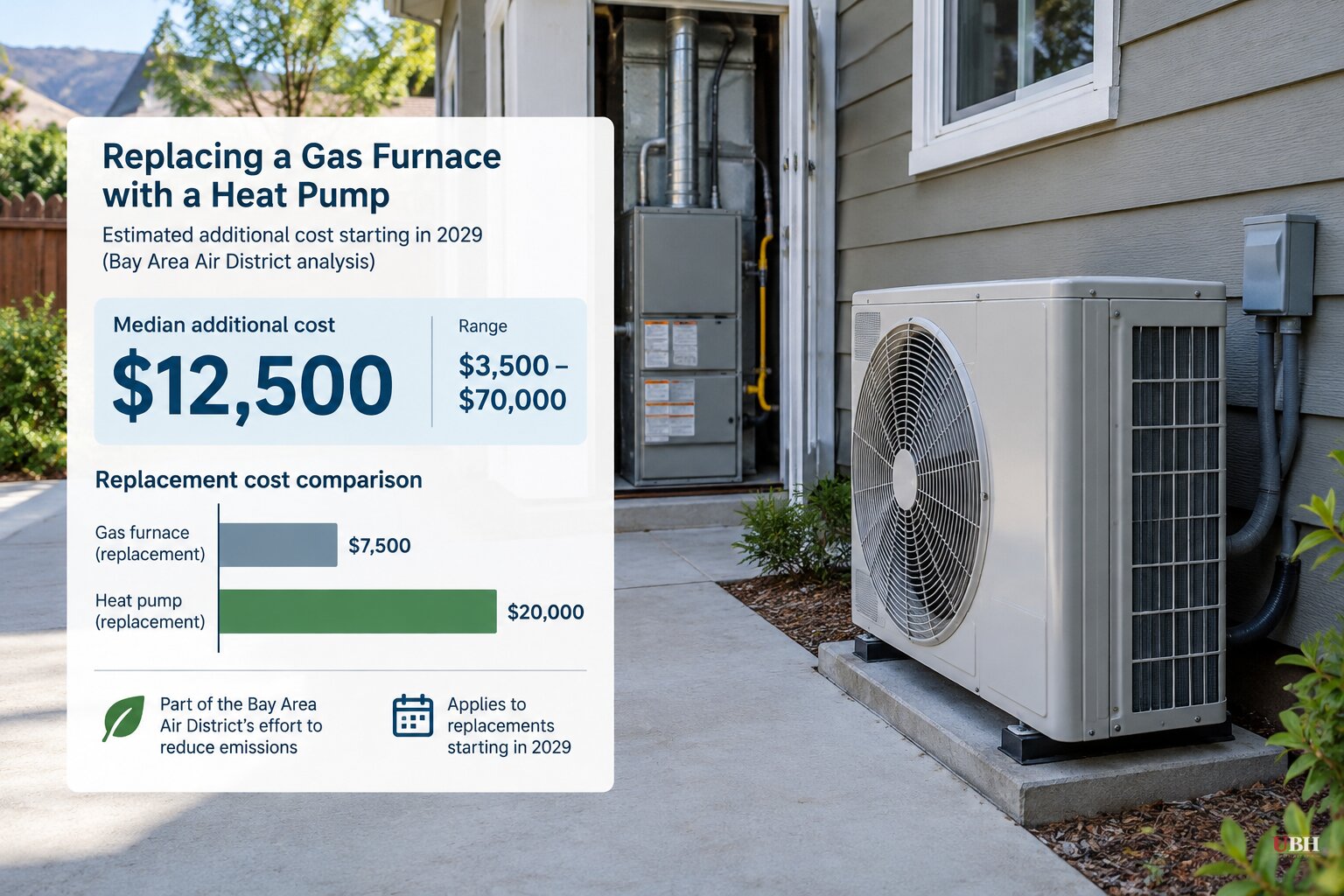
Bay Area homeowners whose gas furnaces die in 2029 will have to replace them with electric heat pumps. A district analysis released Friday puts the median extra cost at about $12,500.
The Bay Area Air Quality Management District says a standard gas furnace replacement runs about $8,000 today. A heat pump heating and cooling system has a median installed cost of about $21,000 for a single-family home. The district's range for installation is $3,500 to $70,000.
The cost fight
Electrical work can push the bill higher. The analysis puts upgrades to older single-family homes at roughly $11,000 and up to $30,000 for multifamily buildings. Some homes would also need new panels, dedicated circuits or ductwork.
District staff stress that a heat pump also provides air conditioning. A homeowner with no AC would skip a separate installation that costs about $10,000, and staff say that shrinks the premium to roughly $2,000.
That offset has limits. About 60% of Bay Area homes already have air conditioning. The district notes those households can remove the old AC unit when they install a heat pump, but they still pay for a full system.
The rule does not force anyone to tear out a working furnace. Repairs stay legal. Gas stoves, ovens, clothes dryers and fireplaces are exempt. Selling a home does not trigger the requirement.
Two heat pumps for many homes
This is the second gas appliance rule the district has approved. The 24-member air board passed both in 2023, among the most aggressive clean appliance regulations in the country.
The water heater rule comes first. The board recently voted to push its start date from January 2027 to Jan. 1, 2028, citing concerns about cost. Heat pump water heaters carry a median extra cost of about $3,500, according to district staff.
The board also approved exemptions it says will cover about half of Bay Area water heaters:
- Owners earning 80% or less of area median income. In Santa Clara County, local housing benchmarks put that at $113,700 for a single-person household.
- Owners who spend a large share of income on mortgage and property taxes. Both income-based exemptions can be claimed by self-reporting through an online form.
- Homes without enough space or electrical capacity, which requires a contractor to confirm the limitation.
- Water heaters under 30 gallons.
Buildings with at least six units have until January 2033.
The district's own numbers mean many homeowners will face both mandates. Not everyone qualifies for the water heater exemptions, and the furnace rule is still expected to be amended.
The health case and the pushback
The district's argument is public health. Staff told reporters that gas water heaters and furnaces emit roughly as much nitrogen oxide across the Bay Area as cars and trucks do. Those pollutants worsen asthma and heart disease and contribute to smog and fine particulate matter.
The district says the two rules together will prevent 37 to 85 early deaths a year and avoid hundreds of millions of dollars in health care costs. Dr. Philip Fine, the agency's executive officer, said in 2023 that the region's 1.8 million water heaters and furnaces "significantly impact our air quality, resulting in dozens of early deaths and a wide range of health impacts, particularly in communities of color."
Greg Nudd, the district's deputy executive officer for policy, described the long-term payoff this way: "It's kind of like paying into a pension, right? Except that instead of the pension paying off the rest of your life, it pays off for the rest of your life, the rest of your children's lives, the rest of your grandchildren's lives."
Opponents focus on the cost to households in one of the country's most expensive housing markets. Johnny Kamis, president of the Silicon Valley Business Alliance and a former San Jose councilmember, argued the water heater rule should have been repealed and replaced with an incentive program rather than delayed. "I don't actually trust (the Air District) with overseeing the carve outs that they say that they're going to," he said.
Supporters are not uniform on timing either. San Jose Councilmember David Cohen, who organized a rally backing the water heater rule, said the delay gives time to "ease the public into the transition," and that the goal is making sure the public does not "revolt" over something "forced upon them."
Groups representing homeowners also pushed back on cost during public comment, while doctors, faith leaders and environmental advocates largely backed the rules.
What comes next
The 2029 date is not locked. District staff anticipate amending the furnace rule to add exemptions, especially for low-income households, using a process similar to the one just completed for water heaters. The start date could also slip to 2030.
The air board is scheduled to give staff feedback on possible changes on Dec. 2. Most board members are local elected officials. San Francisco's representatives include Supervisors Shamann Walton and Bilal Mahmood and Tyrone Jue, who directs the city's environment department. Walton missed the 2023 vote, Mahmood had not yet joined the board, and Jue voted yes.
Whether the exemptions end up covering a share of furnace replacements comparable to the water heater rule's roughly 50% will determine how many households actually pay the median figure.
Sources used for this briefing
6 links from 6 independent newsrooms (syndicated copies of the same report count once)
These are the sources it draws on, linked so you can verify.


