
Unbiased headlines. Facts, not spin.
Unbiased Headlines is an independently owned news organization. We bring you the facts, not opinions, written fresh from 110+ named sources. Sources linked so you can verify it yourself.
 energy
Notable (5/10)
Nevada Solar Plant Backed by $737 Million Federal Loan Guarantee Sold for $7 Million After Second Bankruptcy
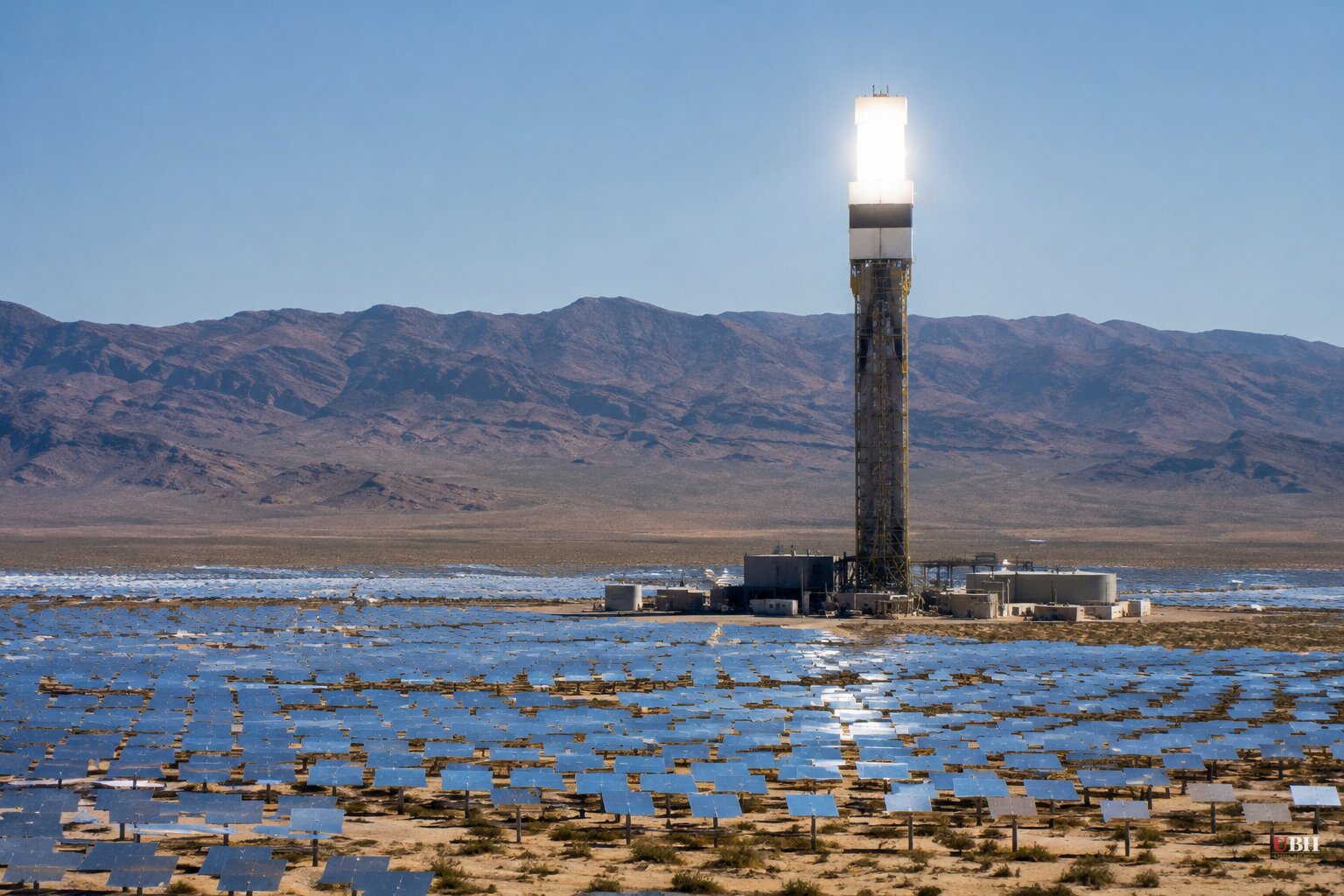
The Crescent Dunes Solar Energy Project in Nevada has gone through bankruptcy twice and sold for $7 million in July 2026. Washington put more than $1 billion behind it.
The federal support came in two pieces: a $737 million Department of Energy loan guarantee and roughly $275 million in Treasury grant awards. Both were part of the Obama administration's roughly $90 billion push into clean energy after the 2008 financial crisis.
Fox News Digital, which toured the site, puts the estimated taxpayer tab at $507.6 million. That is an estimate, not a final audited loss, and it is well below the $1 billion-plus in total support. The ultimate cost depends on how much of the guaranteed debt went unpaid.
What the plant was supposed to do
Crescent Dunes sits on a 2,250-acre federal site about 13 miles northwest of Tonopah, roughly halfway between Las Vegas and Reno. More than 10,000 mirrors surround a 640-foot tower.
The mirrors focus sunlight on a receiver at the top, heating molten salt to about 1,050 degrees Fahrenheit. The salt is stored in an insulated tank and used to make steam that drives a turbine after dark.
That made it the first commercial-scale U.S. solar tower to use molten salt both to collect and to store heat. The Energy Department projected output of 482,000 megawatt-hours a year, with a maximum of 110 megawatts. That is enough to power more than 75,000 Nevada homes at peak.
The pitch was solar power that works at night, which ordinary panels can't do on their own.
What went wrong
Operations began in late 2015. Leaks and equipment failures repeatedly knocked the plant offline, and production fell short of projections.
Cheaper solar alternatives also undercut the project's economics. Oliver Hemmers, a physicist and energy researcher, attributed the collapse to engineering failures and unsustainable economics. He called the project a "boondoggle."
The plant then went through two bankruptcies. The second ended with the $7 million sale. Set against roughly $1.01 billion in federal support, that is less than three-quarters of one percent.
The political fight
The comparison to Solyndra is already being made. Solyndra, another Obama-backed solar company, went bankrupt 15 years ago and left taxpayers on the hook for $528 million. Fox's estimate for Crescent Dunes comes close to that.
Rep. Lance Gooden, R-Texas, told Fox News Digital the project is "a microcosm of what is wrong with Democrat governance: the Green New Scam, hundreds of millions in taxpayer dollars wasted, fraud, and a cover-up."
The waste argument rests on the numbers above. The words "fraud" and "cover-up" are Gooden's allegations. No criminal charge or official finding of fraud has been cited alongside them.
The technology itself was unproven at commercial scale when Washington backed it. The government's own stated goal was to solve solar's nighttime problem, and the plant's failure to perform is documented in its repeated outages and shortfalls.
What's left unanswered
The $7 million sale price is the one hard number that closes out the plant's financial story. The $507.6 million taxpayer figure remains an estimate, and the final loss on the $737 million loan guarantee will depend on what the Energy Department recovers and writes off.
How much of that guarantee the Energy Department ultimately pays out is the figure that will settle what Crescent Dunes cost the public.
Sources used for this briefing
5 links from 4 independent newsrooms (syndicated copies of the same report count once)
These are the sources it draws on, linked so you can verify.


