
Unbiased headlines. Facts, not spin.
Unbiased Headlines is an independently owned news organization. We bring you the facts, not opinions, written fresh from 110+ named sources. Sources linked so you can verify it yourself.
 energy
Notable (6/10)
COP31 Talks Go Into Overtime After Draft Deal Leaves Out Fossil Fuels
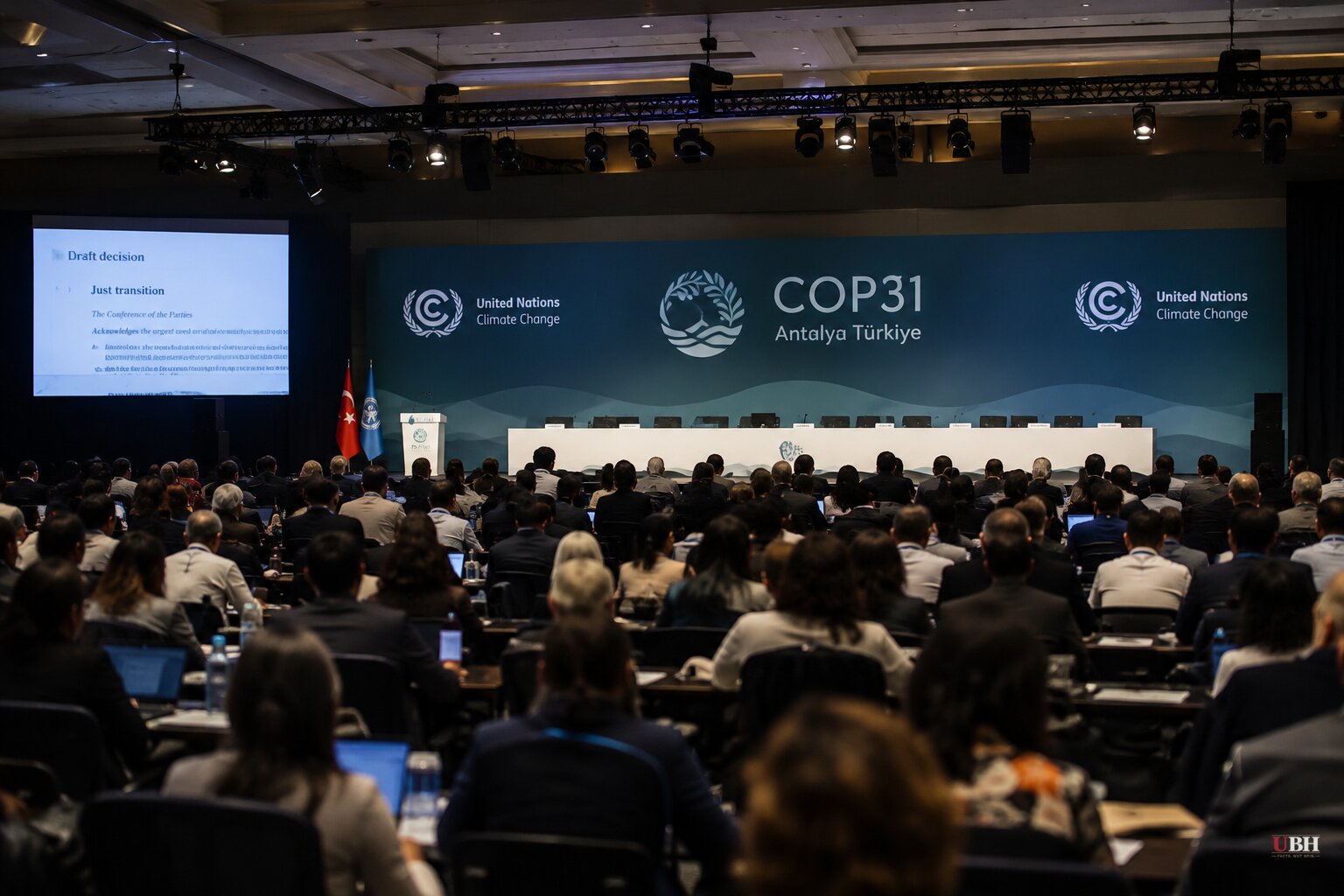
Since the COP31 summit opened in Antalya, the gap between what was proposed and what was on the table at the end has grown wide. The two-week summit was supposed to end Friday, and negotiators went into overtime on Saturday in an attempt to reach a final agreement. The outcome had not been announced as of this writing.
Work crews were already boxing up the venue. Workers packed electronics in the pavilions where countries had showcased their climate policies, and the hallways that normally held tens of thousands of participants stood largely empty.
From ambitious first draft to a text without fossil fuels
The first draft, released by Australian Climate Change Minister Chris Bowen in Antalya on Nov. 17 Australian time, was far more aggressive. Bowen is the COP31 president of negotiations. The 18-page document detailed 144 provisions and was based on submissions from 160 countries and more than 500 pages of feedback.
It called for developed nations to target net zero by 2030 and net-negative emissions by 2040, earlier than many existing commitments. It said funding for climate adaptation projects could triple to at least US$120 billion by 2035. It also proposed increasing electricity's share of global energy use to 35 percent by 2035, known as the 35-by-35 pledge, and called for an immediate transition from fossil fuels, using stronger language than agreed at the COP28 summit. Other proposals included expanding carbon capture and cutting methane emissions.
Bowen warned at the time that it was only a starting point. "This is a draft, a first draft, it won't be the final draft," he said.
Greenpeace Australia Pacific spokesman Simon Bradshaw called it "some of the strongest language we've seen in a draft COP decision." He added: "The question now is how much of it will survive the tough days of negotiations ahead."
A later draft of the final agreement drew strong condemnation from activists and some countries because it fails to mention fossil fuels. The reporting does not say who asked for the omission.
Activists say the summit is failing
On Saturday, 100 civil society groups sent a letter to the summit's co-hosts, Turkey and Australia. They wrote that the two were "on course to preside over one of the most disappointing COPs" the UN has ever held. There were only hours left, the letter said, "to save this COP from becoming a low point of three decades of climate negotiations."
Rachel Cleetus of the Union of Concerned Scientists, who is at the venue, described "a bleak overtime, with dwindling food and water, and no sign of any progress since the alarmingly underwhelming texts we saw earlier."
Teresa Anderson, global lead on climate justice at ActionAid International, said: "No one knows what is happening behind closed doors, or what the outcome of COP31 will be."
Harjeet Singh, a strategic adviser to the Fossil Fuel Treaty Initiative who has attended 18 climate summits, said: "We are still stuck with many, many disagreements and nobody knows how long this will go on."
Experts say the world needs to urgently and drastically cut emissions from the use of coal, oil and gas to avert the most catastrophic effects of warming. A final text silent on fossil fuels runs against that.
On Friday, a protester wearing a red noose and a vest reading "you are killing the future" climbed onto a table and interrupted COP31 co-president Murat Kurum, shouting: "You take out fossil fuels. You killed 1.5. There is no money. Just kill me now. The Global South cannot wait."
The warming numbers and the money fight
Before the talks began, the UN announced that the world will likely blow past the 2015 Paris Agreement goal of limiting warming to 1.5°C (2.7°F) above pre-industrial temperatures. The nonprofit Climate Action Tracker warned during the summit that progress on slowing global warming has stalled for the past five years, even as disasters, including this year's heat waves in Europe and flooding in Nepal, become more deadly.
Money is the other sticking point. Countries most vulnerable to climate change, including small island nations battered by rising seas, say wealthy nations that caused the climate crisis must contribute more to UN funds that help them recover from disasters and adapt to a warmer world. The draft's US$120 billion adaptation figure was framed as funding that "could" triple by 2035 under the draft's goals. The reporting does not say which governments would pay for it.
Tuvalu's Minister of Environment Maina Talia said at a Saturday press conference: "Every year there seems to be a greater discontent, a mistrust and frustration for civil society, indigenous people and countries that are more climate vulnerable." He added: "I am still holding the line, trying to be very optimistic until we see the text."
Washington sat this one out
The United States, the world's largest economy and a major polluter, did not participate directly in this year's talks. Many of the world's top-polluting nations, including the United States, also did not participate directly, according to the Associated Press.
The U.S. absence bears on the numbers in play. A 2030 net-zero target for developed countries and a tripling of adaptation funding are the kind of proposals that depend on major economies. Climate Action Tracker's finding that progress has stalled for five years is the context any final text will be judged against.
What happens next
The reporting does not say when Saturday's session will end or whether the final text will reference fossil fuels. If a deal comes, the open questions are whether it carries any of the first draft's 2030 and 2040 targets and whether it puts firm dollar figures on adaptation funding. The next climate summit is scheduled for Addis Ababa, Ethiopia, in November 2027.
Sources used for this briefing
7 links from 7 independent newsrooms (syndicated copies of the same report count once)
These are the sources it draws on, linked so you can verify.


