
Unbiased headlines. Facts, not spin.
Unbiased Headlines is an independently owned news organization. We bring you the facts, not opinions, written fresh from 110+ named sources. Sources linked so you can verify it yourself.
 energy
Notable (5/10)
Energy Department's nuclear campus job estimates shrink and host-state deadline passes
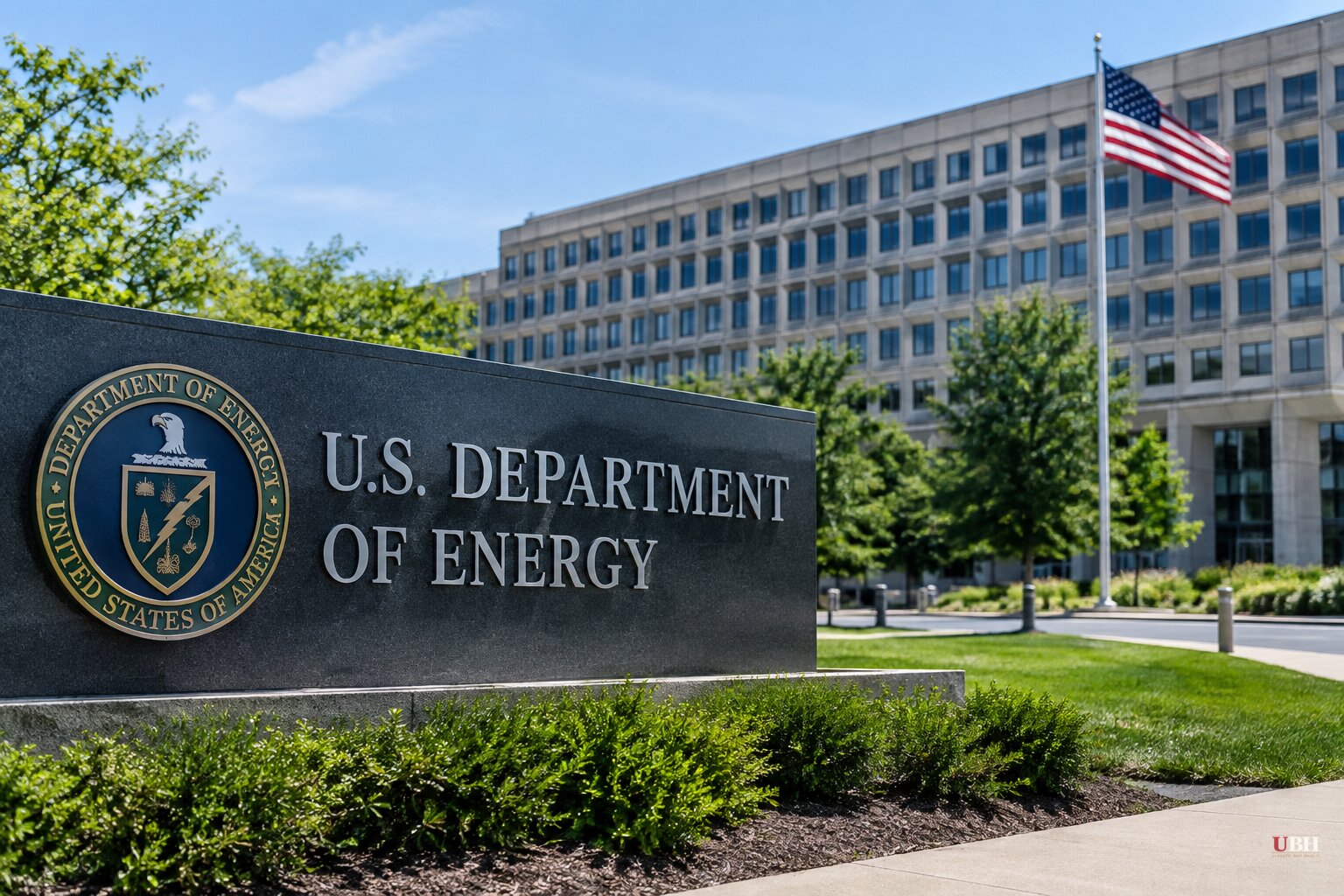
The pitch was big. The Department of Energy told states in January that a Nuclear Lifecycle Innovation Campus could host uranium enrichment, advanced reactors, fuel fabrication, data centers, spent fuel recycling and waste disposal on one site.
A hypothetical campus, the department suggested, could directly employ 50,000 workers and support another 100,000 to 150,000 indirect jobs. It would also need 10,000 to 20,000 new housing units.
Five governors came to the table last summer. Washington has spent decades trying to find a state willing to permanently host spent fuel from nuclear plants, so that was a real political breakthrough.
The numbers moved
The figures floated in July were lower: up to $50 billion in capital investment and nearly 25,000 jobs per campus.
In September, Assistant Secretary for Nuclear Energy Ted Garrish defined success as at least three or four campuses running in 10 to 20 years. Vincent Ialenti, a former DOE senior program manager now at Tampere University in Finland, did the math in an opinion piece in The Hill. At January's top figure, that is 600,000 to 800,000 jobs. At July's figure, it is roughly 75,000 to 100,000.
The headline jobs estimate for the same program fell sharply in about six months.
Where the workers come from
The Energy Department's own employment reports count just over 70,000 people working in the U.S. nuclear energy sector in 2025. Sixty-five percent of nuclear power and fuel employers reported hiring challenges last year. One survey found only 23 percent of nuclear workers were under 30.
Campuses would also compete with advanced manufacturing and data centers for electricians and technicians.
Even the lower July estimate of nearly 25,000 jobs per campus is large next to a sector workforce of just over 70,000, and that is for a single site.
Timelines and the law
In January, the department's vision was for initial campus facilities to be "online in the 2027 timeframe." The Sept. 30 target for host agreements has come and gone.
On Nov. 10, Wright acknowledged that spent fuel disposal outside Nevada's Yucca Mountain site requires legislative change. Rep. Chuck Fleischmann (R-Tenn.) had hoped to take action during the lame-duck session. He now says it may have to wait for the incoming Democrat-controlled Congress.
Disposal is the piece governors were asked to take on. The jobs and investment were the incentive.
What supporters say
The program still has backers, and they are not claiming the original numbers will hold. Craig Piercy, head of the American Nuclear Society, supports it. He said some in the nuclear sector worry that the near-term economic benefits of spent fuel recycling, a centerpiece of the campus plan, were oversold to states. He expects the first projects to be limited public-private demonstrations of spent fuel transportation, recycling, storage and disposal technologies. "Even that is a ways off," he acknowledged.
The department also described the 50,000-job campus as hypothetical. Ialenti's complaint is that the figures were floated to governors anyway, and that the department gambled with its own credibility by lending them gravitas.
Meanwhile, reactors are getting permits
The regulatory side of the nuclear push looks different. The Nuclear Regulatory Commission has issued a construction permit for four Xe-100 small modular reactors at Dow's Seadrift site in Texas. It is the first construction permit for a high-temperature gas-cooled reactor in the U.S. in more than half a century.
Andrew Follett, writing in National Review, calls it the most recent sign that President Trump's cutting of nuclear red tape last year is paying dividends. The permit is a concrete licensing milestone. It is also a single-site reactor project, not a spent-fuel campus with a host state.
What comes next
The department's campus site selections are expected this year or early next. The program now depends on a legal change that has not been made, in a Congress whose majority is about to change hands. Fleischmann's own timeline has already slipped from the lame-duck session to an uncertain date next year.
The open questions, as Ialenti frames them, are which facilities will actually be built, who will pay for them, whether any will open around 2027, and how many jobs will be permanent. For governors still at the table, the question is how much of the original bargain they can secure.
Sources used for this briefing
5 links from 5 independent newsrooms (syndicated copies of the same report count once)
These are the sources it draws on, linked so you can verify.


