
Unbiased headlines. Facts, not spin.
Unbiased Headlines is an independently owned news organization. We bring you the facts, not opinions, written fresh from 110+ named sources. Sources linked so you can verify it yourself.
 energy
Major Story (8/10)
Event date: November 19, 2026 ·
Five Experts Say Iran's Hormuz Mine Claims Lack Evidence as Another Tanker Is Hit Near Khasab
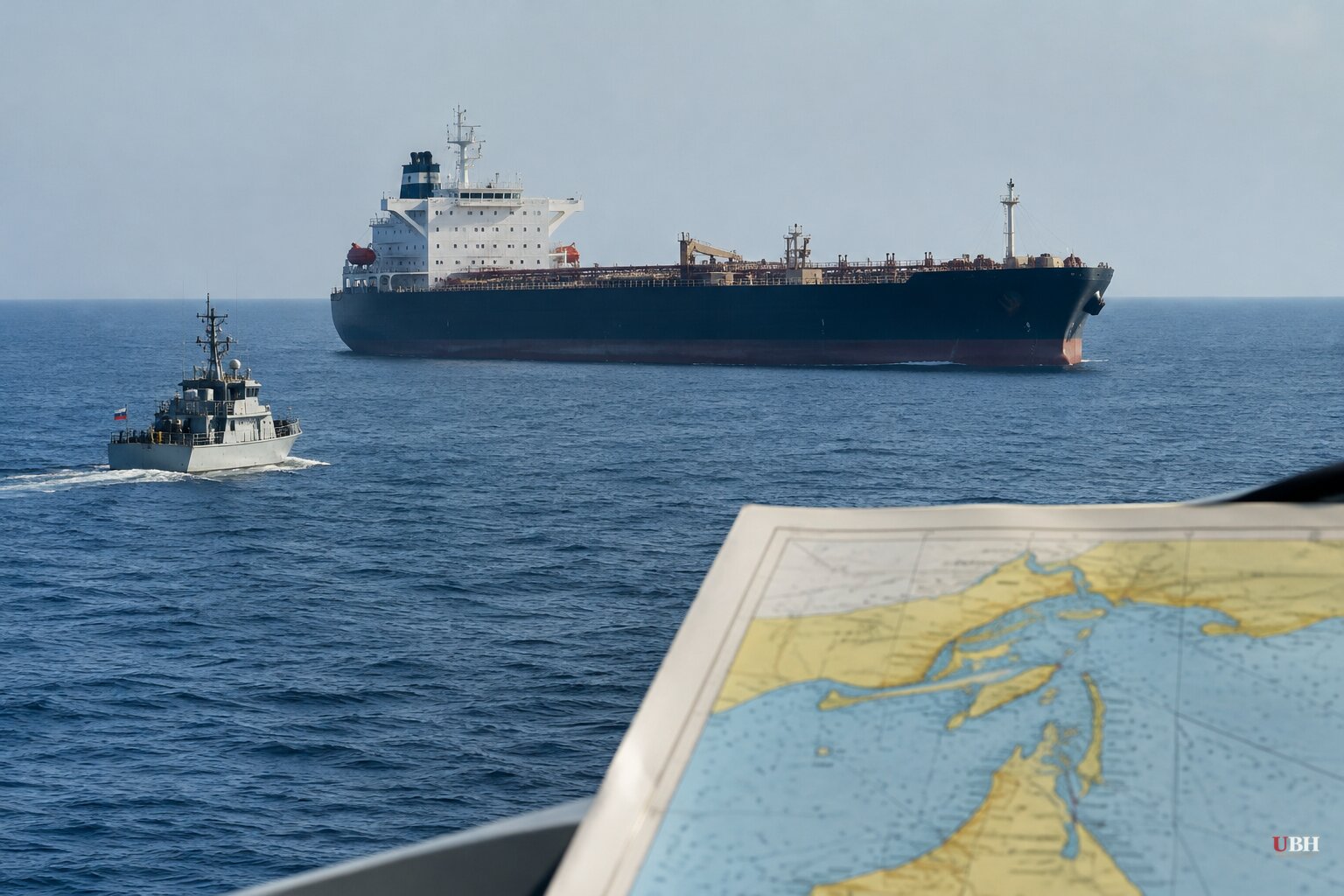
Since the Islamic Revolutionary Guard Corps began announcing mine strikes in Hormuz in late August, each claim has grown bigger. The latest, issued Nov. 19, is the largest by cargo volume so far.
The IRGC Navy said two supertankers carrying more than 4 million barrels of crude exploded after hitting mines on an "unauthorized route" near the strait's southern coast. It said both ships were abandoned and burning. That compares with a 750,000-barrel claim in mid-October.
The IRGC gave no vessel names, IMO numbers, flag states or casualty figures. No Western maritime authority, shipping registry or classification society has confirmed either explosion. UK Maritime Trade Operations did not mention them in its advisories.
Experts say the mine claims do not add up
The IRGC says more than 30 ships have hit sea mines since the start of November. Five experts, including a former navy captain, told The National that none of the incidents has been independently verified.
"From what I have seen so far, there has been almost zero evidence of any damage caused by sea mines," said Farzin Nadimi, a senior fellow at the Washington Institute for Near East Policy.
Phil Belcher, marine director at the tanker owners' association Intertanko, said the group cannot identify any mines posing a risk to ships in the Gulf or the strait. The one exception he cited was a single ship that hit a floating object and was damaged at the waterline.
Scott Savitz, a mine-warfare expert at the Rand Corporation, described the logic Iran may be exploiting. "It's possible to make an effective minefield with zero mines, if someone can make a credible claim that they have mined specific waters," he said.
The IRGC's own framing is blunt. Its Navy said non-compliance with Iranian transit rules "will only result in a collision with a naval mine and the consequent fire." It also warned that tankers "cooperating with the murderous and criminal US army will be dealt with decisively." Iran's army separately said three tankers hit mines in the eastern strait on Wednesday, Nov. 18, after switching off their navigation systems.
The oil market gave the Nov. 19 claim little weight. Brent rose less than 0.2% in Asian trading that day.
The strikes that are documented
The verified attacks involve projectiles, not mines. A tanker was hit on Friday, Nov. 20, at about 1500 UTC, eight nautical miles north of Khasab, Oman, according to UKMTO Warning 214-26. An unknown projectile struck its port bow and started a fire. The ship's company security officer reported no casualties or environmental impact, and authorities are investigating.
On Tuesday, Nov. 17, the tanker NAVIG8 MESSI was struck 13 nautical miles north of Khasab. ADNOC confirmed 11 crew injured and one missing. The remaining crew were evacuated and the vessel was reported under tow.
The LPG tanker TARA GAS was disabled by a projectile on Nov. 16 and hit again the next day. It caught fire and was abandoned.
Martin Kelly of Orbital Risk Intelligence counted 15 attacks and piracy-related incidents worldwide in the past seven days. That is a 50% increase on the prior week and the highest weekly total since mid-October. In the Persian Gulf, Strait of Hormuz and Gulf of Oman he logged seven strikes involving six vessels. Four tankers were hit within 13 nautical miles of Khasab over three days. Kelly's tally for the region is two seafarers missing and 13 injured.
UKMTO's own weekly overview counted six verified attacks through Nov. 18: four in the strait and two in the wider Gulf. None of the sources identifies who fired the projectiles.
Traffic stays far below prewar levels
UKMTO recorded 115 outbound and 148 inbound transits over the past seven days. The prior week saw 139 outbound and 169 inbound, a drop of roughly 15%. UKMTO puts combined traffic about 65% below pre-conflict levels.
Lloyd's List Intelligence uses a different yardstick and puts crossings 80% below prewar levels. Neither figure suggests owners are treating the strait as normal.
The cost is not only physical. Savitz's point is that a credible threat can do the work of a minefield, and the shipping data shows owners staying away whether or not the mines exist.
Oman's island and the wider exchange
Iran has also claimed its forces hit navigation facilities on Oman's Didamar Island, saying they were helping "oil smuggling by the enemy," meaning the United States. A senior Omani official told the Maritime Executive the island was not attacked and its navigation facilities were undamaged. Oman has not publicly denounced any Iranian strike, as it has on earlier occasions.
The U.S. military backdrop remains live. On Nov. 3 a U.S. official said American forces struck Iran's Qeshm Island in what he called a "defensive" response to Iran firing at a U.S. aircraft. The official said it did not signal a return to wider strikes.
The UKMTO investigation into the Nov. 20 strike off Khasab is open. ADNOC's search for its missing NAVIG8 MESSI crew member is the clearest human cost on the record. The IRGC has not named the two supertankers it says are burning, so the claim stays open to confirmation or refutation the moment any vessel identity or satellite image surfaces.
Sources used for this briefing
6 links from 5 independent newsrooms (syndicated copies of the same report count once)
These are the sources it draws on, linked so you can verify.
More coverage: Iran


